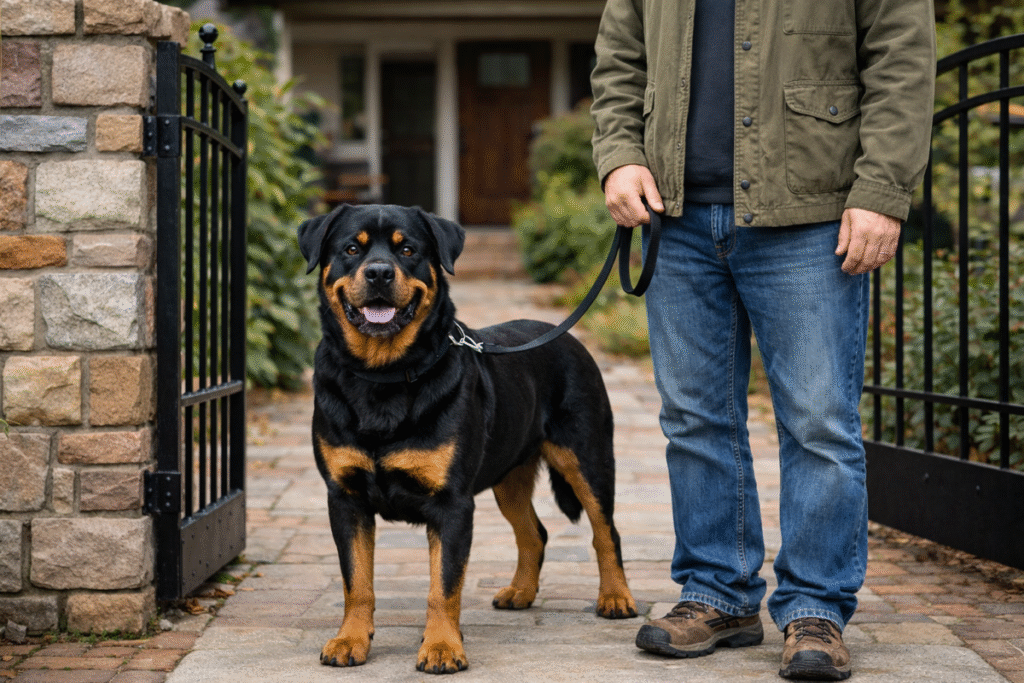
Wondering if a Rottweiler protection dog is the right choice for your home and family? Rottweilers are widely regarded as one of the most reliable and dependable protection breeds. They combine natural guarding instincts, deep loyalty, impressive strength, and the intelligence to recognize real threats while remaining calm in everyday situations.
These confident, powerful dogs have protected families, property, and working environments for centuries. When trained and socialized correctly, a Rottweiler protection dog is not only a capable guardian but also a gentle, affectionate family companion who thrives on connection and purpose.
In this guide, you’ll learn what makes Rottweilers exceptional protection dogs, how they behave in family environments, their training needs, lifestyle requirements, common misconceptions, and how to decide whether this remarkable breed is the right match for your security goals.
Ready to find your ideal protection companion? Explore our personal and family protection dogs for saleand discover professionally trained guardians prepared for real-world protection.
What Makes a Rottweiler Protection Dog Effective
Rottweilers are known for their unmistakable presence: strong, steady, observant, and confident. But what truly sets them apart as protection dogs is the combination of instinct, intelligence, and temperament developed throughout their working history.
Understanding these traits helps you appreciate why so many families, professionals, and security-focused households trust Rottweilers for protection work.
Key protective traits that matter in real homes
- Balanced nerves: A stable dog can tell the difference between a delivery driver and an actual threat.
- Natural territoriality: The dog alerts, postures, and deters, but remains controllable when called off.
- High trainability: Rottweilers thrive with clear guidance and consistent routines.
- Biddable power: Strength without a handler-focused off switch is a liability. The Rottweiler’s best asset is power shaped by obedience.
Why these traits protect better than size alone
Size may deter, but judgment prevents mistakes. A dog that escalates too fast can create risk for neighbors or visiting family. By contrast, a well-socialized Rottweiler learns context and responds to the handler’s voice, delivering protection you can actually live with.
Bring purpose and predictability to your plan. See current options in our personal and family protection dogs for sale catalog.
Quick History-to-Home Reference
| Era or Role | What Shaped the Rottweiler | What That Means For You |
| Roman drover dogs | Endurance, traffic neutrality, livestock protection | Calm in crowds, steady patrolling at home |
| Rottweil butcher’s dog | Money and property guarding, cart pulling | Clear territorial sense, handler focus |
| Police and service work | Nerve strength, obedience under pressure | Reliable response to commands in real threats |
| Modern family protection | Social stability around kids and visitors | Everyday manageability with true capability |
Family Compatibility & Gentleness With Kids
The best protection dog is safe to live with. Families choose Rottweilers because a properly selected and trained dog will be affectionate, routine-loving, and gentle with household children. Calm persistence, not frantic energy, is the breed’s hallmark when you pick the right line and give the right structure.
How gentleness develops
- Early socialization introduces household sounds, kid movement patterns, and polite greetings.
- Rules about space and touch teach children and dog how to interact. A “place” command helps the dog decompress during high-energy play.
- Predictable routines reduce arousal spikes. Meals, walks, dog training, and rest happen on a schedule.
- Neutral exposure to playgrounds, strollers, bikes, and sports gear builds confidence that pays off at home.
Practical kid-focused tips
- Use a “settle” mat in the living room so the dog can be near family without crowding.
- Supervise playdates and give the dog structured breaks in a quiet room.
- Teach a hand-target cue so kids can redirect the dog to a gentle nose-touch game.
- Rotate enrichment: slow feeders on homework nights, sniff walks on weekends, puzzle toys on rainy days.
Preparing your home is as critical as picking your dog. Walk through setup steps with our guide on how to prepare your home for a protection dog.
![Rottweiler resting on a mat while two kids read nearby, loose mouth, soft eyes, supervised by parent]](https://k9maniaprotectiondogs.com/wp-content/uploads/2025/12/image-8-1024x683.png)
Training Considerations
Training is where capability becomes controllable protection. Think in stages: selection, foundation, neutrality, control under pressure, and maintenance.
Selection
You cannot train away poor nerve. Start with a dog evaluated for stable temperament, environmental confidence, and recovery from startle. That is why a structured pathway matters. Review criteria in our K9 selection process.
Foundation
Daily obedience makes protection work safer. Build a clear vocabulary: name recognition, come, heel, sit, down, place, leave it, out, and a strong recall. Teach a reliable off switch with duration “place” and calm handling. Reward neutrality around doorbells, skateboards, and other everyday triggers.
Neutrality
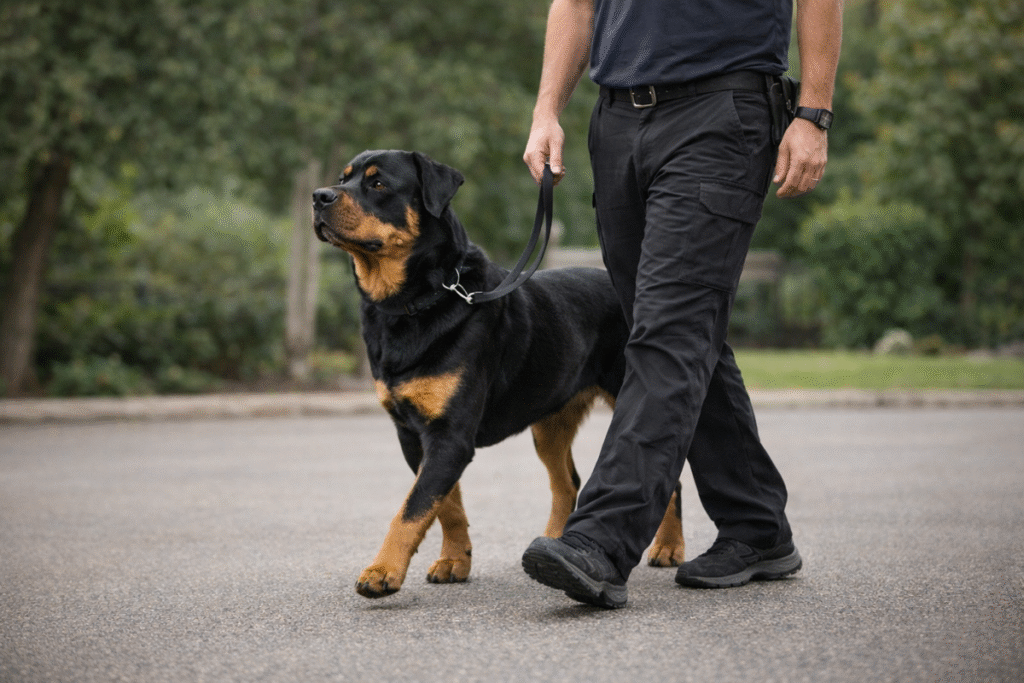
The goal is a dog that looks to you before acting. Train default eye contact when the door opens. Reinforce calm while delivery drivers approach. Practice thresholds without lunging: front door, car doors, backyard gates.
Control Under Pressure
Once the dog is neutral in daily life, introduce controlled defensive scenarios with a professional decoy. Work on line handling, out on command, and guard on cue. The dog must switch from engagement to release reliably. Keep rep quality high and volume low. Precision over spectacle.
Maintenance
Protection is a perishable skill. Schedule monthly tune-ups and short obedience refreshers several times a week. Rotate toys to prevent resource guarding and keep arousal manageable.
Ready to explore suitable candidates and training pathways for your household and schedule? Browse our personal and family protection dogs for sale and speak with a trainer through contact us.
Training Timeline Snapshot
| Stage | Focus | Timeframe | Home Practice |
| Selection | Stable nerves, environmental confidence | 1 to 4 weeks | Meet the dog in varied settings, observe recovery |
| Foundation | Obedience, impulse control | 6 to 10 weeks | Daily place, recalls, calm-door routines |
| Neutrality | Proofing around triggers | 4 to 8 weeks | Doorbell drills, street neutrality, guest protocols |
| Pressure work | Decoy, guard, out, recall | Ongoing blocks | Low volume, high-quality reps, handler timing |
| Maintenance | Refresh skills, fitness | Lifelong | Weekly obedience games, monthly tune-up |
Micro-drill you can start today
At random doors in your house, run this 3-step routine: sit, wait 5 seconds, release to “heel” two steps, return to sit. Two minutes, three times a day, builds impulse control that transfers to the front door.
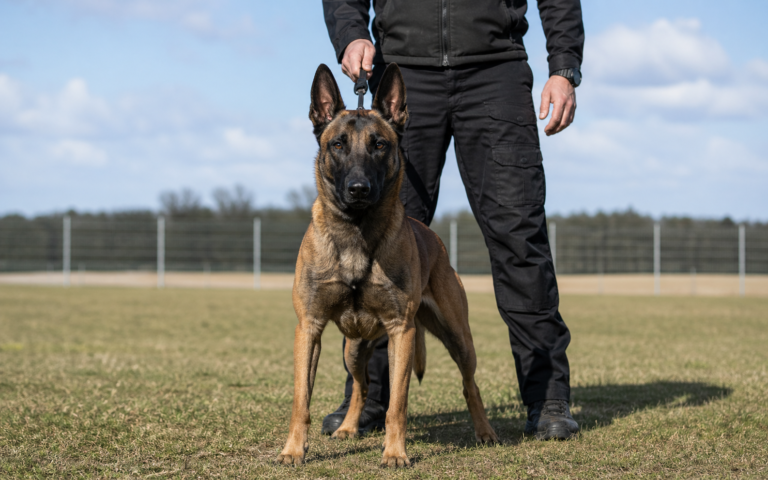
If you are weighing breeds, you may also find it useful to compare traits discussed here with the profile in our overview of the Belgian Malinois protection dog.
Common Misconceptions Debunked
“A big dog is enough to protect.”
Deterrence helps, but the difference between a scare and safety is control. A dog that cannot disengage on command is a liability. Selection and training are non-negotiable.
“Rottweilers are aggressive by default.”
The breed standard favors calm confidence. Poor breeding and lack of structure create problems. With selection for stable temperament and early socialization, you get a discerning guardian, not a bully.
“Protection means biting first, asking later.”
Real protection is judgment. Most events resolve with presence and posture. The trained dog escalates only under clear threat and de-escalates immediately when recalled.
“You can train any dog into a protector.”
Temperament has limits. You can build skills, not change the nervous system. Work with professionals to match a dog to your needs, then develop ability methodically.
Thinking through the myths and the must-haves? See the decision checklist in how to find the best protection dog.
How much space does a Rottweiler need at home
Rottweilers are powerful and athletic, yet they are surprisingly relaxed indoors when their brains and bodies are engaged. What they need is not a mansion, but smart routines and clear boundaries.
Size snapshot
Males commonly reach substantial size with a broad chest and strong bone. Females are typically a little lighter and more compact. Both need room to turn comfortably, rise without bumping furniture, and lie stretched out near family.
Space principles that matter more than square footage
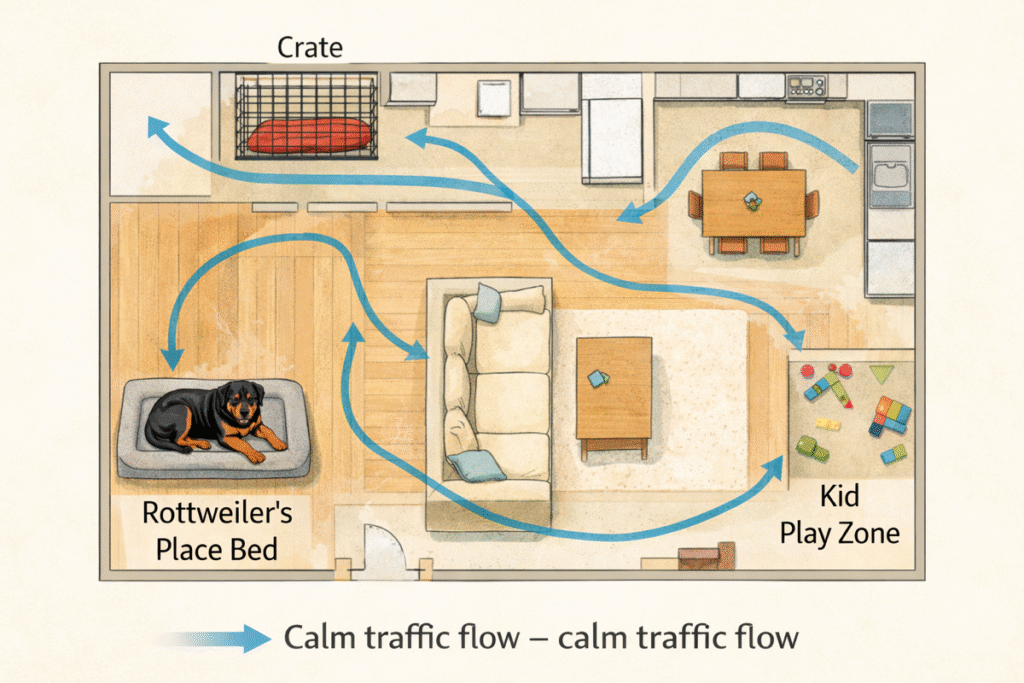
- Predictable zones: One sleeping spot, one “place” in the living room, one feeding area.
- Safe traffic: Walkways free of clutter to avoid frustration or collisions with kids.
- Outdoor access: A secure yard simplifies decompression but is not mandatory if exercise is structured.
- Noise neutrality: Exposure training around elevators, hallways, and city sounds reduces startle in apartments.
Space and Exercise Planner
| Living Setup | Indoor Plan | Outdoor Plan | Daily Target |
| Apartment | Place board in living room, crate or quiet bed in bedroom | 2 structured walks plus 1 sniff session | 90 to 120 minutes split into 3 blocks |
| Suburban yard | Inside settle zones, baby gates for kid playtime | Fenced play plus focused fetch or obedience | 60 to 90 minutes with training integrated |
| Rural property | House rules for doorways and greetings | Off-leash recall games in safe spaces | 60+ minutes plus task-based chores |
Enrichment that pays off
- Nosework games with hidden food pouches in safe rooms.
- Short tug sessions on cue with a clean release.
- Low-impact strength: controlled step-ups, balance pads, cavaletti rows.
- Mental puzzles: find-it, name-your-toy, simple retrieval chains.
Which Option Is Best For You
Choosing the right path depends on your family rhythm, property, and goals. Some households benefit from a fully trained adult with documented temperament tests. Others prefer a younger dog that will mature within your routines. Either way, build your plan around selection quality and handler coaching.
Best for busy families with young kids
A fully trained, stability-tested adult reduces the uncertainty of puppy adolescence. You gain immediate reliability with clear commands and can focus on integration.
Best for experienced handlers or calm households
A young prospect with excellent nerves lets you shape routines and deepen the bond over time, with the understanding that structure is essential during maturing months.
Best for homes with frequent visitors
Prioritize neutrality and a polished out on command. Plan guest protocols: crate or place before guests arrive, greet on cue, then release.
Start a conversation about which pathway fits your home, schedule, and expectations through contact us. If you are ready to evaluate specific candidates today, explore personal and family protection dogs for sale and align that shortlist with our K9 selection process.
Why The Rottweiler Works For Real Families
The breed’s core advantage is composure paired with loyalty. In a suburban routine, that means greeting you at the door, relaxing near the kids’ play area, and taking quiet cues during homework time. During an actual threat, the same dog stands tall, alerts, and follows your commands decisively. Few breeds bring that much capability in such a steady, family-friendly package.
Everyday proof points
- Predictable downtime after structured exercise.
- Calm companionship in shared spaces.
- The right kind of presence at the door, on the sidewalk, and in the yard.
For an at-home action plan, walk through home setup in how to prepare your home for a protection dog.
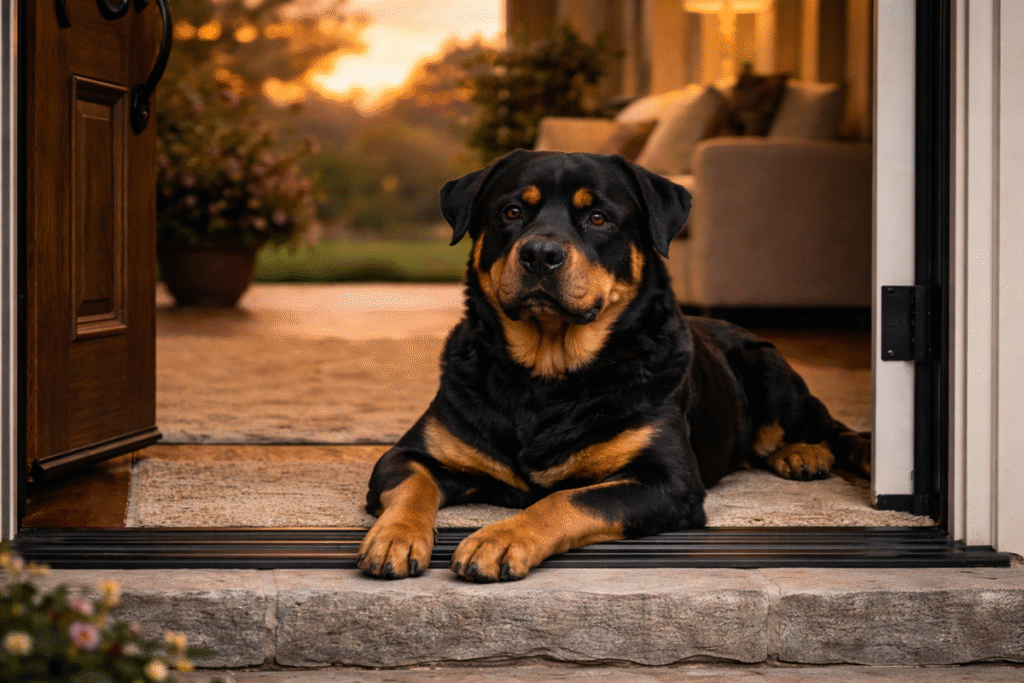
Final Thoughts on Choosing a Rottweiler Protection Dog
A Rottweiler protection dog is a serious commitment that delivers security, companionship, and family protection. With the right breeding, socialization, and structure, these intelligent, loyal guardians combine calm judgment with gentle behavior at home. Success comes from consistent training, daily exercise, thoughtful exposure, and full integration into family routines.
They aren’t yard ornaments; they’re partners whose protective strength grows from deep bonds. Whether you’re raising a puppy or choosing a professionally trained adult, Rottweilers deter threats by presence and respond reliably in true danger. For guidance and candidates, trust K9 Mania Dog Protection to match you with a family-ready guardian.
Looking for a reliable dog board and train in Long Island? K9 Mania offers customized training for puppies, reactive dogs, and aggressive dogs.
Ready to find your perfect protection companion? Contact us to discuss how a professionally trained Rottweiler protection dog can enhance your family’s security.
You may also want to read:
- Belgian Malinois Protection Dog: Complete Guide for Families and Security
- Rottweiler Protection Dog: Complete Guide to This Loyal Guardian
- Doberman Pinscher Protection Dog: What to Know
Frequently Asked Questions
Is a Rottweiler a good protection dog?
Yes, a well-bred and properly trained Rottweiler is one of the most dependable family-first protection choices. The combination of stable nerves, natural territoriality, and high trainability produces a guardian that deters threats without constant supervision. Households benefit from a dog that settles indoors, reads context at the door, and yields immediately to a recall. Selection quality and handler coaching are the keys to getting this result consistently.
Why are Rottweilers used as guard dogs?
Because they pair sound judgment with physical capability. Historically they protected property and livestock, which favored dogs that stayed calm until action was necessary. That temperament profile fits modern homes: confident posture at the fence, quiet observation in the yard, and fast obedience under pressure. The point is not indiscriminate aggression, but deterrence and control that you can manage every day.
What is the weakness of a Rottweiler?
The biggest risk is unmanaged arousal in under-socialized or poorly selected dogs. Strong genetics without structure can lead to pushy behavior or over-guarding. The solution is simple and proven: select for stable nerve, invest in obedience, and give daily outlets for energy and problem solving. Clear household rules around doorways, greetings, toys, and resting spots keep the dog predictable and relaxed.
What’s a better guard dog, a pitbull or a Rottweiler?
For most families seeking controllable protection, a well-selected Rottweiler is the more predictable choice. Many pit-type dogs were bred for different tasks and can be affectionate companions, but they may not offer the same blend of neutrality, territorial awareness, and trainability that makes the Rottweiler shine in structured protection roles. As always, success depends on selection and training quality more than breed labels.