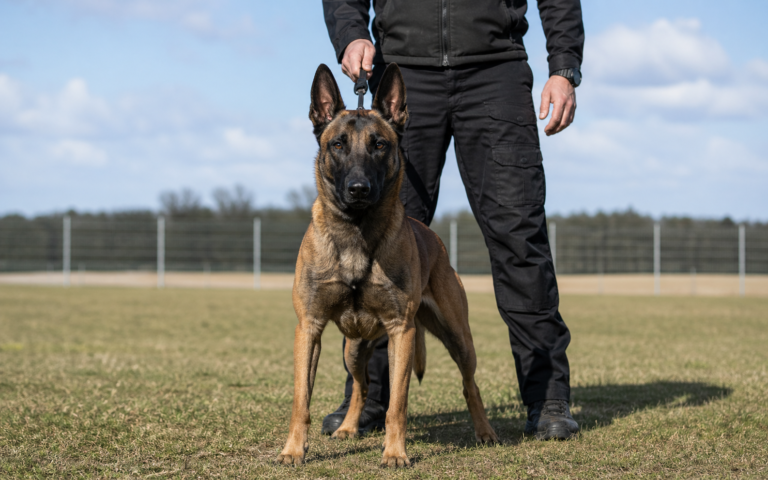
A Doberman Pinscher protection dog can be a dependable choice for personal and family security when properly selected and trained. Known for focus, loyalty, and responsiveness, the breed thrives with structured obedience, calm leadership, and professional guidance.
Doberman protection dogs are widely respected for close-range protection and strong handler awareness. Rather than acting on impulse, a well-trained Doberman Pinscher protection dog relies on alertness, judgment, and controlled response, making it well-suited for real homes.
This guide explains what makes a Doberman Pinscher an effective protection dog, how professional training shapes stable behavior, and what responsible ownership truly involves. You will learn how temperament testing, obedience foundations, and handler education work together to create reliability.
If you are ready to find your perfect guardian, browse our professionally trained personal and family protection dogs for sale at K9 Mania Protection Dogs, where selection standards, structured training, and long-term support are treated as essential, not optional.
Why Doberman Pinschers Stand Out As a Protection Dog
Dobermans were developed for personal defense and close work. They naturally remain near their handler, move quickly, and read human body language with unusual sensitivity. In daily life, that translates to quiet neutrality around family and decisive response when cued. Their athletic frame provides a strong visual deterrent that often prevents escalation before it begins.
The difference between a great guardian and a stressful roommate is structure. Clear rules, consistent markers, and progressive exposure turn alertness into judgment. When that foundation is set, the dog distinguishes everyday noise from true problems, then powers down as easily as it powers up.
Selection and Early Conditioning
Outcome begins with selection. Reputable programs screen for health, nerve stability, recovery speed, and social confidence. From puppyhood or young adulthood, candidates receive controlled exposure to doorbells, visitors, traffic, elevators, and children playing. Short daily obedience sets build focus. Calm recovery time prevents chronic arousal. This shaping yields a dog that settles quickly after excitement and listens when the room gets loud.
A simple litmus test during evaluation: does the dog check in with the handler after a surprise stimulus and then relax? That recovery is the temperament beacon you want.
Which Option Fits You: Pre-Trained or Custom
Choosing between a pre-trained or custom path depends on how quickly you need reliability and how complex your lifestyle and environment are. Both options can work well for a Doberman Pinscher protection dog when training depth and aftercare are clearly defined.
Pre-Trained Protection Dogs
A pre-trained protection dog offers immediate, proven reliability. You can observe obedience, heel work, recall, door routines, and controlled protection responses before placement, reducing uncertainty and allowing confident decision-making. This option works best for stable households with predictable schedules and clearly defined expectations.
Custom Protection Dogs
A custom-trained Doberman Pinscher requires more time but allows training to be built around your household rhythms, property layout, and daily routines. Homes with children, rotating schedules, frequent guests, or multiple handlers often benefit from custom programs because behaviors are installed in the environments where they must function consistently.
If you are new to working with protection dogs, prioritize programs that include structured handover sessions and scheduled follow-up support during the first year. Ongoing coaching helps turn trained behaviors into daily habits, ensuring your dog remains calm, controlled, and dependable in real-world situations.
For a deeper selection framework, see this guide on how to find the best protection dog to support confident decision-making.
Protection Roles Compared
| Role | Primary Goal | Typical Working Distance | Core Traits | Ideal User |
| Personal Guardian | Deter and defend a handler | Within arm’s reach | Handler focus, rapid acceleration, clean obedience | Individuals, executives |
| Family Home Guardian | Protect household and property | House and yard | Neutral with guests, boundary awareness, off-switch | Families, small estates |
| Travel Companion | Deter in transit and hotels | Close control in public | Quiet in elevators, reliable heel through crowds | Frequent travelers |
| Property Patrol | Deter along perimeter | Yard and outbuildings | Endurance, environmental confidence | Larger properties |
Dobermans excel in the first two roles due to their proximity work and quick response. With correct conditioning, they also adapt well to travel routines.
Training Architecture You Can Trust
Think staircase, not switch. Each step must be solid before you climb. The goal is automatic obedience, steady neutrality, and clean, controllable defense.
1. Foundation Obedience
- Name recognition, recall, sit, down, place, heel
- Marker system with clear yes, good, and no
- Release cue to end exercises so arousal doesn’t drift
2. Neutrality and Confidence
- Calm exposure to guests, kids, and delivery interactions
- Public neutrality on sidewalks and in stores
- Mat settled to install a strong off-switch
3. Targeted Protection Skills
- Alert on cue, bark on cue, quiet on cue
- Door and gate presence under the handler’s direction
- Decoy introduction and bite development for selected working candidates only
4. Handler Transfer and Maintenance
- Handover sessions that teach timing, leash language, and positioning
- Written routines matched to your weekly schedule
- Quarterly refreshers to prove behaviors as the dog matures
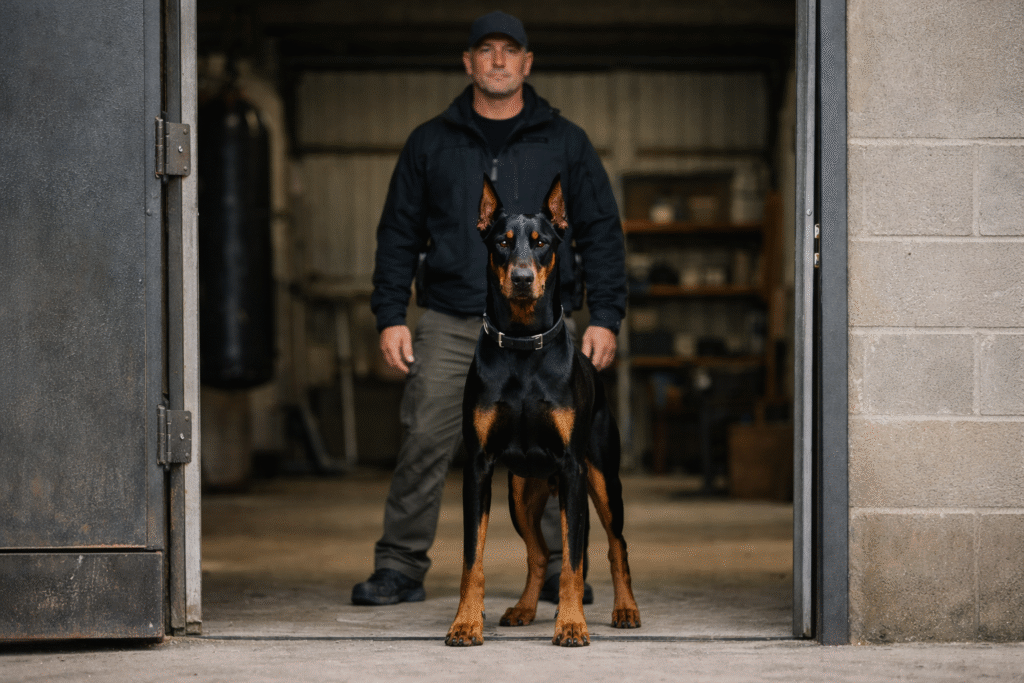
Practical Training Timeline
| Phase | Focus | Home Practice | Typical Duration |
| 1. Onboarding | Bonding, marker words, simple rules | 10-minute obedience circuits, crate comfort, leash manners | Weeks 1–2 |
| 2. Neutrality | Calm with visitors, kids, and delivery | Door routine, controlled greetings, mat relax | Weeks 3–6 |
| 3. Obedience Depth | Reliable recall and heel under distraction | Variable rewards, park drills, and short public sessions | Weeks 7–12 |
| 4. Protection Intro | Alert, bark, quiet; confidence on surfaces | Door presence, handler positioning, quiet on cue | Weeks 13–18 |
| 5. Controlled Engagement | Safe targeting under pro oversight | Threshold control, clean release, proofing | Ongoing with the trainer |
| 6. Maintenance | Refreshers, scenario practice, fitness | Monthly skills audit, health checks | Lifelong |
Routines That Keep Reliability High
A trained Doberman guardian thrives on predictability and clear daily structure. Mornings can include a short obedience session, a controlled sniff walk, and downtime while the household transitions into work or school. Evenings benefit from structured play, mat work near the family, and consistent feeding and rest periods that reinforce calm behavior.
When guests arrive, follow the same routine each time: place before the knock, quiet on cue, greet only after release. This consistency helps a Doberman Pinscher protection dog remain composed and prevents confusion in social situations.
Health and Conditioning
Reliable protection work depends on sound physical and mental conditioning. Maintain a lean body condition, keep nails trimmed for traction, and feed a balanced diet that supports joint and muscle health. Mental resilience is built through varied enrichment such as scent games, short problem-solving tasks, and indoor recall exercises.
Low-impact conditioning like hill walks and controlled fetch strengthens the core without stressing joints. Annual veterinary exams and activity-appropriate screenings help extend a Doberman’s working life.
Real-World Scenarios
A Doberman Pinscher protection dog performs best when training reflects the environment it encounters daily. Applying skills in real settings reinforces calm responses, situational awareness, and dependable control.
- City apartment: Emphasize elevator neutrality, quiet behavior in shared spaces, and steady heel work through narrow hallways. Parking garage sessions help reinforce focus and impulse control.
- Suburban family: Clear door routines and place commands during playdates prevent rushing. Backyard boundary games strengthen recall and reinforce respectful movement around children.
- Small estate: Combine perimeter walks with long-distance recall. Evening patrol routines should include controlled alerts at access points, followed by a clear release back into family mode.
For setup steps that make week one easier, learn how to prepare your home for a protection dog to establish routines, safety zones, and essential gear before your Doberman arrives.
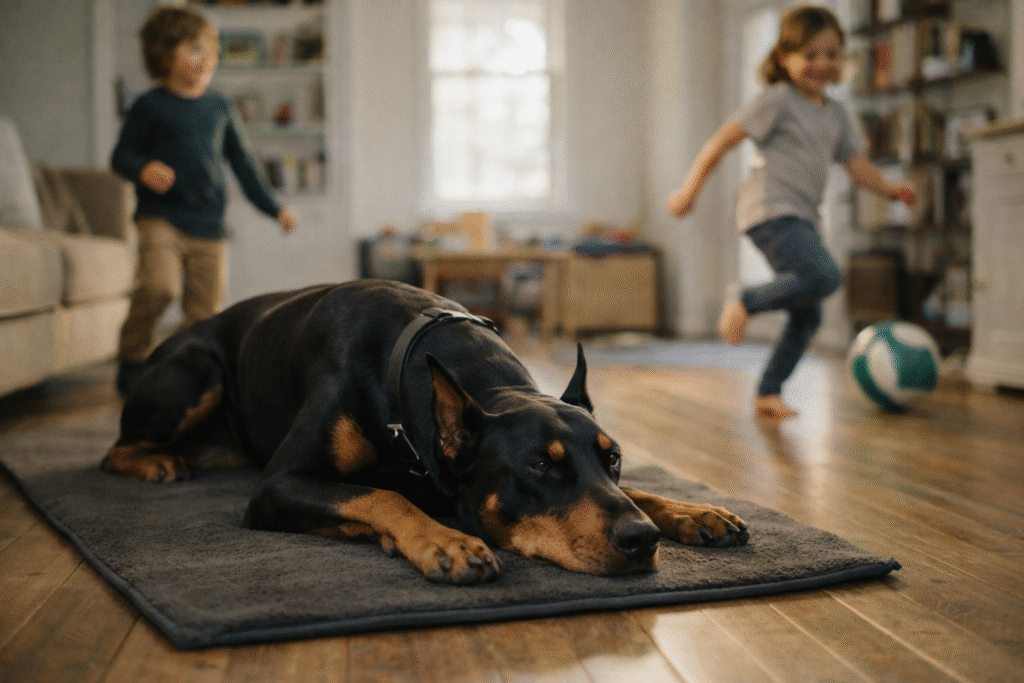
Budget and Lifetime Costs
The investment in a professionally trained Doberman reflects health screening, careful selection, and months of structured training. Ongoing costs include nutrition, veterinary care, insurance, and periodic refresher sessions. Additional tune-ups may be needed after moves, schedule changes, or family growth.
A practical approach is quarterly skill check-ins and one formal refresher each year to maintain reliability.
Safety, Legal, and Community Etiquette
A well-handled Doberman should remain a positive presence in the community. Use clear signage, follow leash laws, and keep vaccinations current. Neutral behavior toward passersby, responsiveness to quiet on cue, and tolerance of everyday noise protect neighbors and long-term success.
Selection Checklist You Can Use Today
Use this three-part review when evaluating a Doberman Pinscher protection dog or training program:
- Stability: Recovers quickly after unexpected movement or sound
- Obedience: Reliable recall and heel under moderate distraction
- Control: Clean alert, clean quiet, and easy settling afterward
When all three appear consistently in demonstration, you’re likely evaluating a strong, responsible fit.
Handler Skills That Multiply Reliability
- Leash language: Keep pressure consistent and light. Practice pace changes so your dog shadows your movement.
- Timing with markers: Yes pays to make the precise choice quickly. Good keeps the dog engaged. No remains neutral to preserve confidence.
- Energy management: Balance focus sessions with decompression walks. Lower arousal equals clearer decisions.
- Scenario practice: Once per week, rehearse a simple door or parking script. End with quiet and a release to flush tension.
When To Choose Pre-Trained vs Custom
Choose pre-trained if you need predictable performance soon and prefer to observe skills up front. Choose custom if your schedule, property design, or travel patterns demand precise integration. Either path works when aftercare is strong. Ask programs to outline handover steps, support windows, and refreshers. If you plan to travel often, request airport and hotel neutrality as a specific training objective.
Final Thoughts on Choosing a Doberman Pinscher Protection Dog
A Doberman Pinscher protection dog is a serious, long-term commitment built on stable temperament, thoughtful selection, and progressive training. When bred and trained correctly, these alert, intelligent guardians combine close-handler loyalty with calm judgment, allowing them to integrate smoothly into everyday family life.
Success does not come from intensity alone. It comes from clear daily rules, consistent handling, regular refreshers, and realistic exposure to real-world environments. A well-prepared Doberman Pinscher protection dog is not reactive or restless at home, but relaxed, observant, and ready when genuine responsibility calls.
For guidance and candidates, trust K9 Mania Dog Protection to match you with a family-ready guardian. Ready to find your perfect protection companion? Contact us to discuss how a professionally trained Doberman Pinscher protection dog can enhance your family’s security.
Frequently Asked Questions
Are Doberman Pinschers good protection dogs?
Yes, Dobermans are excellent controlled deterrents when professionally trained. They combine speed, intelligence, and handler focus, which makes them fast to position and easy to de-escalate on cue. In daily life, that means confident door etiquette, secure escort from store to car, and reliable alerting without nuisance barking. Proper social proofing and neutrality work ensure they are safe around visitors and in public spaces.
Are Doberman Pinschers aggressive by nature?
No, good Dobermans are confident, not randomly aggressive. Breed temperament aims for stability and clear-headed responses. Undersocialized or poorly handled dogs of any breed can show reactivity. With structured routines, daily obedience refreshers, and calm leadership, Dobermans channel their drive into tasks you set for them. Select programs that emphasize neutrality and disengagement alongside alert and defense.
Are Doberman Pinschers good with families and children?
Yes, when raised and managed with structure, Dobermans bond closely with families. They thrive on predictable routines and love being part of daily activities. Teach kids simple rules: no leaning over the dog, invite with a sit first, and end interactions before the dog gets overstimulated. Many families report Dobermans choosing a “favorite person” while remaining affectionate and tolerant with everyone.
Can a Doberman Pinscher protection dog live in an apartment?
Yes, provided you meet exercise and mental work needs. Split activity into morning obedience walks, midday potty breaks, and evening training games. Teach a clean bark on command and an equally strong, quiet cue to avoid complaints. Elevators, stairwells, and lobby time become neutral classrooms. Many city handlers find Dobermans easier indoors than expected because they settle near their people.
Do Doberman Pinschers need professional protection training?
Yes, professional guidance is essential for safe, reliable behavior. Protection work requires precision, clear thresholds, and a dependable outlet. Programs should stack obedience, neutrality, and scenario proofing before bite mechanics. That sequence protects your liability and the dog’s welfare. After placement, schedule handler coaching refreshers to keep timing and cues sharp.