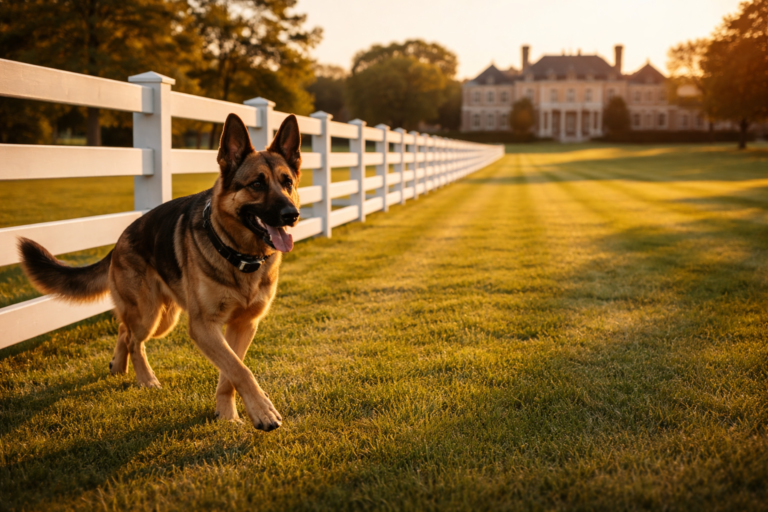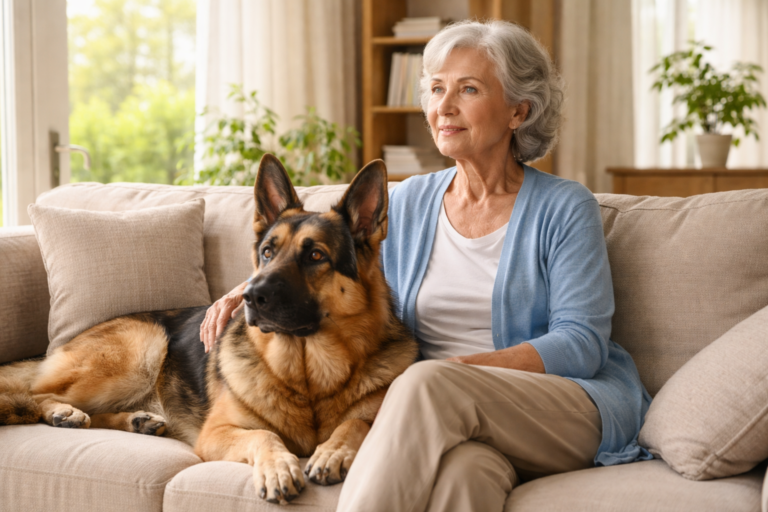
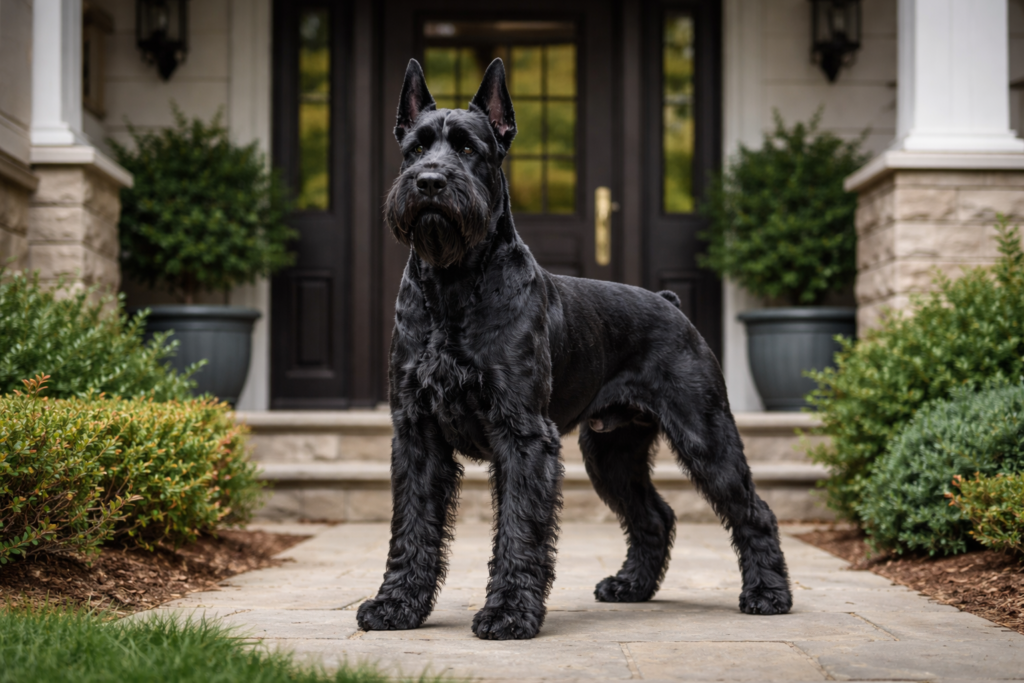
A Giant Schnauzer protection dog offers exceptional family security through their natural territorial instincts, high intelligence, and unwavering loyalty to their owners. These powerful dogs combine the alertness of a watchdog with the courage needed for active protection work.
If you’re considering a protection dog for your family, the Giant Schnauzer brings unique qualities that set them apart from other guardian breeds. Their impressive size, trainability, and devotion make them excellent candidates for protection work while maintaining the temperament needed for family life.
This guide covers everything you need to know about Giant Schnauzers as protection dogs, from their natural abilities to training requirements and what makes them stand out among guardian breeds.
Ready to find your ideal guardian? Explore our custom protection dogs trained specifically for your family’s needs.
What Makes Giant Schnauzers Excellent Protection Dogs
Giant Schnauzers possess several natural traits that make them outstanding protection dogs. Understanding these qualities helps you decide if this breed matches your security needs.
Natural Guarding Instincts and Territorial Behavior
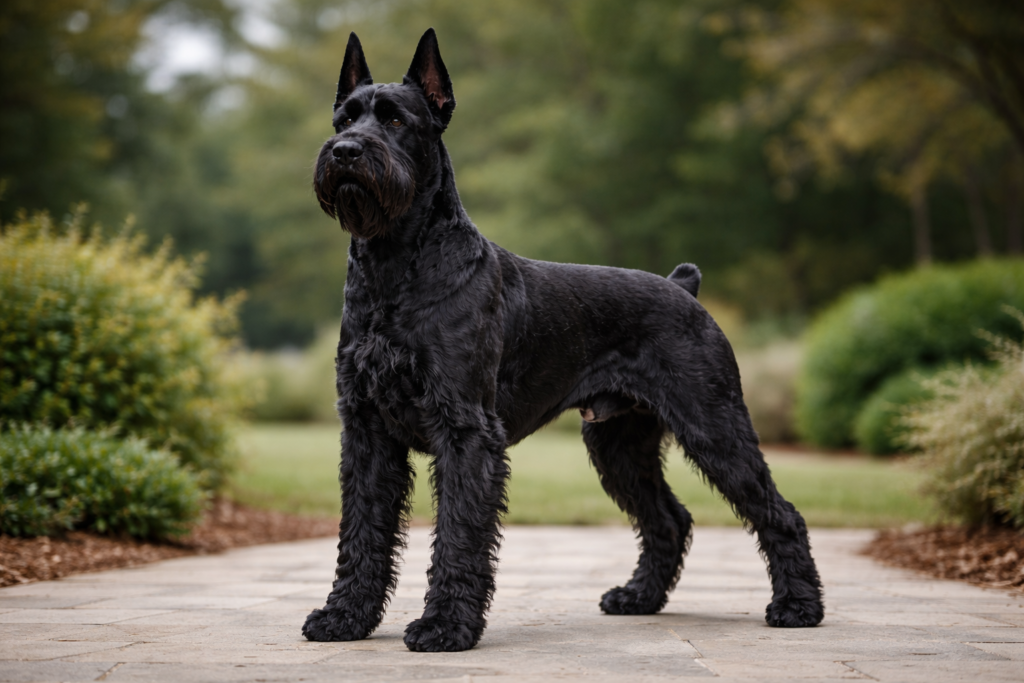
Giant Schnauzers were bred in Germany to guard livestock and property, and that heritage remains evident today. They are naturally territorial, alert, and often wary of strangers. Unlike breeds that require extensive training to develop protective tendencies, Giant Schnauzers instinctively monitor their environment, notice unusual activity, and alert their owners.
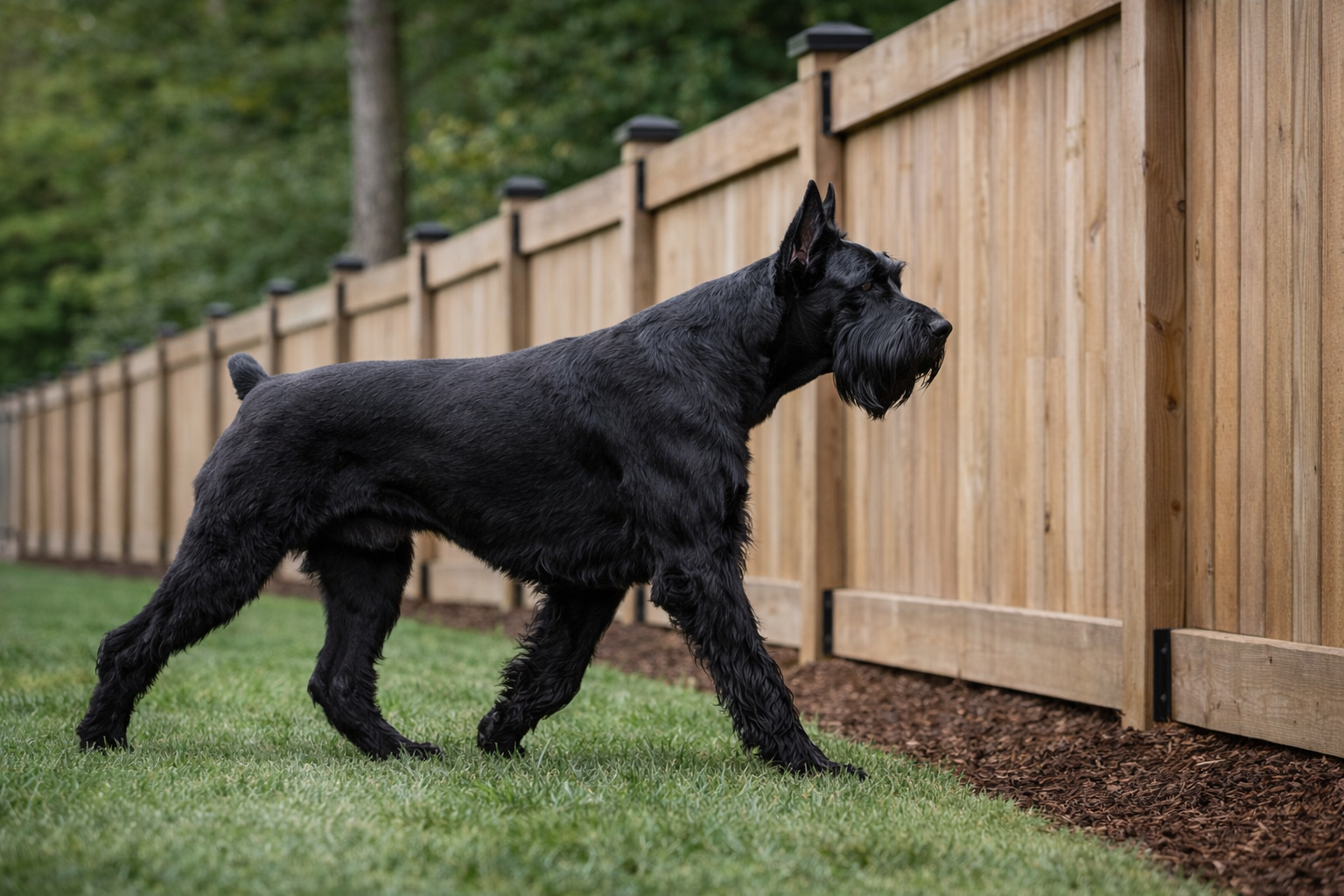
They frequently position themselves between their family and perceived threats. Their vigilant expression and attentive demeanor reflect a constant awareness, allowing them to detect subtle changes that other dogs may overlook.
Intelligence and Trainability for Protection Work
Giant Schnauzers are highly intelligent, which enhances their suitability for protection roles. They learn commands quickly, handle complex tasks well, and can assess situations with some independence. With proper training, they develop the ability to distinguish between normal social interactions and genuine threats.
Their intelligence also demands mental stimulation. Structured training helps channel their energy and prevents boredom-related behavioral issues. Consistent, firm guidance from experienced trainers typically produces the best outcomes.
Physical Capabilities and Deterrent Presence
This breed’s size, strength, and athleticism add to its deterrent value. Giant Schnauzers are muscular, agile, and capable of quick responses. Their confident stance and distinctive appearance alone can discourage potential intruders. Combined with endurance and mobility, these physical traits make them effective, imposing guardians for homes and property.
Giant Schnauzer vs Other Popular Protection Breeds
Comparing the Giant Schnauzer to other protection breeds helps you understand their unique strengths. Each breed brings different qualities to protection work, and the right choice depends on your specific situation and preferences.
| Breed | Size | Trainability | Family Compatibility | Best For |
| Giant Schnauzer | 55-85 lbs | Very High | Excellent with proper socialization | Active families wanting versatile protection |
| German Shepherd | 50-90 lbs | Very High | Excellent | Families seeking proven protection breed |
| Rottweiler | 80-135 lbs | High | Good with training | Properties needing maximum deterrence |
| Doberman Pinscher | 60-100 lbs | Very High | Excellent | Families wanting athletic, alert guardian |
| Belgian Malinois | 40-80 lbs | Very High | Moderate | Experienced handlers, high-activity homes |
Giant Schnauzers offer a balanced combination of trainability, family compatibility, and protection capability. Their versatility makes them suitable for various living situations, from suburban homes to rural properties.
Unlike some protection breeds that can be single-minded in their focus, Giant Schnauzers adapt well to family life. They switch easily between their role as family companion and vigilant guardian. This flexibility makes daily life more enjoyable while maintaining your security needs.
The breed’s grooming requirements set them apart from short-haired protection dogs. Their wiry double coat needs regular brushing and professional grooming every 6 to 8 weeks. While this adds maintenance, their coat sheds minimally compared to breeds like German Shepherds.
Learn more about what a protection dog does in daily family life and security situations.
Training Requirements for Giant Schnauzer Protection Dogs
Proper training transforms a Giant Schnauzer’s natural abilities into reliable protection skills. Understanding the training process helps you prepare for the commitment required to develop an effective guardian.
Essential Foundation Training
Basic obedience is the backbone of protection training. A Giant Schnauzer should reliably follow sit, stay, down, come, and heel before moving forward. This ensures control in any situation.
Socialization is just as important. Early exposure to different people, animals, and environments helps the dog tell the difference between normal events and real threats.
Begin training early, ideally between 8 and 16 weeks. Puppies learn quickly at this stage, and consistency is more valuable than long sessions.
Impulse control exercises are key. Teaching calm behavior around distractions builds the focus needed for protection work.
Specialized Protection Training Methods
Formal protection training usually starts at 18 to 24 months, once obedience and social skills are solid.
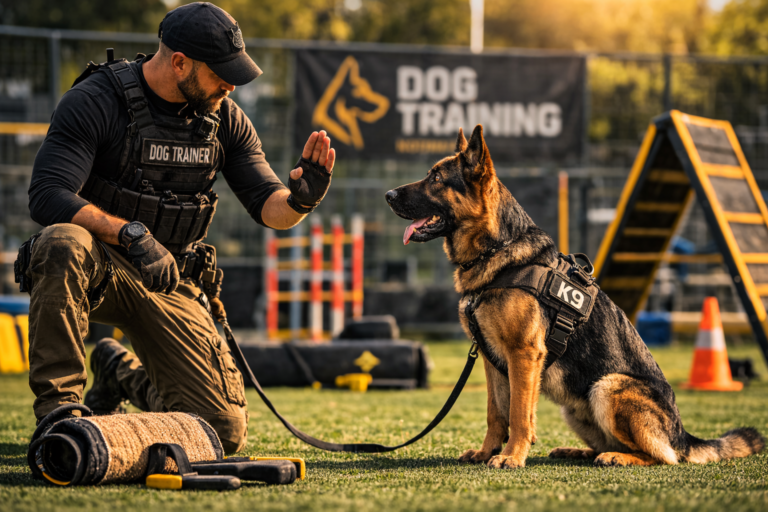
Bite work must be handled by professionals using proper equipment and controlled scenarios. Safety and precision are critical.
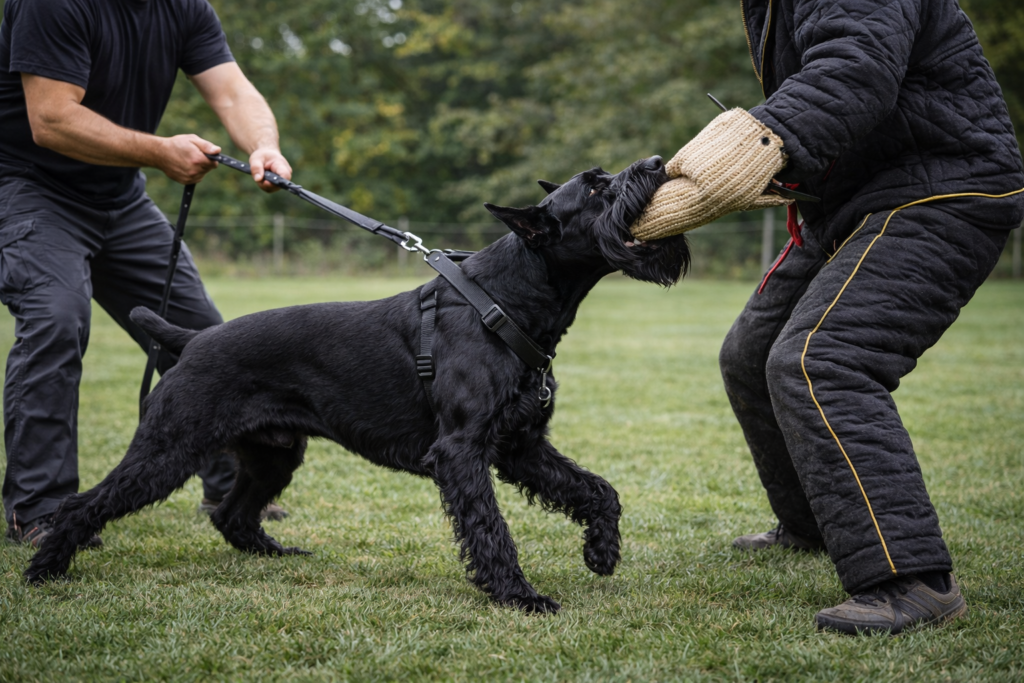
Alert and bark training teaches controlled responses on command, avoiding nuisance barking.
Scenario-based training prepares the dog for realistic situations while reinforcing handler control.
Protection skills require ongoing practice to stay sharp.
Training Timeline and Investment
Developing a protection-ready Giant Schnauzer typically takes 18 to 24 months.
Owners should expect several hours of weekly training plus daily reinforcement.
Costs vary widely. Basic programs may run a few thousand dollars, while advanced protection training can reach five figures.
Many families choose to purchase fully trained elite protection dogs rather than training from puppyhood. This option provides immediate security with a dog whose abilities have been proven and certified by professional trainers.
Living with a Giant Schnauzer Protection Dog
Daily life with a protection-trained Giant Schnauzer involves more than just security benefits. Understanding their needs and behaviors helps create a harmonious home while maintaining their protective capabilities.
Exercise and Mental Stimulation Needs
Giant Schnauzers require substantial daily exercise to maintain their physical fitness and mental health. Plan for at least 60 to 90 minutes of activity each day, including walks, runs, or play sessions. Their working heritage means they thrive on having jobs to do.
Mental exercise proves equally important for this intelligent breed. Puzzle toys, training sessions, and new challenges prevent boredom and associated behavioral problems. A mentally stimulated Giant Schnauzer makes a more reliable and responsive protection dog.
Activities like agility training, tracking exercises, or advanced obedience work provide both physical and mental engagement. These outlets channel their energy productively while strengthening your bond and reinforcing training.
Without adequate exercise and stimulation, Giant Schnauzers may develop unwanted behaviors like excessive barking, destructiveness, or hyperactivity. Meeting their activity needs keeps them balanced and focused on their protection duties.
Family Integration and Child Safety
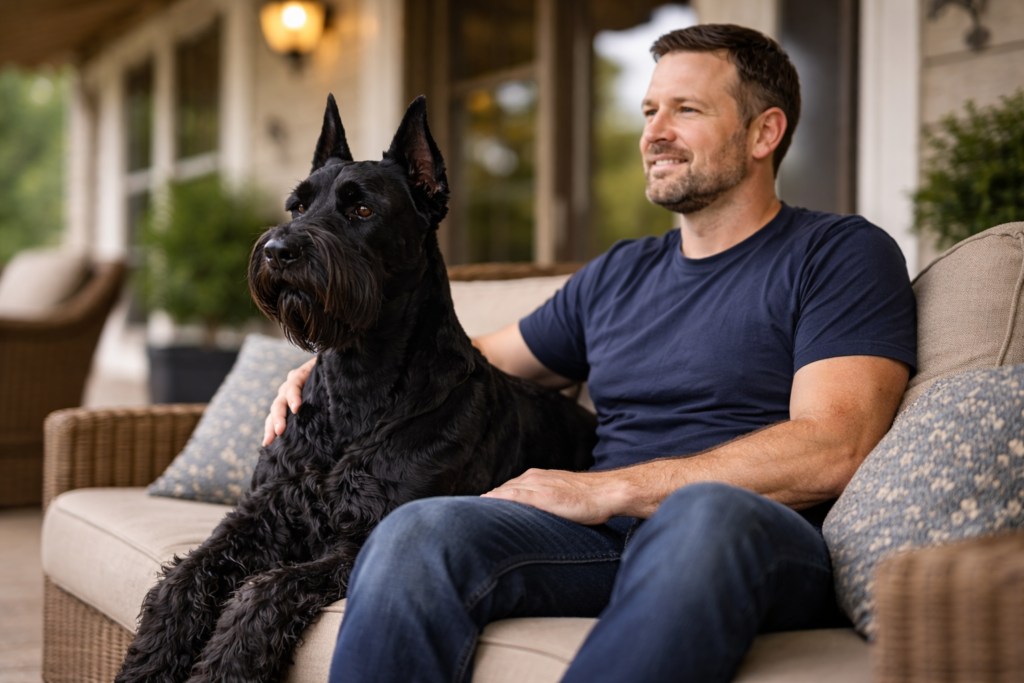
Properly trained Giant Schnauzers excel as family dogs while maintaining their protective role. They form strong bonds with all family members and naturally include children in their protective circle.
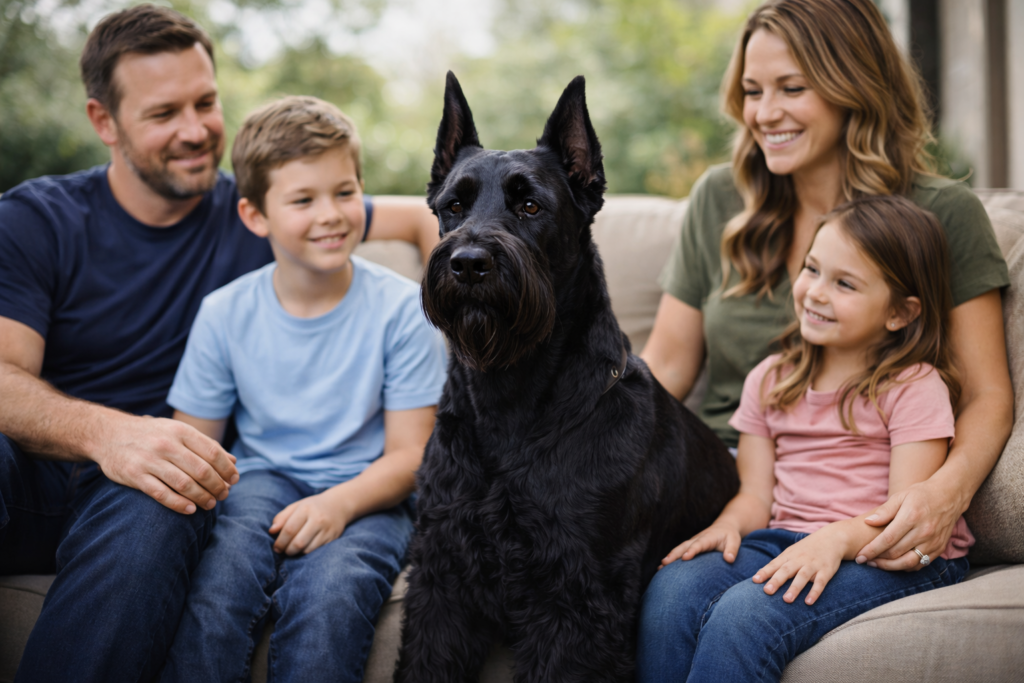
Introduce your Giant Schnauzer to children gradually and supervise all interactions, especially with young kids. Teach children to respect the dog’s space and treat them gently. Even the most patient dog has limits, and children need to learn appropriate behavior around dogs.
Giant Schnauzers can distinguish between rough play among family members and actual threats. Training helps them understand that children playing or arguing doesn’t require intervention. This discrimination ability makes them reliable around active, noisy households.
Establish clear rules about the dog’s role in family life. Everyone should understand that the dog responds to threats but remains under adult control. Children should never give protection commands or attempt to control the dog during security situations.
Prepare your space properly by following our guide on how to prepare your home for a protection dog before bringing your Giant Schnauzer home.
Managing Visitors and Social Situations
Training your Giant Schnauzer to accept approved visitors prevents awkward or dangerous situations. Use consistent introduction protocols where you greet visitors first and then allow the dog to approach after receiving your release command.
Some families designate a secure area where the dog stays during large gatherings or when unfamiliar people visit. This management strategy maintains security while giving guests comfort and preventing overwhelming situations for your dog.
Your Giant Schnauzer should learn to differentiate between announced visitors and unexpected intruders. Regular guests like mail carriers, lawn services, or friends should become familiar faces that don’t trigger protective responses.
Walking your protection dog in public requires attention and control. Keep them leashed and maintain awareness of your surroundings. A well-trained Giant Schnauzer remains calm and non-aggressive toward passersby while staying alert to actual threats.
Giant Schnauzer Protection Dog: Key Characteristics and Considerations
Understanding the full picture of Giant Schnauzer ownership helps you make an informed decision. These characteristics impact both their effectiveness as protection dogs and their fit with your lifestyle.
| Characteristic | Details | Impact on Protection Work |
| Lifespan | 12-15 years | Long-term commitment with sustained protection capability |
| Energy Level | Very High | Requires active owners; maintains alertness and responsiveness |
| Grooming | Moderate to High | Regular maintenance needed; professional grooming every 6-8 weeks |
| Health Issues | Hip dysplasia, eye problems, bloat | Regular vet care essential for working capability |
| Vocalization | Moderate to High | Excellent alert barking; training needed to prevent excessive noise |
| Climate Tolerance | Good in cold, moderate in heat | Works well in most climates with proper care |
| Living Space | Large yard preferred | Adaptable but needs room for exercise and patrol |
Health Considerations for Working Dogs
Giant Schnauzers generally enjoy good health, but protection work demands peak physical condition. Regular veterinary checkups catch potential issues before they affect your dog’s working ability.
Hip and elbow dysplasia can develop in large breeds, potentially limiting mobility and protection capabilities. Responsible breeders screen for these conditions, and maintaining a healthy weight reduces stress on joints.
Bloat poses a serious risk for deep-chested breeds like Giant Schnauzers. Feed smaller meals twice daily rather than one large meal, and avoid vigorous exercise immediately after eating. Recognizing early symptoms of bloat can save your dog’s life.
Eye conditions including cataracts and progressive retinal atrophy occur in some lines. Annual eye exams help detect problems early. Vision issues could compromise a protection dog’s effectiveness and quality of life.
The Loyalty Factor and Bond Formation
Giant Schnauzers form intensely loyal bonds with their families. This devotion drives their protective instincts and makes them willing to face threats on your behalf. The breed’s loyalty surpasses many other protection dog options.
This strong bonding tendency means separation anxiety can develop if the dog isn’t properly conditioned to alone time. Gradual training to accept your absence prevents destructive behaviors and maintains their stability as protection dogs.
Your Giant Schnauzer will likely choose a primary person within the family, though they protect all members equally. This primary bond strengthens their responsiveness to commands and enhances the working relationship between handler and dog.
Building trust through consistent, fair treatment and positive interactions strengthens your bond. A Giant Schnauzer who trusts their handler works more reliably and confidently in protection situations.
Discover the 10 reasons why dogs are good for protection and how Giant Schnauzers exemplify these benefits.
Choosing Your Giant Schnauzer Protection Dog
Selecting the right Giant Schnauzer for protection work requires careful consideration of several factors. Whether you start with a puppy or acquire a trained adult, making an informed choice sets the foundation for successful protection partnership.
Puppy Selection vs. Trained Adult Dogs
Starting with a Giant Schnauzer puppy allows you to shape their training from the beginning and build a strong bond as they mature. Look for puppies from proven working lines with parents demonstrating stable temperaments and protective instincts.
Evaluate puppy temperament through simple tests. Confident puppies that explore their environment, recover quickly from surprises, and show interest in people often develop into effective protection dogs. Avoid overly shy or excessively aggressive puppies.
Adult Giant Schnauzers with partial or complete protection training offer immediate security benefits. These dogs have proven temperaments and abilities, eliminating uncertainty about their development. However, they require time to bond with a new family and adjust to your home.
Purchasing personal family protection dogs from reputable trainers ensures you receive a dog with certified skills and stable temperament. These professionals match dogs to families based on lifestyle, experience level, and specific security needs.
Working with Professional Protection Dog Trainers
Professional trainers specializing in protection work bring expertise that ensures proper development of your dog’s abilities. They understand the fine balance between creating an effective guardian and maintaining a safe family companion.
Reputable trainers provide detailed information about their training methods, success rates, and follow-up support. They should encourage questions and help you understand what to expect at each training stage.
Ask about the trainer’s experience specifically with Giant Schnauzers. While protection training principles apply across breeds, understanding this breed’s unique characteristics improves training outcomes.
Quality protection dog programs include handler training where you learn to work with and maintain your dog’s skills. This education proves essential for long-term success and ensures you can confidently direct your dog in real situations.
Your Guardian Companion: Why Giant Schnauzers Excel at Protection
A giant schnauzer protection dog brings unmatched loyalty, intelligence, and natural guarding ability to your family’s security. Their versatility as both devoted companions and capable guardians makes them stand out among protection breeds.
The breed’s combination of physical capability, trainability, and family compatibility creates an ideal protection partner. Whether you need security for your home, family protection during outings, or peace of mind while traveling, a trained Giant Schnauzer provides reliable defense while enriching your daily life.
At K9 Mania Protection Dogs, we specialize in training and placing Giant Schnauzers and other elite breeds with families seeking reliable protection. Our comprehensive training programs develop each dog’s natural abilities while ensuring stable temperaments suitable for family environments. Contact us today to learn how we can match you with the perfect protection dog for your specific needs and lifestyle.
You May Also Want to Read
Cane Corso Protection Dog: Complete Guide
Rottweiler Protection Dog: Complete Guide to This Loyal Guardian
Belgian Malinois Protection Dog: Complete Guide for Families and Security
Frequently Asked Questions
Are Giant Schnauzers good guard dogs?
Yes, Giant Schnauzers make excellent guard dogs due to their natural territorial instincts, intelligence, and loyal temperament. They instinctively monitor their property and alert owners to potential threats. Their imposing size and protective nature effectively deter intruders while their trainability allows them to distinguish between normal visitors and genuine dangers.
Would a Giant Schnauzer protect you?
Giant Schnauzers will protect their owners when they perceive a genuine threat. Their strong bond with family members drives their protective instincts, and they often position themselves between their people and potential dangers. With proper protection training, they learn to respond appropriately to threats while remaining under your control and avoiding unnecessary aggression.
Do Giant Schnauzers protect their owners?
Giant Schnauzers naturally protect their owners as part of their breed heritage. They form intensely loyal bonds with their families and view protecting them as their primary responsibility. This protective instinct can be refined through training to ensure controlled, appropriate responses to threats while maintaining their role as loving family companions.
Are Giant Schnauzers used as police dogs?
Giant Schnauzers have been used as police and military dogs, particularly in Europe where the breed originated. Their intelligence, trainability, and physical capabilities make them suitable for law enforcement work. However, they are less commonly used than German Shepherds or Belgian Malinois in modern American police forces, though they remain capable of performing these duties.
What is the #1 most protective dog?
No single breed ranks definitively as the most protective, as different breeds excel in various aspects of protection work. German Shepherds, Rottweilers, Doberman Pinschers, and Giant Schnauzers all rank among the top protection breeds. The best choice depends on your specific needs, living situation, and experience with dogs. Giant Schnauzers offer an excellent balance of protection ability and family compatibility.
Do Giant Schnauzers have a prey drive?
Giant Schnauzers possess a moderate prey drive stemming from their original purpose as farm dogs who controlled vermin and livestock. This drive can manifest as chasing small animals or toys. Proper training and socialization help manage this instinct, ensuring it doesn’t interfere with their protection work or create problems with other pets in the household.