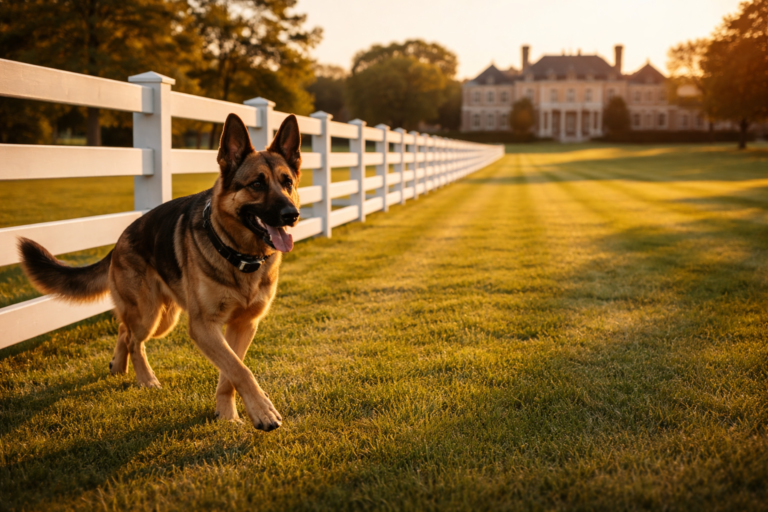
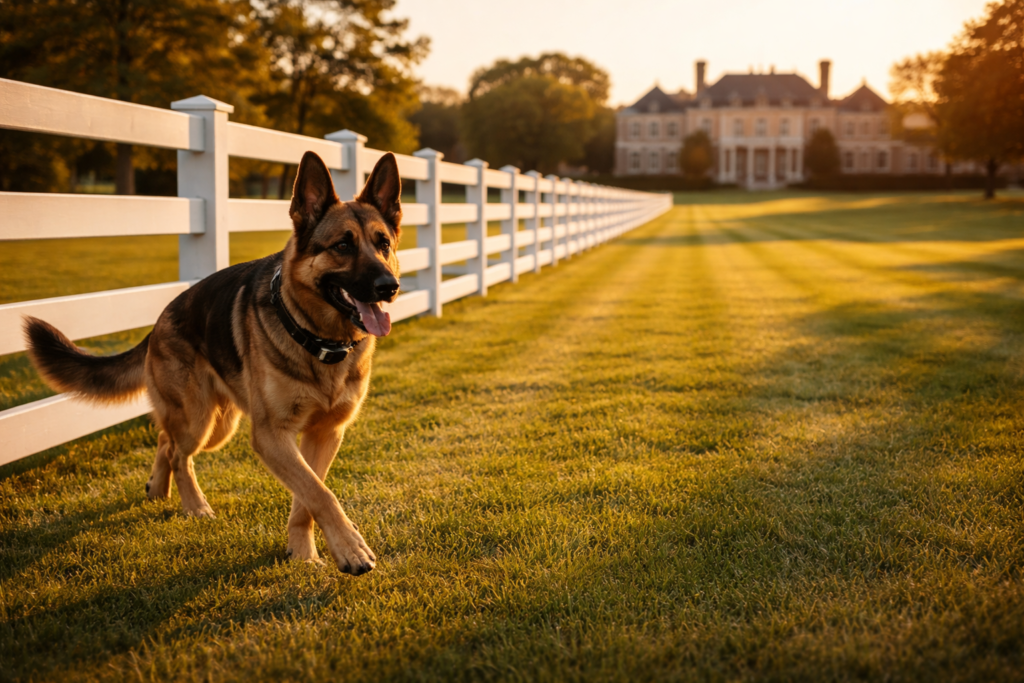
A protection dog for estate property is a professionally trained canine that guards large residential areas, patrols grounds, and responds to security threats with controlled aggression when necessary. These dogs combine natural protective instincts with specialized training to monitor perimeters, detect intruders, and keep your family and assets safe across sprawling properties where traditional security systems may fall short.
If you own multiple acres, have privacy concerns, or want a living security system that also serves as a loyal companion, you’re in the right place. Estate properties face unique security challenges that standard guard dogs or alarm systems can’t always address.
In this guide, you’ll discover what makes a protection dog for estate property different from regular pets, which breeds excel at this role, and how to choose the right dog for your specific needs.
Looking for professionally trained canines ready to defend your property? Explore our custom protection dogs tailored to your estate’s unique security requirements.
What Makes Estate Property Security Different
Large estates present security challenges that smaller homes don’t face. The size alone creates blind spots, extended perimeters, and areas that are difficult to monitor with cameras or alarms.
Unique Vulnerabilities of Large Properties
Estate properties typically span several acres with multiple access points, guest houses, barns, and wooded areas. Intruders can approach from various angles, and response times from law enforcement or private security can be longer in rural or secluded locations.
Traditional security systems work well for entry points like doors and windows, but they struggle with open land. Motion sensors trigger false alarms from wildlife, and cameras only record what happens—they don’t prevent or respond to threats in real time.
A protection dog for estate property fills these gaps by actively patrolling the grounds, using their superior senses to detect threats long before humans or technology would notice. Dogs hear frequencies we can’t, smell scents from far distances, and sense changes in their environment that signal danger.
Why Traditional Security Isn’t Enough
Alarm systems require electricity and internet connections, both of which can be cut or disabled. Security cameras record evidence but don’t stop crimes in progress. Human security guards are expensive for 24/7 coverage and can’t patrol every corner of a large estate simultaneously.
Protection dogs don’t need power, can’t be hacked, and work around the clock without breaks. Their mere presence acts as a psychological deterrent—most criminals avoid properties with trained guard dogs because the risk is too high.
Unlike passive security measures, dogs actively investigate suspicious activity. They’ll alert you to unusual sounds, unfamiliar people, or animals approaching your property lines. This early warning system gives you time to assess the situation and respond appropriately.
What Is a Protection Dog for Estate Property
A protection dog for estate property is more than just a large breed that barks at strangers. These dogs receive months of specialized training to perform specific security tasks while remaining safe around family members and authorized guests.
Professional Training vs. Regular Guard Dogs
Regular guard dogs rely on natural territorial instincts and may bark, growl, or act aggressively toward anyone they perceive as a threat. This unpredictability creates liability issues and makes them unsuitable for properties with staff, visitors, or children.
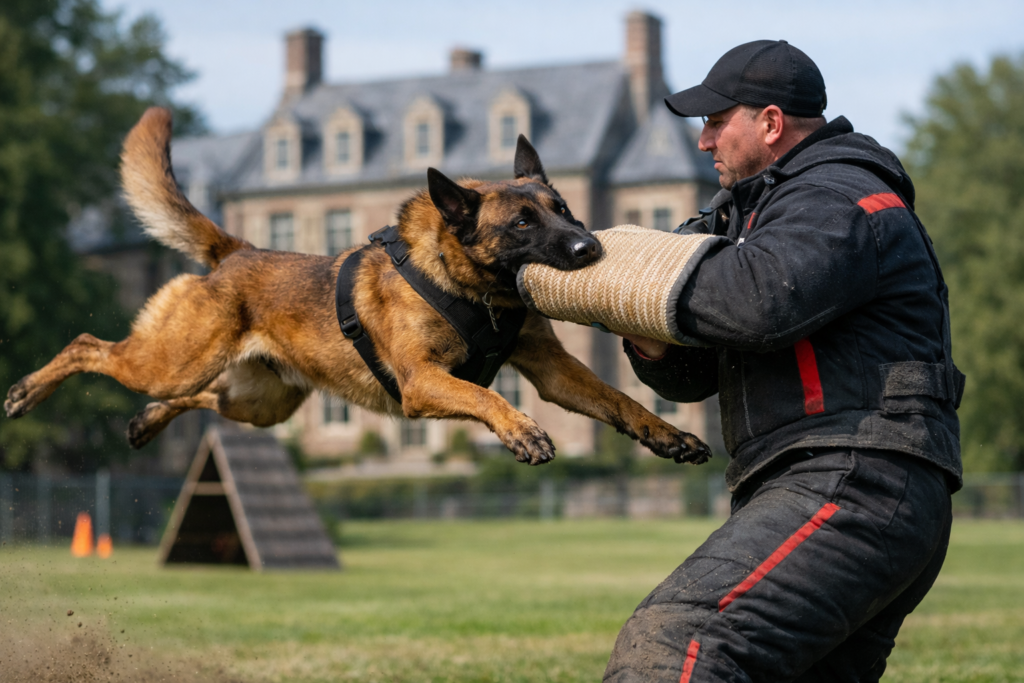
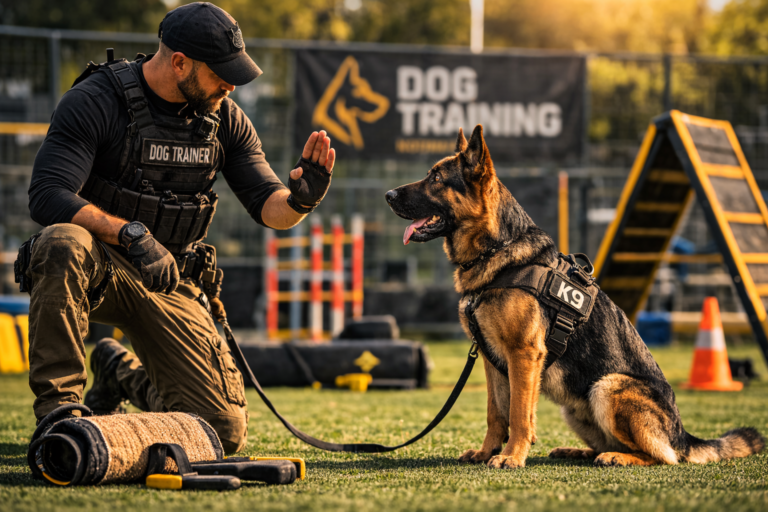
Protection dogs undergo rigorous obedience training first, learning to follow commands reliably in all situations. They’re then taught controlled aggression—how to recognize genuine threats, when to bark as a warning, when to hold ground, and when to engage physically if commanded.
This training includes bite work, perimeter patrol, property sweeps, and distinguishing between normal activity (delivery drivers, maintenance workers) and actual security threats. The best elite protection dogs can switch between friendly companion mode and protective mode based on your commands and the situation.
Key Traits of Estate Protection Dogs
Estate protection dogs need specific characteristics beyond basic guard instincts:
- Territorial awareness: Understanding property boundaries and patrolling them consistently
- Environmental soundness: Not reacting to normal ranch animals, wildlife, or equipment noise
- High trainability: Following complex commands even with distractions
- Physical stamina: Covering large areas daily without fatigue
- Social stability: Distinguishing between threats and authorized people
- Weather tolerance: Working effectively in rain, snow, heat, and cold
These dogs should be confident but not aggressive, alert but not anxious. They need the physical size and strength to deter intruders while possessing the temperament to coexist peacefully with your household when off duty.
Searching for a loyal defender for your family and property? Browse our personal family protection dogs bred for both security and companionship.
Best Dog Breeds for Estate Property Protection
Not all protection breeds suit estate work. The ideal candidate combines size, intelligence, endurance, and trainability with a natural instinct to patrol and protect territory.
Top Breeds for Large Property Security
Here’s how the most popular estate protection breeds compare:
| Breed | Size | Energy Level | Best For | Training Difficulty |
| German Shepherd | 65-90 lbs | High | All-around estate work, versatile | Moderate |
| Belgian Malinois | 55-75 lbs | Very High | Active patrol, quick response | Advanced |
| Rottweiler | 95-135 lbs | Moderate-High | Perimeter defense, intimidation | Moderate |
| Doberman Pinscher | 70-100 lbs | High | Speed patrol, alert systems | Moderate |
| Giant Schnauzer | 65-90 lbs | High | Weather-resistant patrol | Moderate-Advanced |
| Cane Corso | 95-110 lbs | Moderate | Guarding fixed points, property borders | Moderate |
German Shepherds remain the most popular choice because they excel in both patrol work and family integration. Their intelligence, loyalty, and trainability make them suitable for first-time protection dog owners who have large properties.
Belgian Malinois offer superior athleticism and drive, perfect for estates needing high-energy patrol dogs that cover ground quickly. However, they require experienced handlers and substantial daily exercise beyond security work.
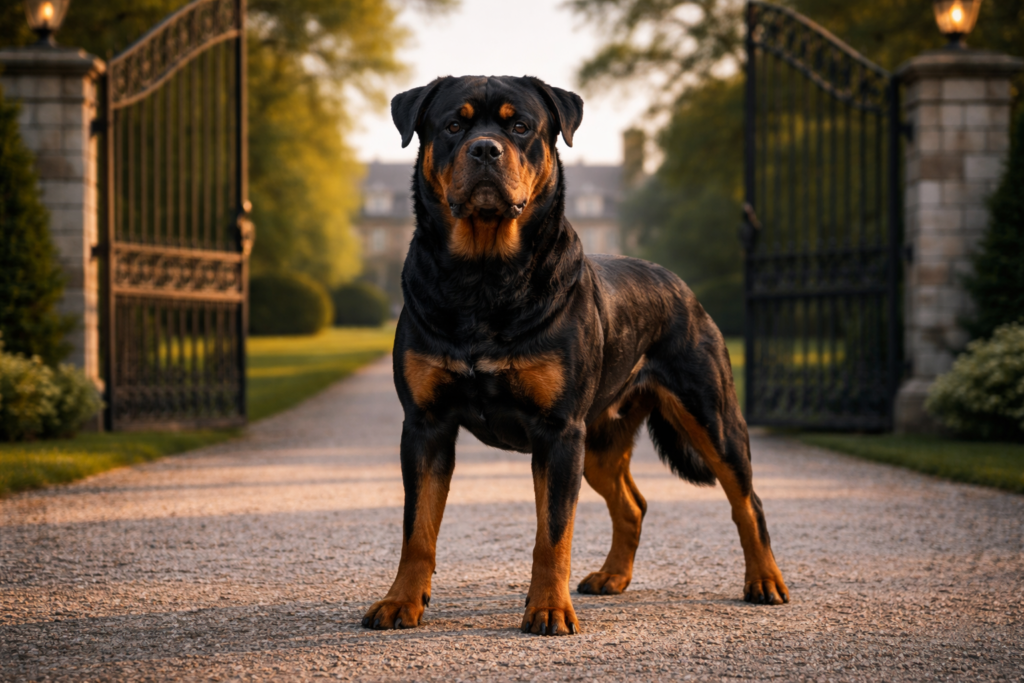
Rottweilers and Cane Corsos provide maximum intimidation and physical strength for deterring even determined intruders. Their imposing presence alone prevents most security incidents, but they need firm, consistent training from experienced handlers.
Size and Physical Requirements
Estate protection dogs need enough size to deter adults but not so much mass that they tire quickly or develop joint problems from constant patrol. The sweet spot is typically 65-110 pounds.
Dogs in this range can cover several acres daily, navigate varied terrain, and physically intervene when necessary while remaining agile enough for quick direction changes and sustained pursuit if needed.
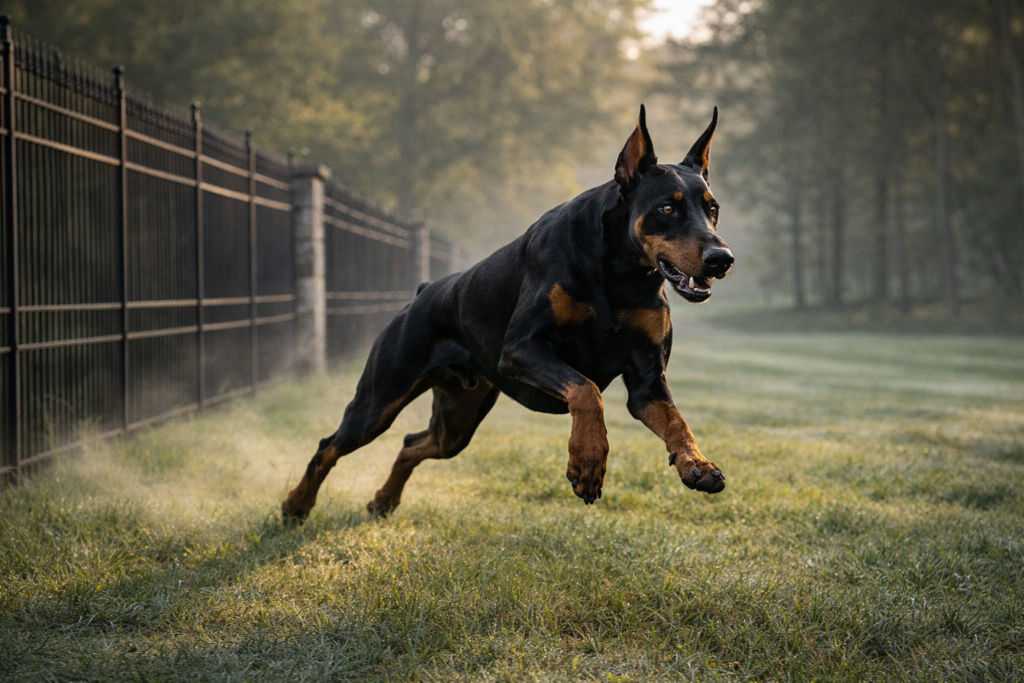
Weather resistance matters for outdoor patrol work. Double-coated breeds like German Shepherds and Giant Schnauzers handle cold and rain better than short-coated breeds. If your estate is in a warm climate, consider how breeds with heavy coats will manage summer temperatures during active patrols.
Training Levels and What They Mean
Protection dog training isn’t one-size-fits-all. Different properties need different security levels, and understanding training classifications helps you match the right dog to your specific situation.
Understanding Protection Dog Classifications
| Level | Training Focus | Typical Cost | Best For | Capabilities |
| Level 1 (Basic) | Obedience, alert barking, deterrence | $5,000-$15,000 | Rural estates, basic security needs | Controlled barking, boundary awareness, basic commands |
| Level 2 (Intermediate) | Controlled aggression, threat assessment | $15,000-$35,000 | Suburban estates, moderate security | Bite work, hold commands, escort protection |
| Level 3 (Advanced) | Full engagement, multiple threats | $35,000-$75,000+ | High-value estates, serious security | Multiple attacker scenarios, handler protection, advanced tactics |
Level 1 dogs provide visible deterrence and early warning systems. They bark on command, patrol designated areas, and make their presence known to discourage casual intruders or trespassers.
Level 2 dogs add bite work and controlled aggression to their skill set. They can physically engage threats when commanded and hold suspects without causing unnecessary harm. These dogs understand the difference between warning and engaging.
Level 3 dogs represent the highest training tier, capable of protecting handlers during violent encounters, responding to multiple simultaneous threats, and making independent decisions in complex security situations. Learn more about selecting the right level by reading our guide on how to find the best protection dog.
Matching Training Level to Property Needs
Your estate’s security requirements determine which training level makes sense. Consider these factors:
Property isolation: Remote estates with long law enforcement response times benefit from Level 2 or 3 dogs that can handle threats independently until help arrives.
Threat level: If you’ve experienced previous security incidents, have high-value assets, or face credible threats, invest in higher-level training.
Staff and visitors: Properties with frequent authorized guests need dogs trained in stranger discrimination—distinguishing between welcome visitors and actual threats.
Budget: Higher training levels require more time, specialized trainers, and ongoing maintenance training, which affects both purchase price and lifetime costs.
Most estate owners find Level 2 training offers the best balance of security capability and practical household integration. These dogs can patrol independently, respond to commands reliably, and engage threats when necessary without being overly aggressive in daily life.
Integrating Protection Dogs Into Estate Life
Successfully deploying a protection dog for estate property means more than just releasing them onto your land. Proper integration ensures they work effectively while fitting into your household routine.
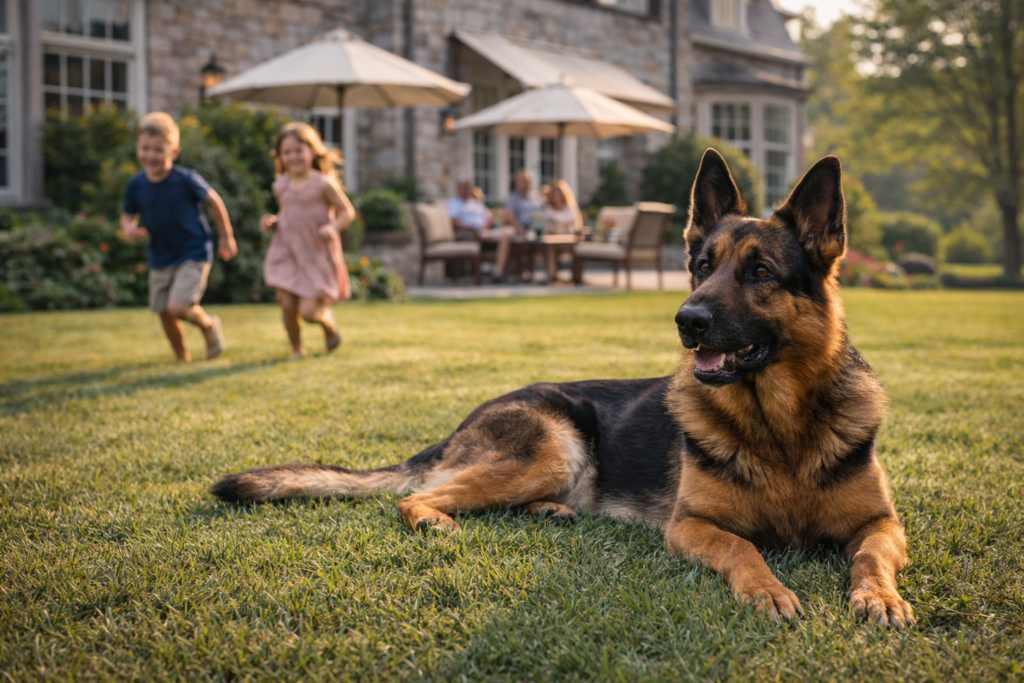
Daily Routines and Patrol Schedules
Protection dogs need structure even when performing security work. Establish consistent patrol times so the dog learns when to be most alert and when to relax with the family.
Morning patrols typically happen after the dog’s first meal and exercise. This clears the property of overnight activity, checks fence lines, and establishes the day’s security baseline.
Evening patrols occur before dark when transitional lighting makes properties more vulnerable. The dog checks access points, investigates any changes since morning, and settles into overnight watchfulness.
Overnight, many estate dogs sleep in positions where they can hear and see primary access points. Some owners use multiple dogs to rotate active patrol and rest periods, ensuring 24/7 coverage without exhausting individual animals.
Working With Staff and Family Members
Everyone who regularly interacts with your property must understand how to behave around the protection dog. This includes landscapers, housekeepers, contractors, and delivery personnel.
Create a formal introduction process for regular staff. The dog’s handler should present new people properly, using commands that signal these individuals are authorized. Most protection dogs learn to recognize regular staff by sight and scent after proper introductions.
Family members, especially children, need clear rules about the dog’s working behavior versus off-duty behavior. When the dog is actively patrolling or responding to alerts, family should avoid interfering unless there’s an emergency.
Set boundaries for when the dog is in protection mode versus family companion mode. Many handlers use specific collars or commands to signal mode changes, helping the dog understand when to relax and when to maintain vigilance.
Want to understand the full benefits of canine security? Read our article on why dogs are good for protection and how they outperform traditional security systems.
Practical Considerations for Estate Owners
Beyond choosing and training the right dog, successful estate protection requires planning for daily care, legal compliance, and long-term costs.
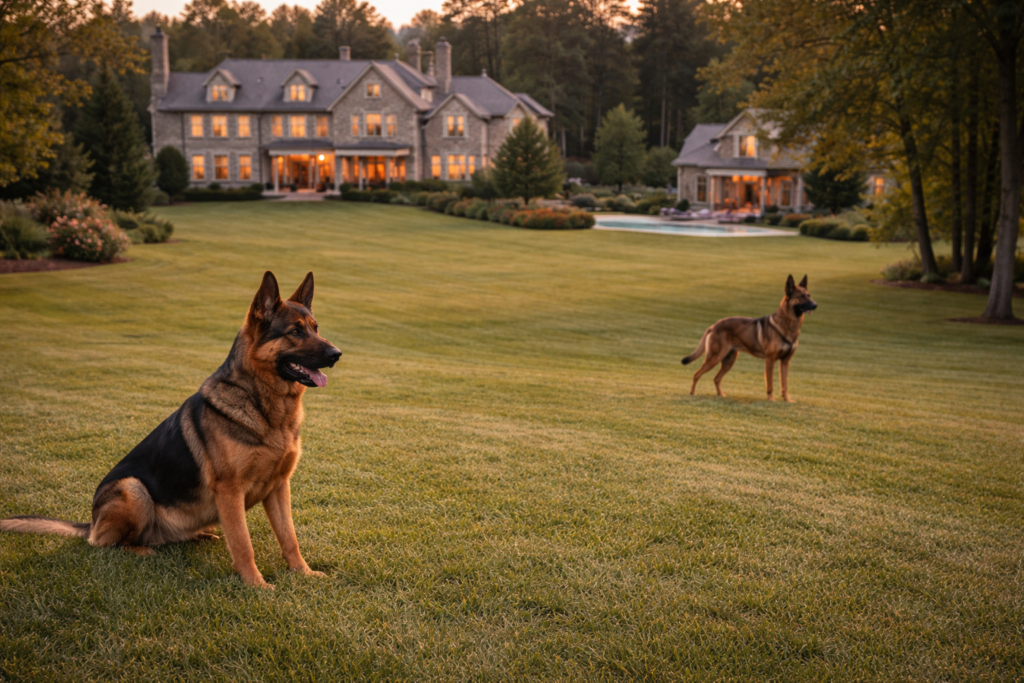
Housing and Facilities
Protection dogs need appropriate shelter that allows them to rest comfortably while maintaining property awareness. Outdoor kennels should be insulated, weatherproof, and positioned where the dog can observe key areas.
Many estate owners build dual-purpose facilities—a comfortable indoor space for rest and family time, with easy access to outdoor patrol areas. This setup lets the dog transition between security work and household companionship.
Fencing matters more for defining patrol boundaries than containing the dog. Well-trained protection dogs won’t wander off property, but clear boundaries help them understand their territory and focus their protective instincts on the right areas.
Liability and Legal Requirements
Owning a protection dog carries legal responsibilities that vary by location. Check local laws regarding:
- Breed-specific legislation that might restrict certain breeds
- Liability insurance requirements for trained protection dogs
- Signage obligations warning visitors about guard dogs on property
- Bite incident reporting and quarantine procedures
Work with a lawyer familiar with premises liability to ensure your property insurance covers protection dog incidents. Some insurers exclude certain breeds or require additional riders for professionally trained guard dogs.
Post clear warning signs at all entry points indicating trained protection dogs patrol the property. This provides legal protection and serves as an additional deterrent to potential intruders.
Ongoing Training and Costs
Protection dog skills degrade without regular reinforcement. Budget for monthly or quarterly refresher training sessions with qualified trainers who can maintain and advance your dog’s capabilities.
Annual costs typically include:
- Refresher training sessions: $1,000-$3,000
- Premium dog food for athletic working dogs: $1,500-$2,500
- Veterinary care including joint health monitoring: $800-$1,500
- Equipment replacement (collars, leads, protective gear): $300-$600
These costs represent investments in maintaining your security asset. A well-maintained protection dog provides 8-12 years of reliable service, making the annual expenses reasonable compared to hiring human security personnel or installing extensive electronic systems.
Older estate protection dogs can transition into lighter security roles or full retirement as family companions. Planning for this transition ensures they receive appropriate care after their working years while you bring in younger dogs to maintain security coverage.
Securing Your Estate: Final Thoughts on Protection Dogs for Property Security
A protection dog for estate property represents one of the most effective security investments you can make for large residential properties. These professionally trained canines combine the deterrent effect of their presence with the active response capabilities that static security systems simply cannot match.
By choosing the right breed, investing in appropriate training levels, and properly integrating the dog into your estate’s daily operations, you create a living security system that adapts to changing situations, provides early threat detection, and responds decisively when needed. The key lies in understanding that these aren’t just pets—they’re highly trained security professionals that happen to also be loyal family companions.
When you’re ready to enhance your estate’s security with a professionally trained protection dog, K9 Mania Protection Dogs stands ready to help you find the perfect match. With extensive experience placing protection dogs on estates across the country, our team understands the unique challenges of large property security.
We offer customized training programs, breed selection guidance, and ongoing support to ensure your protection dog integrates seamlessly into your property while providing the highest level of security for your family and assets.
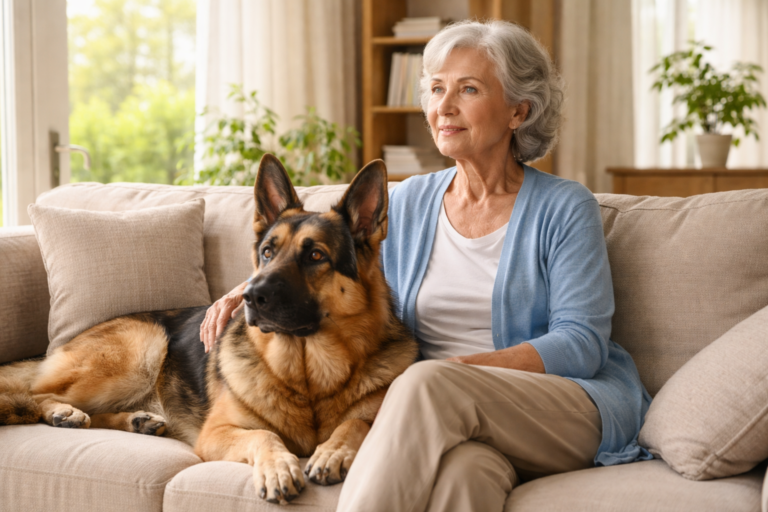
Interested in specialized protection for vulnerable family members? Discover our protection dogs for elderly individuals who need dedicated security and companionship.
Explore Related Articles
- Belgian Malinois vs German Shepherd
- Protection Dog Commands
- Best Guard Dogs for Women
- Protection Dog for Elderly
Frequently Asked Questions
What is the best dog for property protection?
The German Shepherd consistently ranks as the best dog for property protection due to its intelligence, trainability, and versatility across different estate sizes and climates. This breed combines strong protective instincts with excellent discrimination skills, allowing them to distinguish between normal activity and genuine threats. German Shepherds adapt well to both family environments and serious security work, maintain high energy levels for regular patrols, and possess the physical capabilities to deter or engage intruders when necessary.
What is an estate guardian dog?
An estate guardian dog is a professionally trained canine specifically prepared to protect large residential properties by patrolling grounds, monitoring perimeters, and responding to security threats. Unlike basic guard dogs that simply bark at intruders, estate guardian dogs receive extensive training in controlled aggression, threat assessment, and boundary awareness. They learn to differentiate between authorized personnel (family, staff, regular visitors) and potential threats while maintaining the stamina and environmental soundness needed to work effectively across large properties with varied terrain and weather conditions.
Which dog is best for home protection?
For traditional home protection on smaller residential properties, Doberman Pinschers and Rottweilers excel due to their strong territorial instincts, natural alertness, and intimidating presence that deters most intruders. However, for estate-sized properties exceeding several acres, German Shepherds and Belgian Malinois prove more effective because they combine protection capabilities with the endurance needed to patrol large areas daily. The “best” choice depends on property size, family composition, and specific security needs rather than a single universal answer.
What is a level 3 protection dog?
A level 3 protection dog represents the highest tier of professional protection training, capable of engaging multiple attackers, protecting handlers during violent encounters, and making independent security decisions in complex situations. These dogs complete 12-18 months of intensive training beyond basic obedience, learning advanced bite work, threat escalation responses, and tactical scenarios that prepare them for serious security situations. Level 3 dogs typically cost $35,000-$75,000 or more and are recommended for high-value estates, individuals facing credible threats, or properties requiring maximum security capabilities.
What are the top five protection dogs?
The top five protection dogs for estate work are German Shepherds (most versatile and trainable), Belgian Malinois (highest energy and patrol drive), Rottweilers (maximum deterrence and strength), Doberman Pinschers (speed and alertness), and Cane Corsos (imposing presence and boundary guarding). Each breed offers distinct advantages—German Shepherds provide the best all-around balance for first-time protection dog owners, while Belgian Malinois suit experienced handlers needing high-performance patrol dogs. Rottweilers and Cane Corsos excel at fixed-point security and intimidation, and Dobermans offer exceptional speed for quickly covering large properties.
How much property can one protection dog effectively patrol?
One protection dog can effectively patrol and secure approximately 5-10 acres depending on terrain, property layout, and the dog’s breed and conditioning. German Shepherds and Belgian Malinois typically handle larger areas due to their endurance and speed, while heavier breeds like Rottweilers work better on smaller properties or specific zones. For estates exceeding 10 acres, consider deploying multiple dogs working different sections or shifts, using relay systems where dogs alternate active patrol and rest periods to maintain 24/7 coverage without exhausting individual animals.