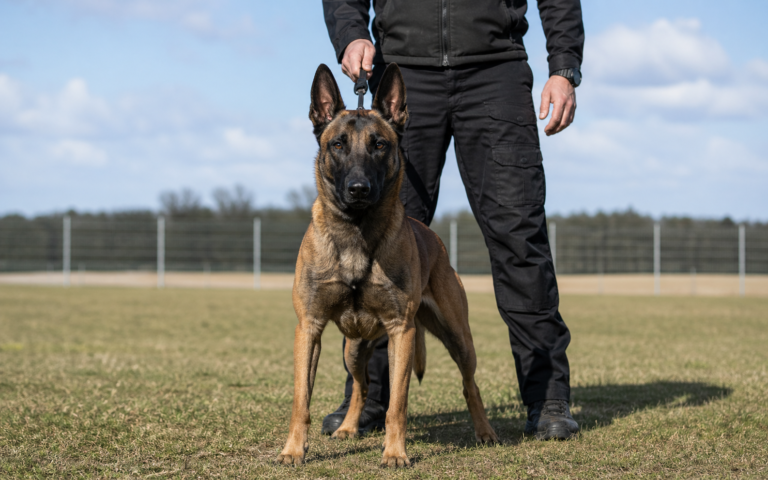
A german shepherd protection dog is one of the most effective choices for personal and family security, combining natural protective instincts with exceptional trainability and unwavering loyalty. These intelligent canines excel at threat detection, deterrence, and defensive action when properly trained by professionals.
German Shepherds have served in military, police, and protection roles for over a century because they possess the perfect blend of physical capability, mental sharpness, and devotion to their handlers. When you’re considering a protection dog for your family or property, understanding what makes German Shepherds exceptional can help you make the right choice.
In this guide, we’ll explore why German Shepherds dominate the protection dog world, what training they need, and how to choose the right one for your specific security needs.
Why German Shepherds Excel as Protection Dogs
German Shepherds consistently rank as the top choice for protection work across professional and family settings. Their combination of physical attributes, mental capabilities, and temperament creates the ideal foundation for protection training.
Natural Protective Instincts and Temperament
German Shepherds were originally bred to guard and protect livestock, which means protection is literally in their DNA. This breed naturally watches over their family and territory without needing to be taught the basics of vigilance.
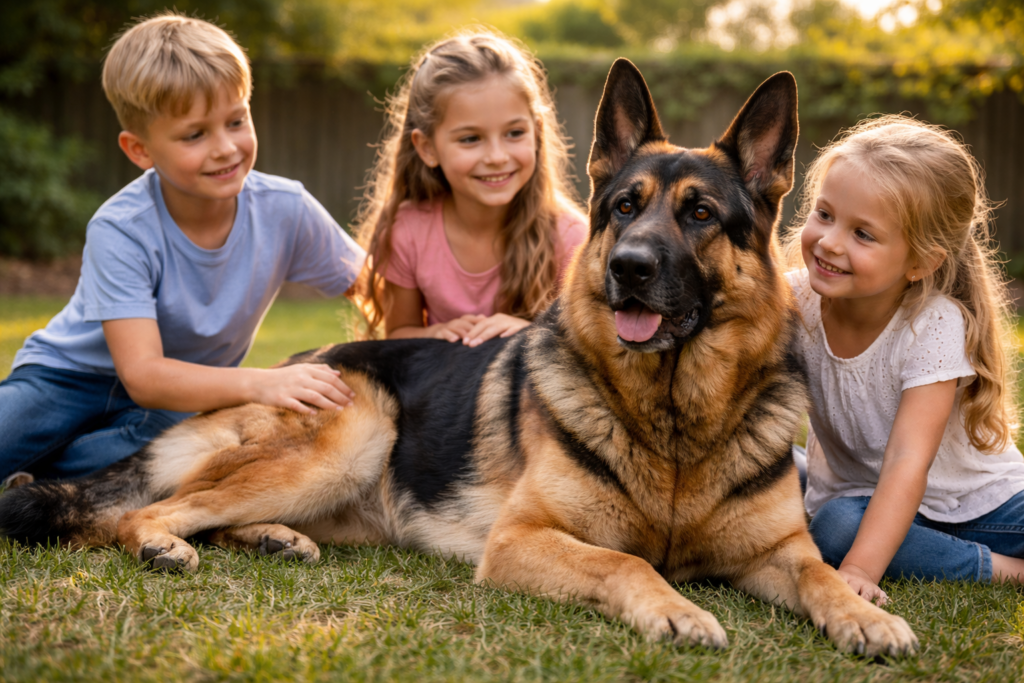
Their balanced temperament sets them apart from other protective breeds. A well-bred German Shepherd is confident but not aggressive, alert but not anxious, and protective but not territorial without reason. This balance means they can differentiate between normal situations and actual threats.
German Shepherds form deep bonds with their families, which drives their protective behavior. They see protecting you as their job and purpose. Unlike some breeds that protect mainly through aggression, German Shepherds use intelligence to assess situations before acting.
The breed’s courage is another key factor. German Shepherds will not back down when their family faces real danger, but they also have the self-control to stop when commanded. This combination of bravery and obedience makes them safer and more reliable than breeds that rely only on aggression.
Intelligence and Trainability
German Shepherds rank among the top three most intelligent dog breeds. This intelligence translates directly into faster learning, better problem-solving, and more reliable performance under pressure.
Their eagerness to work and please their handlers makes training efficient and effective. Where some breeds need hundreds of repetitions to learn a command, German Shepherds often grasp new concepts in just a few sessions. This matters tremendously in protection training, where complex behaviors and split-second decision-making are required.
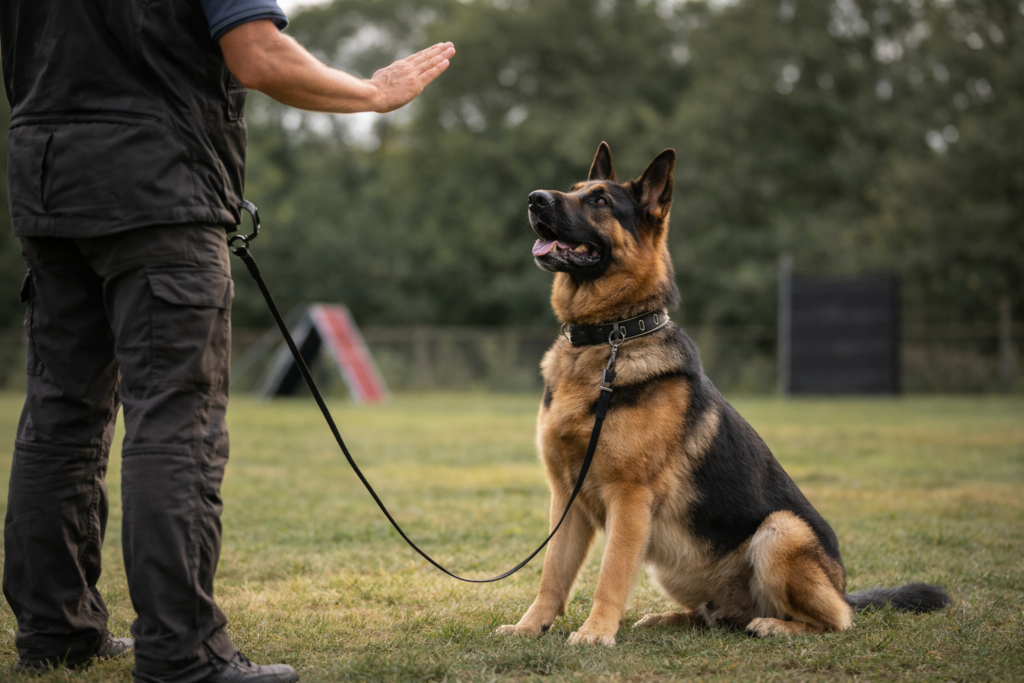
The breed’s ability to generalize training across different environments is exceptional. A German Shepherd trained to protect in one location will apply those skills in new settings without extensive retraining. They can also distinguish between play, training, and real-world threats, which prevents false alerts and unnecessary aggression.
German Shepherds retain their training over long periods. Once they learn protection behaviors, those skills remain sharp with minimal refresher work. This reliability makes them valuable long-term assets for family security.
Physical Capabilities for Protection Work
Size and strength matter in protection work, and German Shepherds deliver both. Males typically weigh 65-90 pounds with powerful builds designed for sustained physical work. This size is large enough to deter and stop threats but manageable enough for most handlers to control.
Their athleticism is remarkable. German Shepherds can sprint at speeds over 30 miles per hour, leap over six-foot obstacles, and maintain intense activity for extended periods. In protection scenarios, this means they can pursue threats, navigate challenging terrain, and respond quickly to changing situations.
The breed’s bite force averages 238 PSI, which provides sufficient stopping power without the extreme danger of breeds with stronger bites. Combined with their natural bite inhibition training, this creates an effective deterrent that can be controlled.
German Shepherds also have exceptional endurance. Unlike some larger breeds that tire quickly, German Shepherds can maintain alertness and responsiveness throughout long shifts or extended periods of vigilance.
Training Requirements for Protection German Shepherds
Not all German Shepherds automatically make good protection dogs. Proper training transforms natural instincts into reliable, controlled protection behaviors that keep families safe without creating liability.
Foundation Obedience and Socialization
Before any protection training begins, a German Shepherd must master basic obedience. Commands like sit, stay, come, and heel need to be absolutely reliable under all conditions and distractions. This foundation ensures you can control your dog in any situation.
If you’re starting with a puppy or young German Shepherd, learning how to train a German Shepherd with proper foundation techniques will set you up for success in advanced protection training later.
Socialization is equally critical. A protection dog must be comfortable around normal people, animals, and situations. Poor socialization creates a fearful, reactive dog that cannot distinguish between normal activity and actual threats. Well-socialized protection dogs remain calm in public, friendly with approved individuals, and focused only on genuine dangers.
Exposure to various environments helps German Shepherds generalize their training. They should experience urban settings, crowds, loud noises, and different surfaces. This broad exposure prevents them from being startled or confused by normal stimuli when they need to focus on protection duties.
Understanding what a protection dog does starts with recognizing that obedience and socialization form the bedrock of all advanced training. Without these fundamentals, protection training becomes dangerous and unpredictable.
Professional Protection Training Methods
Professional protection training for German Shepherds involves multiple phases that build progressively more advanced skills. Initial training focuses on alert barking and controlled aggression on command. Dogs learn to bark to announce threats but only escalate to physical intervention when specifically directed.
Bite work training teaches German Shepherds where, when, and how to bite. They learn to target arms and legs rather than faces or necks, to maintain a grip until commanded to release, and to stop immediately when the threat ends or when commanded. This controlled aggression is what separates a protection dog from a dangerous liability.
Scenario-based training exposes dogs to realistic protection situations. They practice responding to home invasions, car approaches, walking threats, and multiple attackers. This training builds confidence and teaches dogs to apply their skills across different contexts.
Handler protection drills teach German Shepherds to work as a team with their owner. The dog learns to position between the handler and threats, to respond to subtle cues, and to take direction even under high stress. This partnership approach creates more effective and safer protection.
The entire training process typically takes 6-18 months for a complete protection dog, depending on the starting age and desired skill level. Custom protection dogs receive individualized training tailored to specific family situations and security needs.
Maintenance Training and Ongoing Practice
Protection skills require regular practice to stay sharp. Even fully trained German Shepherds need refresher sessions every few months to maintain their abilities and responsiveness.
Daily obedience work keeps the foundation strong. Simple practice sessions with basic commands reinforce the handler-dog relationship and ensure control in everyday situations. This ongoing obedience work takes just 10-15 minutes daily but makes a significant difference.
Periodic scenario training helps dogs remember how to respond to threats. These sessions can be as simple as having a trusted helper play the role of an intruder while the dog practices alert behaviors and controlled responses.
Physical conditioning is also important. Regular exercise maintains the strength, speed, and endurance that protection work demands. Swimming, running, and play all contribute to keeping your German Shepherd in peak protective condition.
Learning how to prepare your home for a protection dog includes setting up a training routine that maintains your dog’s skills over years of service.
Choosing the Right German Shepherd for Protection
Not every German Shepherd has the temperament or ability for protection work. Selecting the right dog from the start saves time, money, and potential safety issues.
Working Line vs Show Line German Shepherds
German Shepherds split into two main breeding lines with significant differences. Working line German Shepherds are bred specifically for performance in jobs like protection, police work, and military service. These dogs have higher energy, stronger drives, and more intense focus.
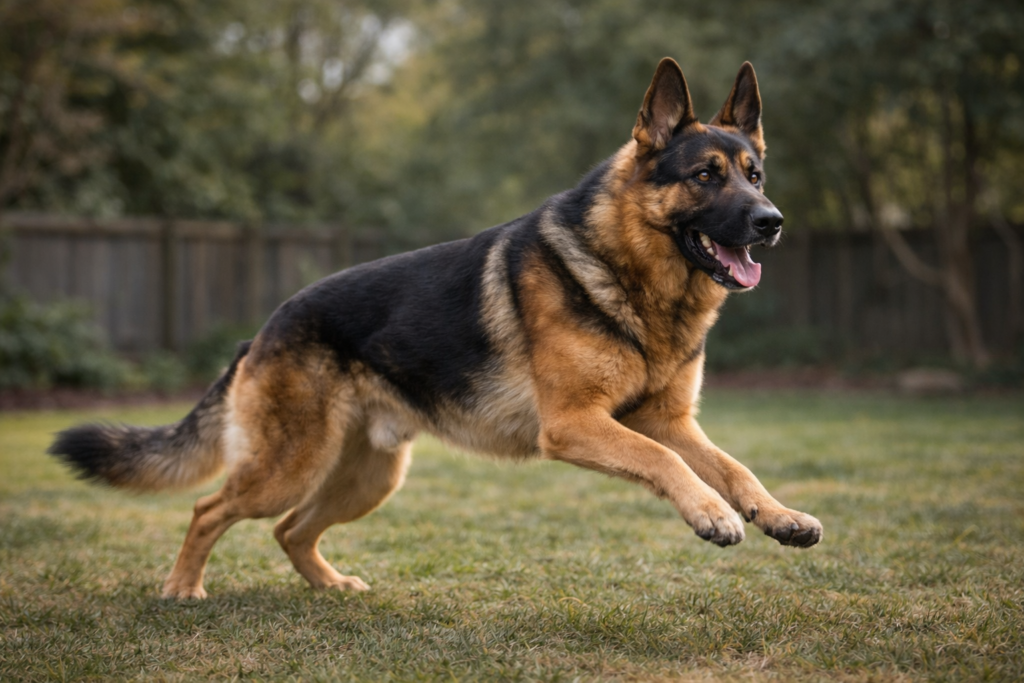
Show line German Shepherds are bred for appearance and conformation to breed standards. While beautiful, they often have lower energy and less intense working drives. Show lines can still make good family companions but typically lack the intensity needed for serious protection work.
For protection purposes, working line German Shepherds are almost always the better choice. Their breeding emphasizes the mental and physical traits that make excellent protection dogs. They have stronger nerves, better focus under stress, and higher drive to work.
The physical differences are also notable. Working line dogs have straighter backs and more athletic builds compared to the sloped backs of show lines. This structure provides better endurance and fewer joint problems over the dog’s working life.
Age and Training Considerations
You can acquire a german shepherd protection dog at different life stages, each with advantages and disadvantages. Puppies offer the most customization in training but require 1-2 years before they’re fully functional protection dogs. You can shape their experiences and build the exact behaviors you need, but this requires patience and significant training investment.
Started dogs are typically 1-2 years old with foundation training completed. They have basic obedience and some protection exposure but need specialized training for your specific situation. This option reduces the waiting time while still allowing customization.
Fully trained protection dogs are 2-4 years old with complete protection training. These elite protection dogs are ready to work immediately and provide security from day one. The higher cost reflects the extensive training and proven abilities these dogs possess.
Senior protection dogs (5+ years) can still provide effective security at a lower cost. While they have fewer working years remaining, their experience and stable temperament make them excellent choices for some situations.
Temperament Testing and Selection Criteria
Professional temperament testing reveals whether a German Shepherd has the right mental makeup for protection work. Key traits include:
Confidence: The dog should approach new situations with curiosity rather than fear. Confident dogs investigate strange objects, people, and environments without hesitation.
Nerve strength: Protection dogs must remain composed under pressure. They should recover quickly from startling situations and not show prolonged fear or anxiety.
Prey drive: A strong desire to chase and catch moving objects indicates good working drive. This trait translates into motivation for protection training.
Defensive drive: Natural suspicion of strangers and protective behavior toward handlers suggests good protection instincts. The dog should notice and respond to unusual activity.
Bite inhibition: Even in play, the dog should show some natural control over bite pressure. This indicates they can learn controlled aggression.
The table below compares key traits for protection work:
| Trait | Ideal for Protection | Less Suitable |
| Confidence | Approaches strangers calmly, investigates new objects | Hides behind handler, avoids novel situations |
| Energy Level | High drive, always ready to work | Low energy, prefers rest over activity |
| Focus | Maintains attention despite distractions | Easily distracted, loses focus quickly |
| Recovery | Bounces back from stress within seconds | Stays anxious after startling events |
| Sociability | Friendly with approved people, aloof with strangers | Either overly friendly with everyone or fearful |
German Shepherd Protection Dogs and Family Life
A well-trained protection German Shepherd integrates seamlessly into family life while maintaining their security role. Understanding how these dogs interact with families helps create a safe, harmonious household.
Behavior with Children and Family Members
Well-trained German Shepherds are usually excellent with children. Their protective nature often makes them naturally watch over younger family members and position themselves between kids and potential threats. They are known for their patience and can tolerate a lot of play and handling compared to many other breeds. Still, supervision is always important when large dogs are around small children.
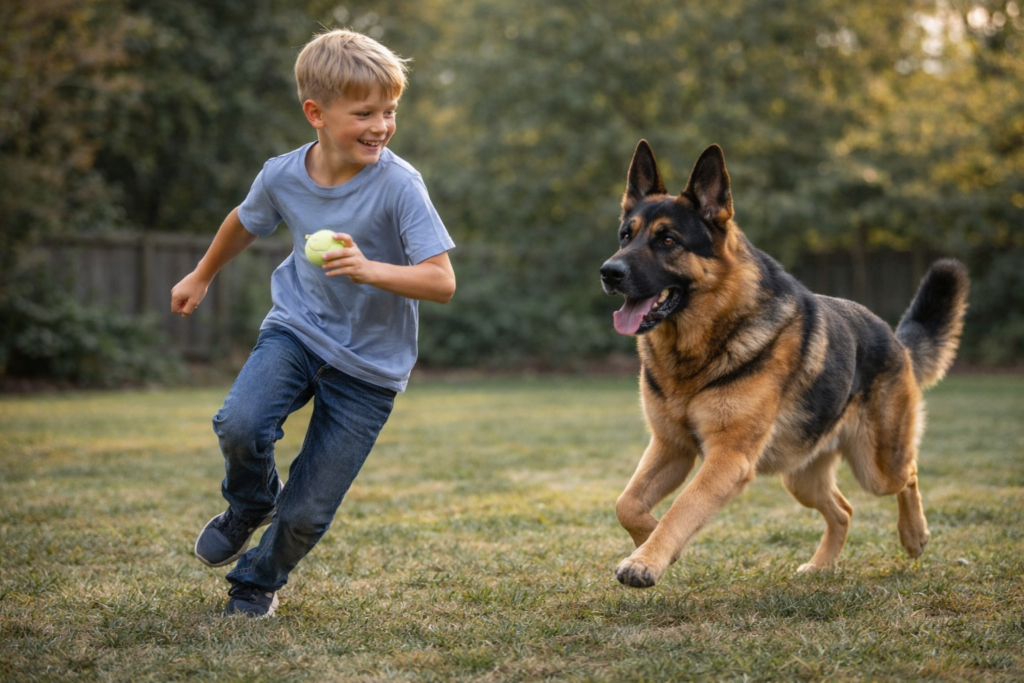
With proper socialization, German Shepherds can distinguish between normal family play and real aggression. They generally won’t react to harmless roughhousing or typical physical interactions. Teaching children how to interact respectfully with the dog is essential. Kids should avoid disturbing the dog while it’s eating, sleeping, or alerting to something.
Integration with Other Pets
German Shepherds can live peacefully with other pets when introduced properly. Early socialization helps them adjust to cats, small dogs, and other animals in the home. Because they have a natural prey drive, they may chase smaller animals that run, but training can reduce this behavior.
With other large dogs, especially those of the same sex, they may show dominance at first. This usually settles once a stable hierarchy forms. Protection training itself does not make them aggressive toward other pets and often improves their impulse control.
Exercise and Mental Stimulation
German Shepherds need about 1–2 hours of daily activity. Physical exercise and mental challenges like training, puzzle toys, and scent work keep them balanced and prevent boredom.
There are many reasons dogs are good protection, but German Shepherds stand out because they balance protection instincts with the ability to relax and be a companion when no threats exist. Proper exercise and stimulation maintain this balance.
Comparing German Shepherds to Other Protection Breeds
While German Shepherds excel at protection work, understanding how they compare to other popular protection breeds helps you make an informed choice.
| Breed | Size | Trainability | Family Friendliness | Protection Style | Maintenance |
| German Shepherd | 65-90 lbs | Excellent | High | Intelligent, controlled, versatile | Moderate grooming, high exercise |
| Belgian Malinois | 55-75 lbs | Excellent | Moderate | Intense, high drive, fast | Moderate grooming, very high exercise |
| Rottweiler | 85-130 lbs | Good | High with family | Powerful, territorial, confident | Low grooming, moderate exercise |
| Doberman Pinscher | 60-100 lbs | Excellent | High | Alert, fast, loyal | Low grooming, high exercise |
| Cane Corso | 90-120 lbs | Moderate | Moderate | Imposing, territorial, strong | Low grooming, moderate exercise |
| Giant Schnauzer | 65-90 lbs | Good | Moderate | Territorial, vocal, athletic | High grooming, high exercise |
For families wanting a calmer dog with lower exercise needs, Rottweilers may be preferable. For those wanting more versatility, easier training, and a more active companion, German Shepherds are the better choice.
Cost and Investment Considerations
Acquiring and maintaining a german shepherd protection dog represents a significant financial commitment. Understanding these costs helps you plan appropriately.
Purchase Price Ranges
The cost of a protection German Shepherd varies widely based on training level, bloodlines, and specific capabilities. An untrained German Shepherd puppy from working lines costs $1,500-$3,500. These dogs have the potential for protection work but require extensive training.
Started protection dogs with foundation training range from $10,000-$25,000. These dogs have basic obedience and some protection exposure but need finishing work for your specific situation.
Fully trained personal family protection dogs typically cost $30,000-$65,000. These dogs are ready to protect immediately and have proven abilities in realistic scenarios.
The highest level protection dogs with specialized training for executive protection or complex security situations can exceed $100,000. These elite dogs represent years of training and selection for exceptional abilities.
Your Partner in Safety: Protection German Shepherds
A german shepherd protection dog offers an unmatched combination of intelligence, loyalty, and protective capability that few other breeds can match. These remarkable canines transform from devoted family companions to fierce protectors the moment a real threat appears, all while maintaining the control and discernment that keeps everyone safe.
Whether you’re looking for a guardian for your family, property, or personal security, German Shepherds deliver reliable performance backed by centuries of breeding for protection work. Their trainability, physical abilities, and balanced temperament make them the gold standard in protection dogs.
Ready to experience the security and companionship of a professionally trained protection German Shepherd? K9 Mania Protection Dogs specializes in breeding and training elite protection German Shepherds for families and individuals who demand the highest level of protection. With decades of experience and a commitment to excellence, K9 Mania pairs each client with a dog specifically suited to their security needs and lifestyle.
You May Also Want to Read
- Rottweiler Protection Dog: Complete Guide to This Loyal Guardian
- Doberman Pinscher Protection Dog: What to Know
- Giant Schnauzer Protection Dog: Complete Guide to This Loyal Guardian
- Cane Corso Protection Dog: Complete Guide to This Elite Guardian Breed
Frequently Asked Questions
Is a German Shepherd a good family dog?
Yes. German Shepherds are loyal, protective, and great with families when properly trained and socialized. They bond strongly with children but need regular exercise, training, and enough space to stay balanced.
What is the most common problem in German Shepherds?
Hip dysplasia is the most common issue, affecting joint health and mobility. Separation anxiety is also common because German Shepherds bond closely with their families and dislike being left alone too long.
Are German Shepherds protective?
Yes. German Shepherds naturally guard their family and territory. They are alert and watchful, but proper training and socialization ensure their protective instincts stay controlled and focused on real threats.
Which dog has the highest IQ?
Border Collies are usually ranked the most intelligent dog breed. German Shepherds typically rank third, known for fast learning, strong memory, and excellent problem-solving ability.
Why do police use German Shepherds and not pitbulls?
German Shepherds are highly trainable, versatile, and reliable in complex tasks like detection and search. They also have better control and public acceptance compared to pitbulls in law enforcement roles.
Can German Shepherds be left alone?
Adult German Shepherds can stay alone for about 4–6 hours if properly exercised and trained. Longer isolation may cause separation anxiety, boredom, or destructive behavior.