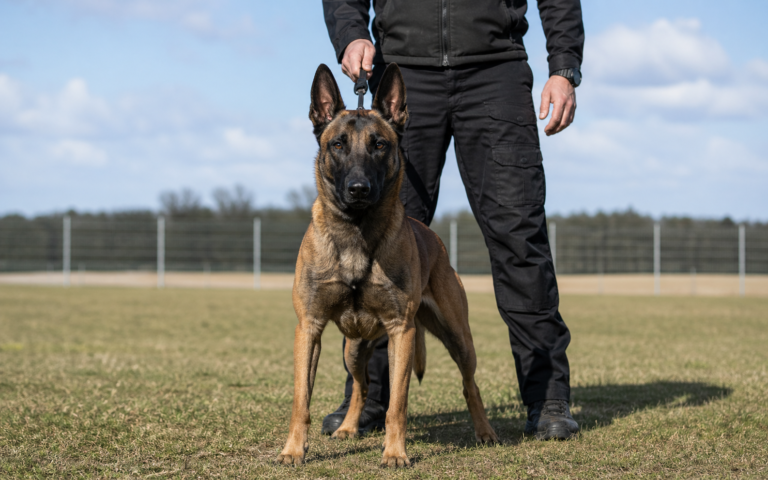
Protection dog aggression is trained, controlled behavior triggered by specific cues or real threats, not random dangerous outbursts. A properly trained protection dog knows exactly when to act and, just as critically, when to stand down.
Understanding this difference is one of the most important things you can learn as a protection dog owner. Whether you are considering a new dog or managing one you already have, this guide breaks down triggers, warning signs, and what keeps your household safe and in control.
Things to Know
- Protection dog aggression is cue-based, not instinct-driven
- Uncontrolled aggression and protection training are very different things
- Early socialization prevents aggression from turning inward toward family
- Off-switch training is just as important as bite work
- Temperament should be assessed before any protection training begins
📌 The right dog makes all the difference from day one. Learn more about the protection dog selection process before committing to any training program.
The Real Definition of Protection Dog Aggression
People often mix up protection aggression with the unpredictable behavior of a poorly socialized or abused dog. They are not the same thing.
True protection aggression is purposeful. It happens in response to a perceived threat, a direct command, or a specific triggering situation. The dog responds with controlled force and disengages the moment the threat is removed or the handler gives a release command.
A protection dog that bites on command and stops on command is fully controlled. A dog that bites randomly and cannot stop is dangerous, not protective. That distinction matters for every family that shares a home with a working dog.
Controlled Protection vs. Random Reactive Behavior
One of the most common misunderstandings about working dogs is that training them to protect makes them dangerous. It does not. The table below shows the real difference between the two.
| Behavior Type | Controlled Protection | Uncontrolled Aggression |
| Trigger | Specific cue or real threat | Unpredictable, random |
| Off-switch | Releases on command | Does not stop reliably |
| Home behavior | Calm and social indoors | Tense or reactive |
| Socialization | Comfortable around people | Fearful or reactive in public |
| Foundation | Structured, ongoing training | Little or no formal work |
A well-trained protection dog is not “always on.” It plays with kids, greets guests calmly, and relaxes indoors. The protection mode is a trained response, not a permanent personality trait.
Common Triggers That Activate Protective Behavior
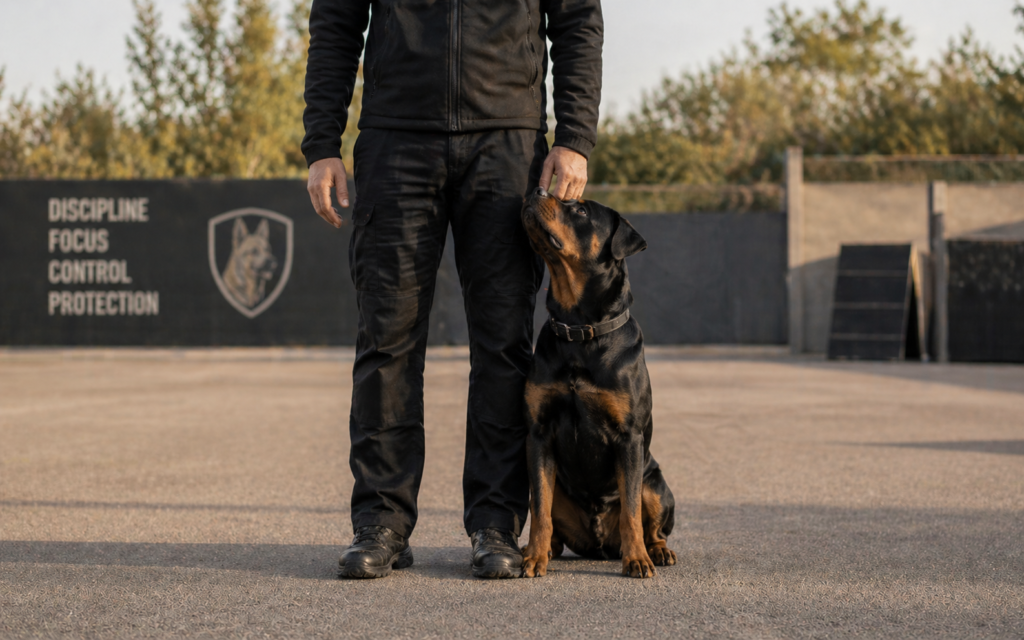
Protective aggression does not come out of nowhere. It almost always links to one of several core triggers every owner should understand before bringing a working dog home.
Common triggers include:
- A direct, threatening approach toward the handler or family members
- An intruder entering a secured or familiar space
- Sudden, aggressive movements during a real-threat scenario
- A verbal or physical command from the handler
- Sensing genuine fear in the handler during a confrontation
Training narrows these triggers down to situations where a response is actually needed. A dog that reacts only to real threats or handler cues is far safer than one that responds to anything that makes it uncomfortable.
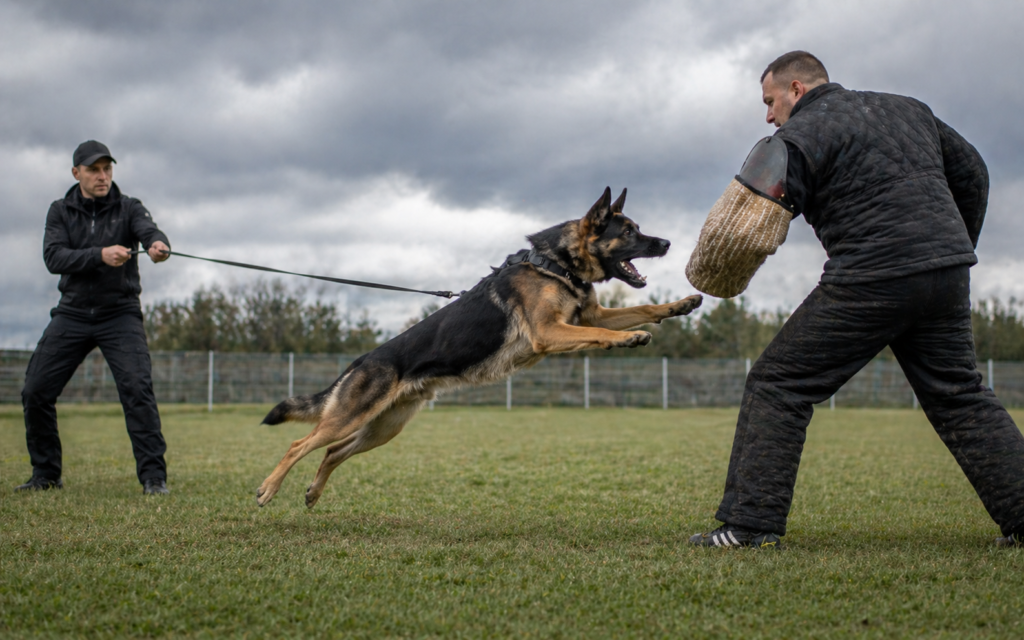
📌 Understanding how those cues work is just as important as the training itself. See a full breakdown of protection dog commands and how they shape reliable, repeatable behavior.
Warning Signs Your Dog’s Behavior Has Gone Too Far
Catching early warning signs is far easier than correcting a fully developed problem. Watch for these behaviors in your dog:
- Growling or stiffening around family members without a clear cause
- Refusing to release during training or play sessions
- Guarding food, toys, or spaces from people in the household
- Snapping or lunging at guests who were properly introduced
- Reacting to normal household sounds or daily foot traffic
These signs do not mean your dog is “too protective.” They usually point to a gap in training, inconsistent handling, or a temperament issue that was not addressed early enough. Either way, they need attention before the behavior locks in.
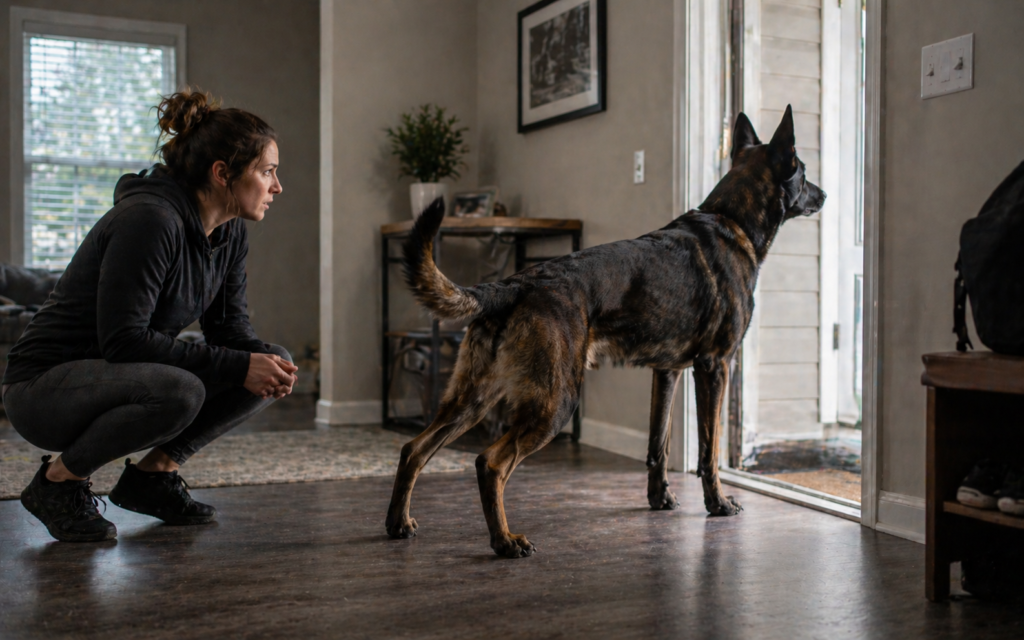
📌 Getting ahead of these problems starts with the right training approach. This guide on how to train a protection dog covers what balanced, structured work actually looks like day to day.
Keeping a Working Dog Safe Around Your Household
The concern that a protection dog might turn on its own family is valid but almost entirely preventable with proper structure. Here is what actually keeps that from happening.
Clear household leadership. Every person in the home should rank above the dog in the household structure. This is built through daily obedience, consistent limits, and calm, confident handling from everyone involved.
Proper introductions. New guests and children should always be introduced slowly and in a calm state. Never allow the dog to meet someone new while it is in an alert or heightened mode.
Consistent rules from everyone. Mixed signals from different family members create confusion. If one person enforces rules and another ignores them, the dog learns it can pick and choose.
Ongoing obedience maintenance. Protection training is not a one-time event. Regular sessions keep the dog balanced, sharp, and responsive to its handler well beyond the initial training period.
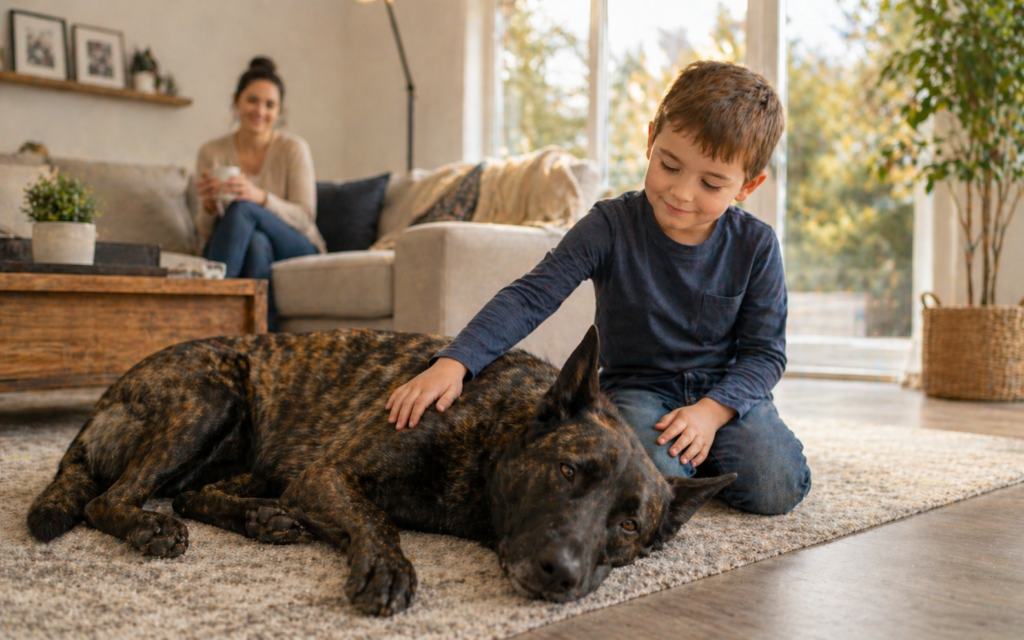
The best family protection dogs for sale are evaluated for stable, social temperament before any protection training ever begins. No amount of obedience work can build a foundation that was not there from the start.
Practical Day-to-Day Management Tips for Owners
Your daily environment shapes your dog’s behavior more than most owners realize. Here are specific habits that experienced working dog owners use to keep things balanced:
- Set up a dedicated rest area away from high-traffic zones so the dog has a place to decompress
- Keep feeding and exercise times consistent every day, including weekends
- Practice “place,” “down-stay,” and “leave it” in and around the home, not just in formal training sessions
- Use room separation or baby gates when introducing the dog to new guests for the first time
- Run short, calm obedience sessions daily to reinforce that you are in charge at all times
These are not shortcuts. They are the management habits that prevent small issues from becoming serious behavioral problems over time.
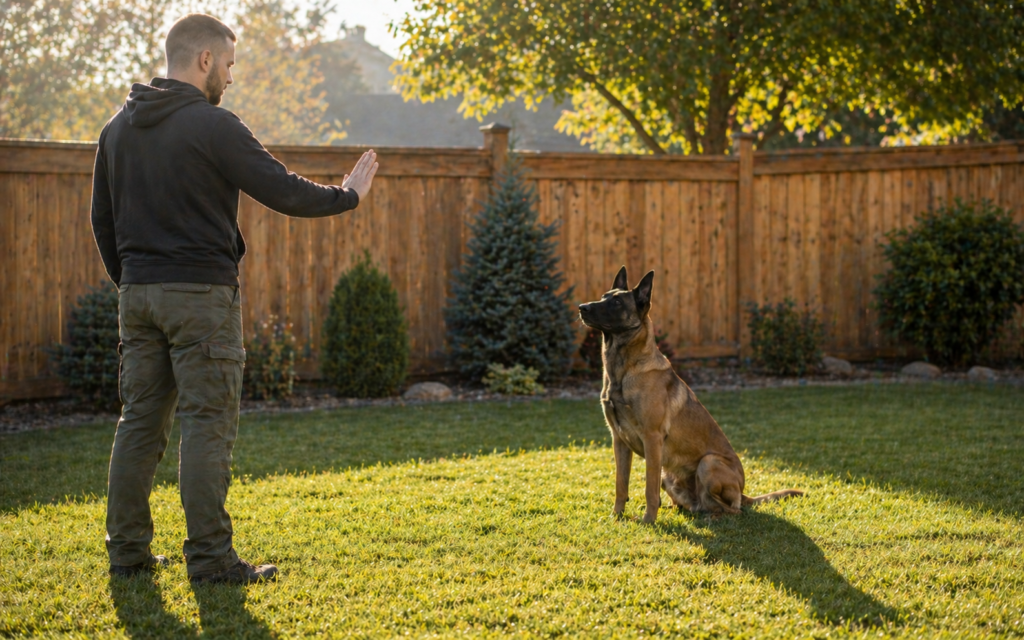
📌 Your home layout and daily routine affect how your dog reads its environment. Read the full guide on how to prepare your home for a protection dog before your dog arrives.
Matching the Right Dog to the Right Role
Not every protection dog is built for the same job. Random aggression in a working dog creates serious liability and is a sign of fear, poor breeding, or inadequate early training, not a sign of a better protector. A true protection dog is stable, confident, and calm until it needs to shift into something else.
The table below shows how different protection roles compare based on what temperament they actually require.
| Dog Role | Temperament Needed | Training Focus | Best Fit |
| Family Protection Dog | Stable, social, confident | Obedience plus controlled defense | Households with children |
| Personal Protection Dog | Alert, handler-bonded | Handler-focused protection work | Individuals or couples |
| Property Guard Dog | Independent, territorial | Perimeter awareness | Commercial properties |
| Patrol or Police Dog | High drive, obedient | Bite work plus structured commands | Law enforcement use only |
If you want a dog built for a specific role, a custom protection dogs program matches the dog to the job, rather than forcing aggression onto a dog that was never meant for that kind of work.
Understanding Protection Dog Aggression Starts With the Right Team
Protection dog aggression, when properly trained and managed, is one of the most reliable safety tools a family can have. The difference between a dog that protects and a dog that endangers always comes down to structure, temperament, and the quality of training behind it.
If you are ready to add a well-trained, balanced protection dog to your home, or need help addressing behavioral concerns in a dog you already own, do not leave it to chance.
Contact K9 Mania Protection Dogs today and work with a team that has spent years building protection dogs that are safe, reliable, and genuinely trustworthy around the families they serve. Visit k9maniaprotectiondogs.com to get started.
FAQs About Protection Dog Aggression
Is a protection dog just an “attack dog”?
A protection dog is not the same as an attack dog. Attack dogs are trained for military or law enforcement use with a narrow, single-purpose function. Protection dogs are trained to assess real threats, respond proportionally, and disengage completely on command. They are also conditioned to be calm, social, and stable in everyday home situations. The goal is a balanced dog that can shift between a relaxed companion and a reliable protector as the situation demands.
What triggers protective aggression?
Protective aggression is typically triggered by a direct threat toward the handler or family, an intruder entering a familiar or secured space, or a verbal command from the handler. Fast, aggressive movements toward the owner and sensing genuine fear during a real encounter are also common triggers. A properly trained dog responds only to specific, clear situations rather than reacting to anything that causes discomfort or uncertainty.
How do I know if my protection dog is becoming too aggressive?
Warning signs include growling at family members without a clear cause, refusing to release during training sessions, guarding spaces or objects from household members, and snapping at properly introduced guests. A dog that reacts to ordinary household sounds, or that stays tense indoors throughout the day, is showing signs that its behavior has moved beyond controlled training. These issues need professional attention before they escalate further.
How do you prevent a protection dog from turning on family?
Preventing this requires consistent household rules, clear leadership, and regular obedience work that every person in the home takes part in. Each family member should follow the same expectations with the dog. Proper introductions for new guests, calm daily handling, and ongoing training sessions all keep a working dog stable and safe around the people it lives with. Structure and consistency are the most reliable prevention tools available.
Can a protection dog be good with kids?
Yes, with the right temperament and proper socialization already in place. Protection dogs are trained to distinguish between family members they know and genuine threats, which means children they live with are not viewed as triggers. Children in the home should learn basic rules around any working dog, including not approaching it while it rests or eats. Stable temperament is evaluated before any protection training begins, which is what makes safe family placement possible.
How do you stop a dog from resource guarding?
The most effective approach is teaching the dog that giving something up leads to a reward rather than a confrontation. Practice trading items for high-value treats and build strong “drop it” and “leave it” responses through consistent daily obedience. Feeding in a calm, predictable environment reduces anxiety around meals. Avoid using force near a guarding dog, as confrontation almost always makes the behavior worse. Severe guarding should be fully resolved before any additional protection training is introduced.
Why Guard Dogs Should Not Be Aggressive
A truly effective guard dog is stable and controlled, not randomly aggressive. Constant aggression signals fear, poor breeding, or a breakdown in training rather than a stronger protector. Dogs that react to everything create legal liability for the owner and pose real risk inside the home. The best working dogs are confident enough to stay calm under normal conditions and precise enough to respond only when a genuine threat presents itself. That balance is what separates a reliable protection dog from a dangerous one.
Managing Protection Dog Aggression: Trust the Experts at K9 Mania
K9 Mania Protection Dogs is Long Island’s trusted protection dog training company specializing in top-tier personal and family protection dogs. We are committed to delivering reliable, well-trained dogs with a focus on safety, performance, and peace of mind. Whether you need help selecting the right dog or addressing behavioral concerns, our experienced team handles every case with precision and care. Trust K9 Mania Protection Dogs to guide you through every step of ownership. Visit us at k9maniaprotectiondogs.com and give your family the protection they deserve.