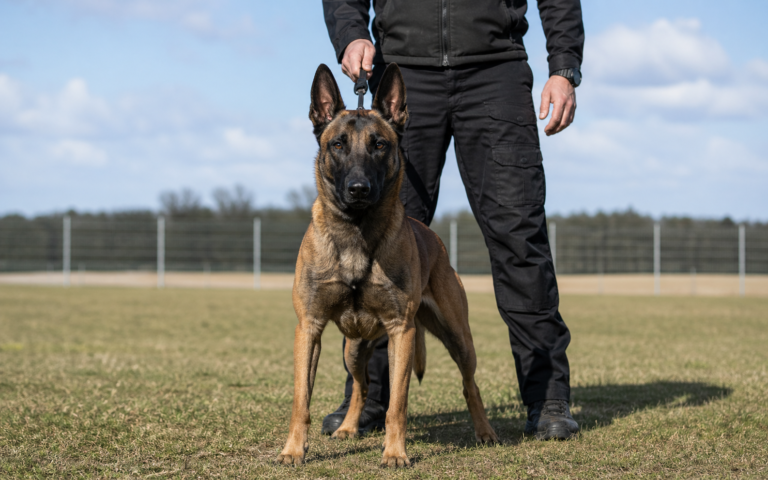
Protection dog commands are specialized instructions that teach your dog to protect on command while maintaining complete obedience and control. These commands combine traditional obedience training with advanced protection work, creating a dog that can guard your family while remaining safe and manageable in everyday situations.
Whether you’re considering custom protection dogs or training your current dog, understanding the right commands is the foundation of effective protection training. The difference between a dangerous liability and a reliable guardian comes down to precise command training and consistent reinforcement.
In this guide, we’ll break down the most important protection dog commands, explain how to teach them properly, and show you which commands your dog needs to master for real-world protection scenarios.
What Are Protection Dog Commands
Protection dog commands are verbal or hand signals that tell your dog when to guard, alert, engage, or stop protective behavior. Unlike basic obedience commands, these instructions prepare your dog to respond to genuine threats while staying calm during normal daily activities.
These commands create clear boundaries between protection mode and everyday behavior. Your dog learns exactly when to act and when to stay neutral, preventing false alarms and dangerous overreactions.
Basic Foundation vs Protection-Specific Commands
Every protection dog needs two types of commands. Basic obedience commands form the foundation, while protection-specific commands handle security situations.
Foundation commands include sit, stay, down, come, and heel. These establish control and ensure your dog listens before advancing to protection training. Without solid obedience, protection work becomes unpredictable and unsafe.
Protection-specific commands tell your dog when to bark on command, hold a position, or engage a threat. Commands like “watch,” “bark,” and “out” give you precise control during security situations.
Your dog must respond instantly to both types. A protection dog that ignores basic commands can’t be trusted with advanced protection work.
Why Proper Command Training Matters for Protection Dogs
Command training separates a well-trained protection dog from a dangerous liability. Poor training creates dogs that attack unpredictably or fail to stop when commanded.
Proper training protects your family, your dog, and anyone who visits your home. A dog that only responds to protection dog commands when it feels like it puts everyone at risk.
Legal consequences matter too. If your protection dog bites someone because you couldn’t control it, you face lawsuits and potential criminal charges. Courts don’t excuse poor training.
Insurance companies often refuse coverage for protection dogs without verified training. Documented command training proves your dog is controlled and reduces liability concerns.
Most importantly, correct command work keeps your dog mentally balanced. Protection dogs with clear commands experience less stress because they understand their job and when to perform it.
Ready to bring home a fully trained guardian? Explore our elite protection dogswith expert command training.
Essential Protection Dog Commands Every Dog Should Know
Protection training builds on a foundation of control commands before introducing any bite work or aggressive behavior. These commands create the framework for safe, reliable protection.
Control and Obedience Commands
Control commands give you complete authority over your dog’s movements and actions. These form the base layer that makes protection training possible.
Sit tells your dog to place its rear on the ground and wait. This command interrupts unwanted behavior and creates a calm starting point for other commands.
Stay means don’t move from your current position until released. Your protection dog must hold this command even with distractions, strangers, or perceived threats nearby.
Down requires your dog to lie flat with belly on the ground. This command shows submission and gives you maximum control in high-stress situations.
Come or Here brings your dog directly to you regardless of distance or distraction. This recall command can prevent dangerous situations before they escalate.
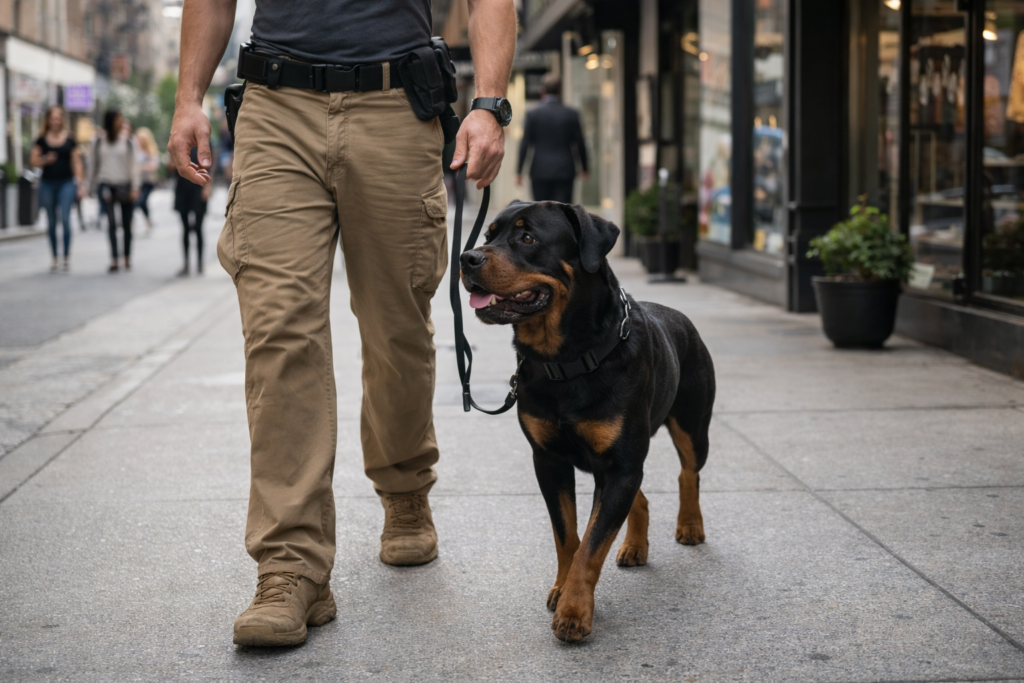
Heel keeps your dog walking calmly at your side. Protection dogs must walk controlled in public despite their guardian instincts wanting them to scan for threats.
These basics aren’t optional. Without instant obedience to control commands, protection training becomes reckless and unpredictable.
Before teaching advanced protection behaviors, dogs need a solid base in obedience, focus, and impulse control, which is why Long Island board and train can be a valuable step for many owners.
Alert and Guard Commands
Alert commands activate your dog’s protective awareness without aggression. These tell your dog to watch, listen, and notify you of concerns.
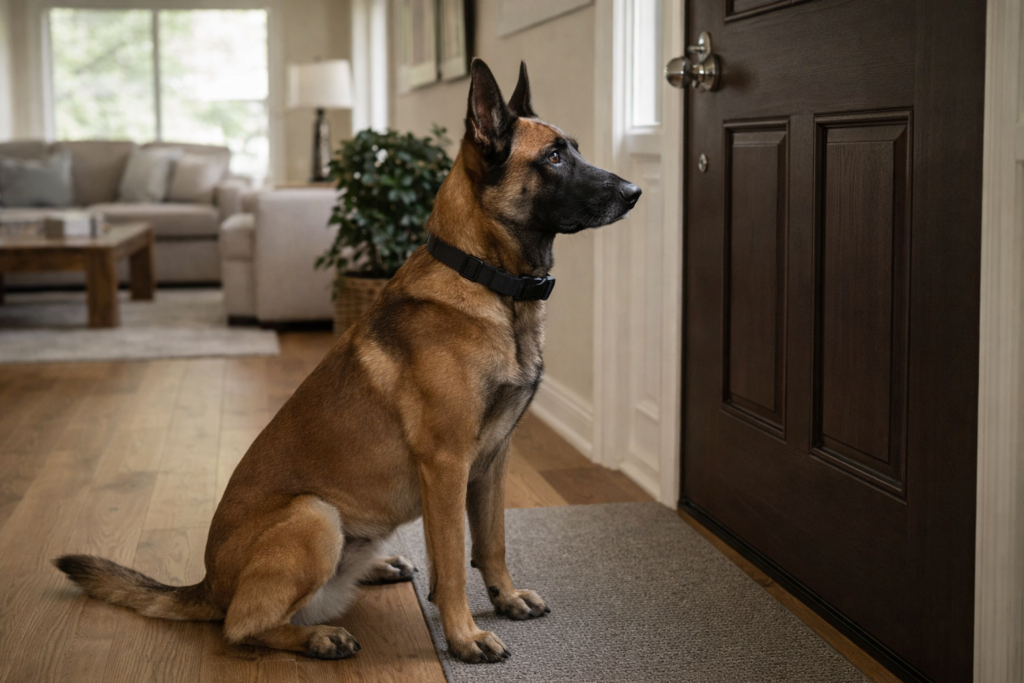
Watch or Guard directs your dog’s attention to a specific person, area, or object. Your dog maintains focus without barking or advancing.
Bark or Speak commands your dog to vocalize on cue. This warns potential threats and alerts you to concerns without physical engagement.
Quiet or Enough stops barking immediately. You need instant control over noise, especially in residential areas or false alarm situations.
Place or Post sends your dog to a designated spot to monitor. This could be a doorway, vehicle, or specific room where your dog maintains watch position.
Alert commands let your protection dog fulfill its guardian role without creating chaos or frightening guests. You control when vigilance becomes vocal warning.
Engagement and Release Commands
Engagement commands are the most serious and require the most training. These tell your dog when to physically engage a threat and, critically, when to stop.
Out or Release ends all engagement instantly. This command must be obeyed immediately, even during high arousal or active confrontation. It’s the most important safety command you’ll teach.
Hold or Guard maintains control of a detained person without increasing aggression. Your dog holds position and prevents movement without additional biting.
Back or Off creates distance between your dog and the subject without fully releasing. This gives you options during de-escalation.
Professional trainers spend months conditioning these commands because lives depend on reliability. A dog that won’t release on command is a serious danger.
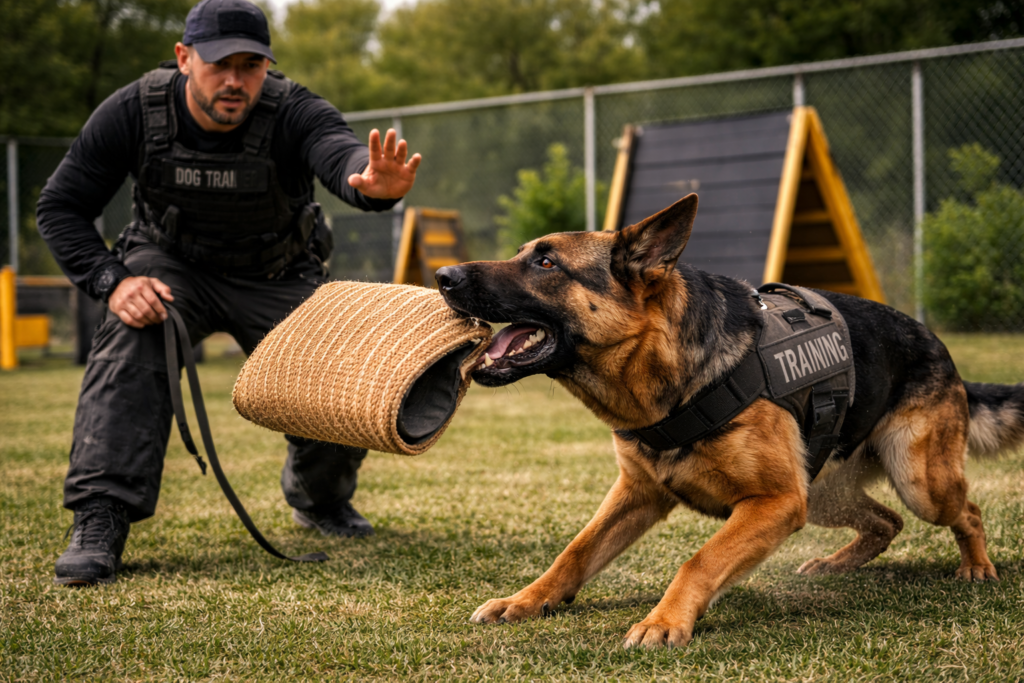
Before teaching engagement commands, consider whether you actually need them. Many families benefit more from alert and deterrent training than full bite work. Read about what does a protection dog do to understand different protection levels.
How to Train Protection Dog Commands Effectively
Training protection dog commands requires structured progression, consistency, and often professional guidance. Rushing the process or skipping steps creates unreliable responses that fail when you need them most.
Starting with Foundation Obedience
Begin every protection dog’s training with rock-solid basic obedience. Your dog should respond to sit, stay, down, come, and heel with at least 95% reliability in distracting environments.
Practice these commands in different locations with various distractions. Your dog needs to obey at home, in parks, near traffic, and around other people and animals.
Use positive reinforcement during foundation training. Treats, praise, and play build the desire to work with you. Harsh corrections during early training damage the trust you’ll need for advanced work.
Test obedience under stress before advancing. If your dog ignores a recall command when excited, it won’t obey during protection scenarios.
Foundation training typically takes three to six months of consistent daily work. Don’t rush to protection commands before this base is solid.
Progressive Introduction to Protection Commands
Protection commands should be introduced slowly, beginning with low-stress situations and gradually increasing intensity.
Start with alert commands like “watch” and “bark.” These teach your dog to stay aware without physical engagement. Reward calm, controlled alertness.
Practice with helpers approaching your property so your dog learns to distinguish normal visitors from suspicious behavior.
Only after months of successful alert training should engagement training begin, and it should always involve professional guidance.
Make sure your dog maintains obedience between each step. Moving too fast can cause protection instincts to override training.
Common Training Mistakes to Avoid
Many owners make mistakes that reduce a protection dog’s reliability.
Never encourage aggression without proper command training. This creates an uncontrolled and potentially dangerous dog.
Avoid inconsistent training. Protection commands require regular practice to remain reliable.
Don’t use protection commands for entertainment or showing off. This weakens their seriousness.
Always train the “out” (release) command. Every engagement must end with a reliable release.
Never attempt bite-work training without professional supervision, as it can lead to safety risks and legal issues.
Protection Dog Commands vs Basic Obedience: Understanding the Difference
Protection training and basic obedience serve different purposes and require different approaches. Knowing these differences helps you set realistic expectations and training goals.
| Aspect | Basic Obedience Commands | Protection Dog Commands |
| Purpose | Daily control and good manners | Security, deterrence, and threat response |
| Training Level | Beginner to intermediate | Advanced, requires professional guidance |
| Response Time | Should be immediate but some flexibility | Must be instant, especially release commands |
| Stress Level | Low to moderate stress during training | High stress, simulates real threats |
| Safety Risks | Minimal if done correctly | Serious injury risk without proper training |
| Legal Concerns | Generally none | Significant liability if not properly controlled |
| Handler Skill | Most owners can self-train successfully | Professional training strongly recommended |
When Protection Training Is Appropriate
Protection training isn’t right for every dog or situation. Consider whether you actually need advanced protection commands or if basic obedience and natural alertness provide sufficient security.
Personal family protection dogs work well for homes in isolated areas, families with specific security concerns, or people who travel frequently with their dogs.
Most suburban families get adequate security from a well-trained dog that barks on command and has an intimidating presence. Full bite work may be unnecessary and creates additional liability.
Evaluate your living situation, local laws, and insurance requirements before committing to protection training. Some areas restrict or prohibit trained protection dogs.
Which Commands Apply to Your Situation
Match your command training to your actual security needs:
For general home security, focus on alert commands like watch, bark, and quiet. Add place or post commands to position your dog strategically. This provides effective deterrence without bite work liability.
For rural properties or isolated locations, consider more advanced training including engagement commands. These environments have fewer liability concerns and may require stronger protection capabilities.
For personal security during travel or high-risk situations, your dog needs complete command reliability in all environments. This requires extensive professional training and regular reinforcement.
Before starting any protection training, prepare your environment properly. Learn how to prepare your home for a protection dog to create the right foundation.
Building Reliability: Practice and Maintenance
Protection dog commands don’t maintain themselves. Even professionally trained dogs need consistent practice and reinforcement to keep responses sharp and reliable.
Daily Practice Routines
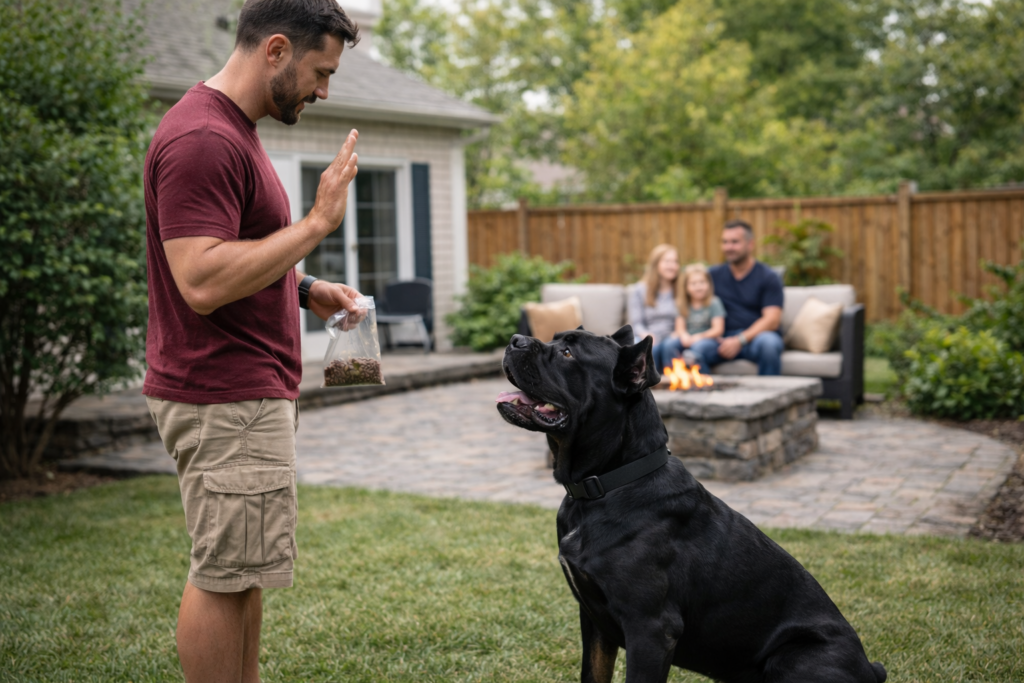
Include command practice in your daily routine instead of separate training sessions to keep skills reliable.
Practice basic obedience during walks, before meals, or when visitors arrive. Short five-minute sessions throughout the day work well.
Review alert commands weekly in controlled situations, such as having a family member approach while your dog practices watch or bark.
Practice release commands often. During toy play, include release exercises to keep this safety command sharp.
If your dog has engagement training, schedule monthly sessions with a professional trainer to maintain safety and reliability.
Testing Commands in Real-World Scenarios
Controlled testing helps confirm that protection commands work in real situations.
Create realistic scenarios with helpers your dog doesn’t know. Test commands in different locations, times, and weather conditions.
Add distractions like movement or noise to see if your dog stays focused and responds correctly.
Record training sessions on video to review response times and command consistency.
Never test engagement commands without professional supervision.
Choosing Between Professional Training and Self-Training
The decision between professional training and self-training depends on your goals, experience, and the level of protection work you need.
| Factor | Professional Training | Self-Training |
| Best For | Engagement commands, bite work, high-level protection | Basic alert commands, foundation obedience |
| Cost | $5,000-$25,000+ for complete protection training | Minimal, mainly time investment |
| Time Investment | Several months of intensive training | Ongoing, fits into daily routine |
| Safety | Supervised by experts, minimizes risk | Higher risk without expert guidance |
| Certification | Often includes documentation and liability coverage | No formal certification available |
| Reliability | Professionally conditioned responses | Depends heavily on owner consistency |
| Liability Protection | Training documentation helps in legal situations | No professional backing if issues arise |
Why Professional Training Matters for Advanced Commands
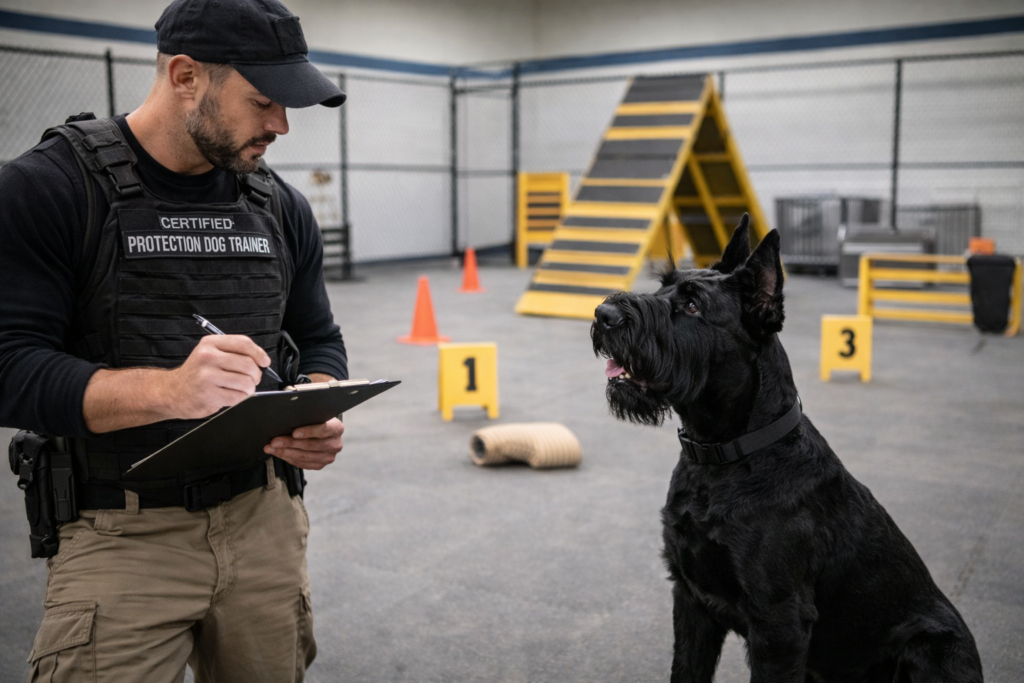
Engagement and bite-work commands require professional training because the risks of amateur training are high.
Professional trainers understand dog behavior, bite mechanics, and legal considerations. They create structured scenarios that build protection skills without encouraging uncontrolled aggression.
They also teach handlers how to manage a protection dog safely, including leash control, reading body language, and maintaining calm command during stressful situations.
Professional programs often provide training documentation, which can help with insurance, liability concerns, and local regulations.
What You Can Train on Your Own
Many foundational skills can be taught successfully at home with consistency and patience.
Basic obedience commands such as sit, stay, down, come, and heel are within reach for most dog owners using positive reinforcement methods.
Alert commands like watch, bark, and quiet can also be trained safely since they don’t involve physical engagement.
You can also practice environmental awareness, such as teaching your dog to monitor doors or alert to unusual sounds.
However, for full protection training that includes engagement commands, professional guidance is strongly recommended to avoid safety, legal, and training issues.
For selecting the right dog to train, read our guide on how to find the best protection dog before starting the training process.
Your Path to Reliable Protection Dog Commands
Training protection dog commands takes time, consistency, and realistic expectations about what you can accomplish. The commands your dog masters determine its effectiveness as a guardian and its safety as a family member.
Start with solid foundation obedience before considering any protection work. Build alert and guard commands that provide security without unnecessary aggression. Only advance to engagement training if you truly need it and can commit to professional guidance.
Remember that the best protection dog is one you can control completely. Commands that work under stress, in any environment, with instant reliability are what separate professional protection dogs from dangerous liabilities.
K9 Mania Protection Dogs specializes in fully trained guardians with expert command conditioning. Our dogs master foundation obedience, alert commands, and advanced protection work under professional supervision. Each dog receives extensive scenario training and comes with lifetime support to maintain command reliability. When you need a protection dog you can trust completely, our proven training methods deliver the security and control your family deserves.
You May Also Want to Read
- Belgian Malinois vs German Shepherd: Which Protection Breed is Right for You?
- German Shepherd Protection Dog: Your Complete Guide to Safety and Loyalty
- Giant Schnauzer Protection Dog: Complete Guide to This Loyal Guardian
- Rottweiler Protection Dog: Complete Guide to This Loyal Guardian
Frequently Asked Questions About Protection Dog Commands
What are the top 10 dog commands?
The 10 essential dog commands are sit, stay, down, come, heel, leave it, drop it, watch, quiet, and place. These give you strong control over your dog in everyday situations. Protection dogs may also learn advanced commands like bark, guard, and out (release) to build a reliable protection foundation.
What is the hardest command to teach a dog?
The release or “out” command is usually the hardest, especially for protection dogs. It requires the dog to instantly stop intense behavior and return to calm obedience. Because it goes against natural instincts, it often takes months of consistent training and professional guidance.
What words do dogs hear best?
Dogs respond best to short, clear words with strong consonants, especially sounds like K, T, D, and P. Commands like sit, down, come, and out work well because they are short and easy to distinguish. Consistency matters most—use the same command words every time.
What are the first 5 commands to teach a puppy?
The first five commands puppies should learn are sit, come, down, stay, and leave it. Start with sit since it’s simple and useful. Then teach come for recall, down for calm control, stay for patience, and leave it to prevent unsafe behaviors.
What are the 7 most important dog commands?
The seven key commands are sit, stay, down, come, heel, leave it, and drop it. These cover most everyday situations and help maintain control in public or at home. Protection dogs may also learn watch, bark, and out to handle security situations.
What words confuse dogs?
Dogs get confused by similar-sounding commands, long phrases, or inconsistent wording. For example, switching between “come here” and “come on” can confuse them. Use short, distinct commands and keep your wording and tone consistent during training.