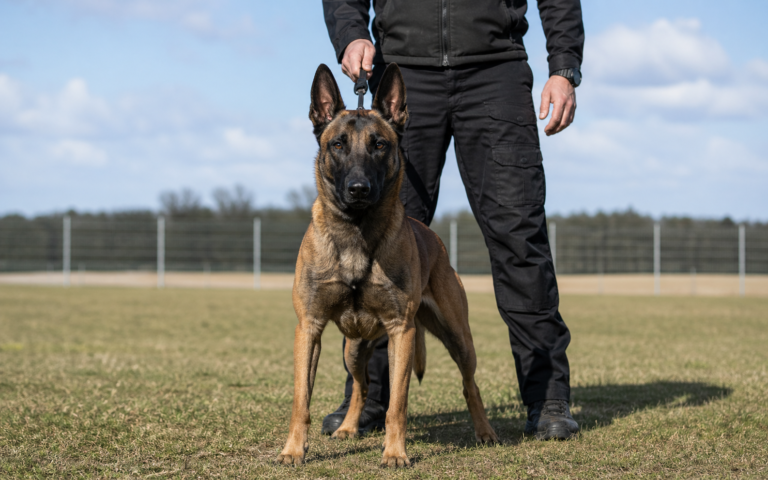
Training a protection dog requires specialized knowledge, consistent effort, and a solid foundation in obedience before any protection work begins. The process typically takes 12 to 24 months and involves building drive, teaching controlled aggression, and ensuring your dog can differentiate between real threats and everyday situations.
Understanding how to train a protection dog isn’t just about teaching your dog to bite on command. It’s about creating a balanced, obedient companion who can protect your family when needed while remaining safe and manageable in daily life. This guide breaks down the training phases, essential skills, and realistic timelines so you can make informed decisions about whether to train your own dog or work with professionals.
Ready to bring home a professionally trained guardian? Explore our family protection dogs for saleand find the perfect match for your home.
What Makes a Good Protection Dog Candidate
Not every dog has the temperament, drive, or physical ability to become a reliable protection dog. The right candidate combines specific traits that make training successful and ensure your dog can perform when it matters most.
Breed Selection and Natural Traits
Certain breeds excel at protection work because they were developed specifically for guarding and defense. German Shepherds, Belgian Malinois, Rottweilers, Doberman Pinschers, and Giant Schnauzers consistently rank among the top choices.
These breeds share common traits that make them suitable for protection training:
- Strong prey drive: The desire to chase and capture targets
- Natural suspicion: Wariness of strangers without excessive fear or aggression
- Confidence: Ability to handle stress and new situations
- Trainability: Willingness to learn and follow commands
- Physical capability: Size, strength, and athleticism to perform protection tasks
Working lines produce better protection dogs than show lines. Dogs bred for performance rather than appearance typically have stronger drives and better working temperament.
Temperament Requirements
A protection dog needs stable nerves and solid temperament. Dogs who are fearful, overly aggressive, or unpredictable cannot be safely trained for protection work.
Essential temperament traits:
- Confident in various environments
- Recovers quickly from stress
- Shows clear on/off switch behavior
- Bonds strongly with family members
- Tolerates handling and grooming
- Displays appropriate social behavior with known people
Young puppies show early signs of good temperament through their reactions to new experiences. A puppy who approaches new objects with curiosity rather than fear demonstrates the confidence needed for future training.
Age and Training Windows
The best time to start protection dog training depends on what phase you’re working on. Foundation work begins in puppyhood, while actual protection training starts much later.
Training timeline by age:
- 8-16 weeks: Socialization and basic obedience
- 4-6 months: Drive building and play training
- 6-12 months: Advanced obedience and impulse control
- 12-18 months: Introduction to protection work
- 18-24 months: Advanced protection scenarios and refinement
Starting protection work too early can create problems. Dogs under 12 months lack the physical and mental maturity needed for bite work. Rushing the process produces unreliable or dangerous dogs.
Considering a professionally trained dog? Learn about our protection dog selection processto understand what separates exceptional guardians from average pets.
Foundation Training: Building Blocks for Protection Work
Every reliable protection dog starts with rock-solid foundation skills. These basics create the framework that allows advanced protection training to succeed safely and effectively.
Obedience Training as the Core
Protection dogs must respond to commands instantly, even under high stress. Basic obedience forms the control system you need to manage a powerful, trained guardian.
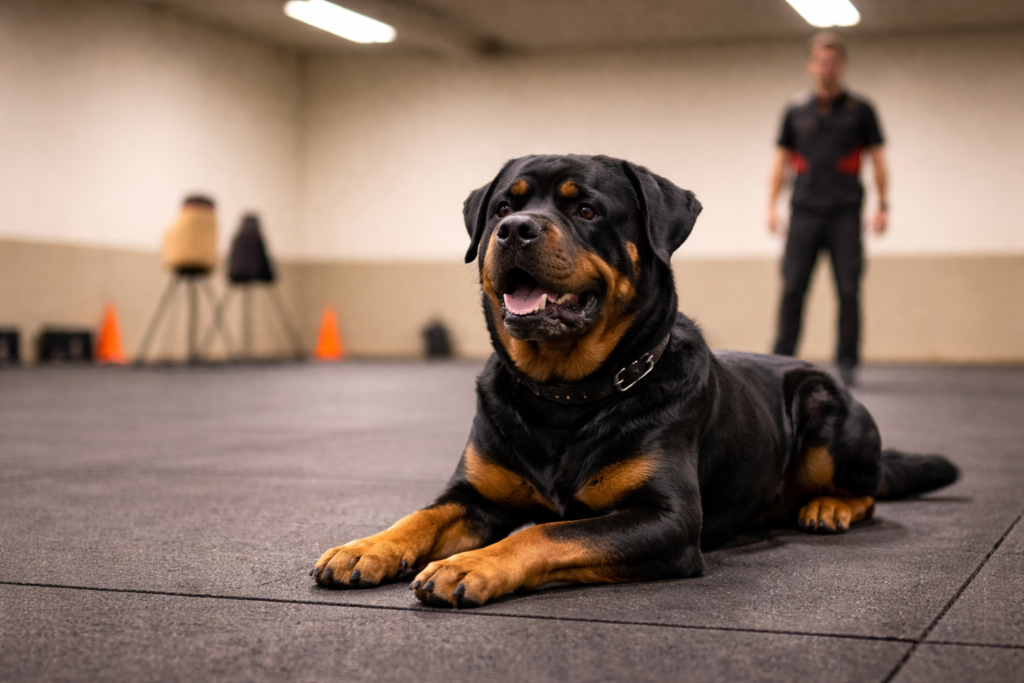
Your dog must master these commands before any protection training begins:
- Sit/Down/Stay: Complete stationary control
- Recall: Immediate response to come when called
- Heel: Walking calmly on and off leash
- Place: Going to and remaining on a designated spot
- Out/Release: Immediately stopping any activity on command
The “out” command is critical for protection work. Your dog must release a bite the instant you give the command, regardless of the situation or how excited they are.
Practice obedience in distracting environments. A dog who obeys perfectly at home but ignores you around strangers or other dogs isn’t ready for protection training.
Socialization and Environmental Exposure
Protection dogs need extensive socialization to distinguish between normal situations and actual threats. A poorly socialized dog may react aggressively to harmless situations or fail to respond when real danger appears.
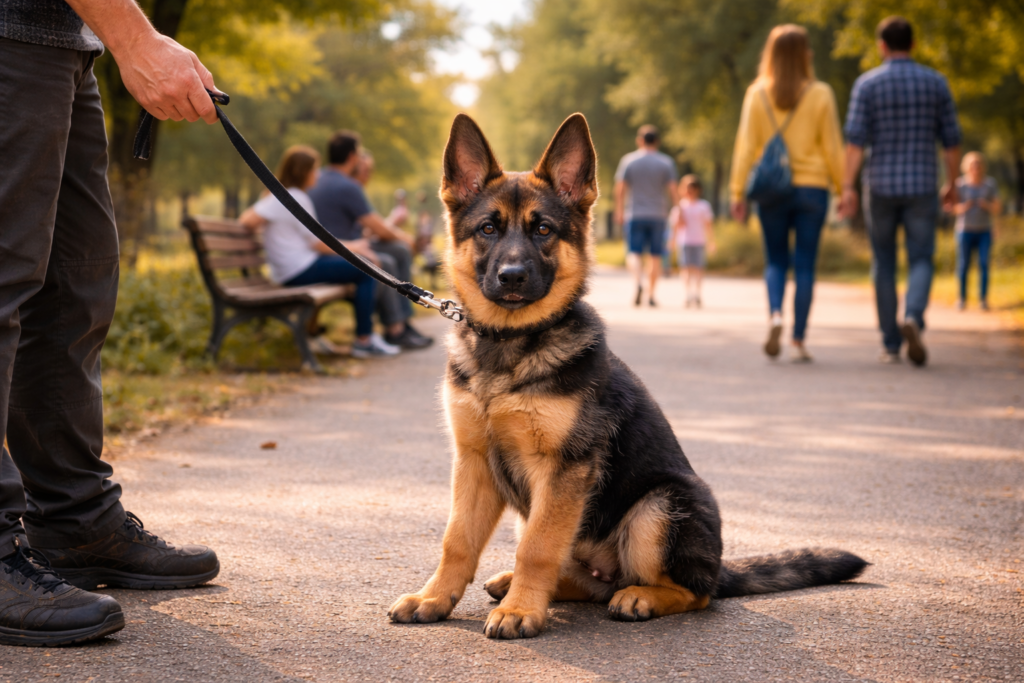
Socialization priorities:
- Different types of people (ages, genders, ethnicities)
- Various environments (parks, stores, busy streets)
- Other animals (dogs, cats, livestock)
- Novel objects and sounds (wheelchairs, shopping carts, fireworks)
- Handling by strangers (veterinarians, groomers)
Expose your dog to these experiences in positive, controlled ways. The goal is creating a confident dog who views the world as generally safe but can identify genuine threats.
Never allow negative experiences during socialization. A single frightening encounter can create lasting fear that interferes with training.
Drive Development and Play Training
Protection training harnesses your dog’s natural drives, especially prey drive and defense drive. Building these drives through structured play creates the motivation needed for protection work.
Tug and bite work games:
Start with simple tug toys and gradually introduce bite sleeves or wedges. Let your dog win frequently to build confidence and drive. The game should be exciting and rewarding.
Targeting and focus:
Teach your dog to focus intensely on specific targets. This skill transfers directly to protection scenarios where your dog must lock onto a threat and maintain focus despite distractions.
Impulse control during drive building:
Balance drive development with control exercises. Your dog should show high excitement for the game but freeze instantly when you give a command. This creates the on/off switch critical for protection work.
Understanding these foundation elements helps you see why professional training matters. For deeper insight into what makes protection dogs effective, check out our guide on protection dog commands.
The Protection Training Process: Step-by-Step Phases
How to train a protection dog follows a structured progression from basic skills to advanced scenarios. Each phase builds on the previous one, creating a reliable guardian who can perform under pressure.
Phase 1: Introduction to Bite Work
Bite work training begins with building your dog’s confidence and drive to engage targets. The first sessions use soft sleeves or bite wedges that make winning easy and fun.
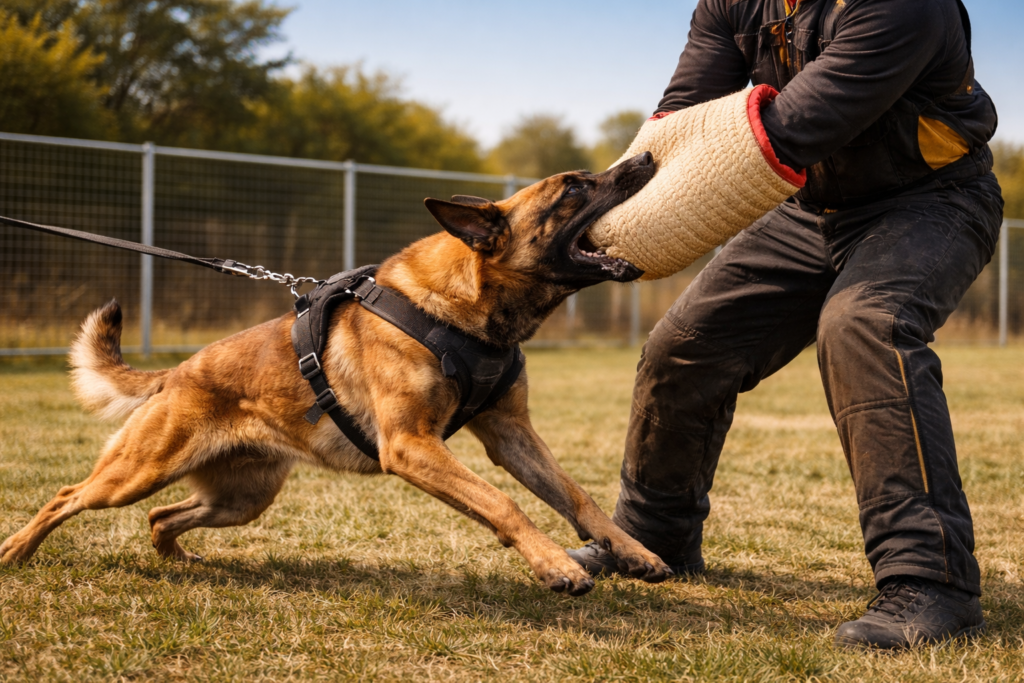
A helper (called a decoy) agitates your dog with movement and sounds that trigger prey drive. Your dog learns to bite and hold the equipment while the decoy continues moving.
Key skills in this phase:
- Full mouth bite (all teeth engaged)
- Holding pressure (maintaining grip)
- Targeting (biting the presented equipment, not the person)
- Calm approach before engagement
Sessions stay short and positive. Your dog should end each session excited about the work, not exhausted or stressed.
Phase 2: Building Courage and Defense Drive
As your dog gains confidence, training shifts from prey-driven biting to defense-driven protection. The decoy begins using more threatening behavior that triggers your dog’s protective instincts.
This phase introduces pressure and stress to test your dog’s courage. The decoy may advance on the dog or handler, creating scenarios that require your dog to stand firm and engage.
Critical elements:
- Fighting through pressure without backing down
- Protecting the handler, not just biting equipment
- Maintaining composure under stress
- Reading and responding to genuine threats
Not every dog has the courage for this phase. Some dogs show excellent prey drive but lack the defensive drive needed for real protection work.
Phase 3: Obedience Under Distraction
Your dog must follow commands perfectly, even during the excitement of protection scenarios. This phase combines obedience with bite work to build control.
The decoy creates distraction while you command your dog through various exercises. Your dog learns to ignore the exciting target and focus on your commands instead.
Training exercises:
- Heeling past an agitating decoy
- Holding a down-stay while the decoy moves nearby
- Recalling away from an active threat
- Releasing a bite on command and returning to heel
This phase reveals whether your foundation training was solid enough. Dogs with weak obedience cannot progress to advanced scenarios safely.
Phase 4: Scenario Training and Real-World Application
Advanced training puts your dog in realistic situations that mimic actual threats. Scenarios include home invasions, car approaches, and attacks during walks.
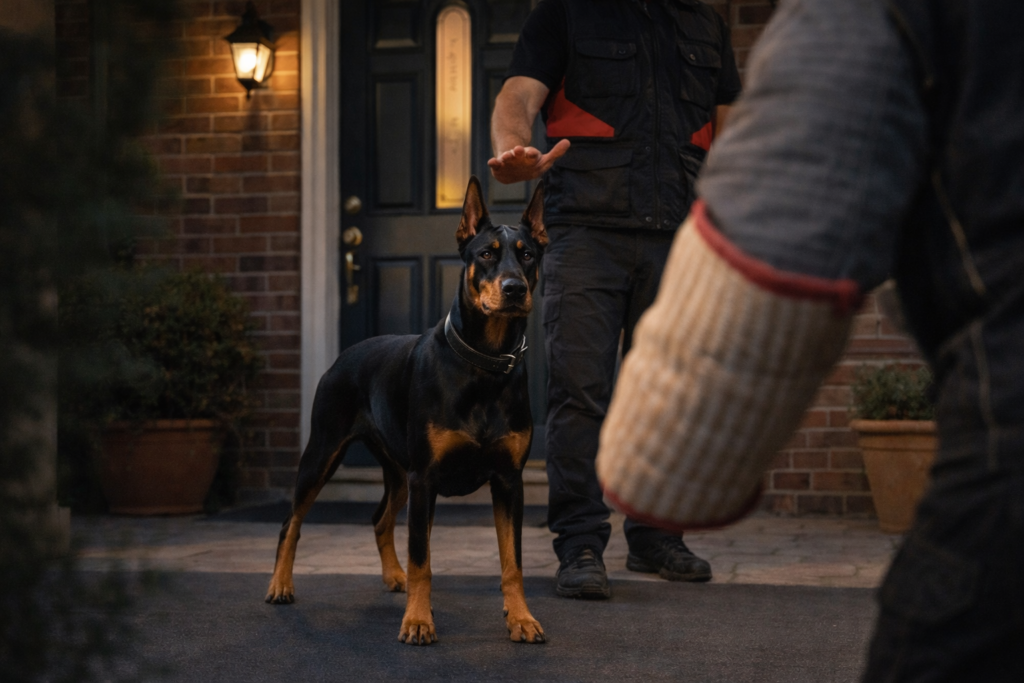
Your dog learns to evaluate situations and respond appropriately. Not every stranger represents a threat, and your dog must understand the difference.
Advanced scenario elements:
- Multiple attackers
- Attacks from behind or unexpected angles
- Protecting family members, not just the primary handler
- Disengaging when the threat stops
Environmental training matters here. Your dog should perform in various locations, times of day, and conditions. A dog who only trains in one location may not generalize skills to your actual home or neighborhood.
Training Methods and Approaches Compared
Different training methods produce different results in protection dogs. Understanding these approaches helps you evaluate programs and decide which method aligns with your goals.
| Training Method | Best For | Training Duration | Typical Cost | Key Advantages | Potential Drawbacks |
| Professional Training Program | Serious protection work, family safety | 12-18 months | $15,000-$50,000+ | Expert instruction, proven methods, liability support, guaranteed results | High cost, limited owner involvement during training |
| Owner-Led with Professional Guidance | Experienced handlers, sport protection | 18-24 months | $3,000-$10,000 | Lower cost, stronger handler bond, ongoing education | Requires significant time, may lack expertise for scenarios |
| Self-Training (Not Recommended) | Sport/hobby work only | Variable | Minimal | Complete control, lowest cost | High risk of creating dangerous dog, no liability protection |
Working with Professional Trainers
Professional protection dog trainers bring years of experience and proven methods. They understand how to build drives safely, recognize temperament issues early, and create reliable guardians.
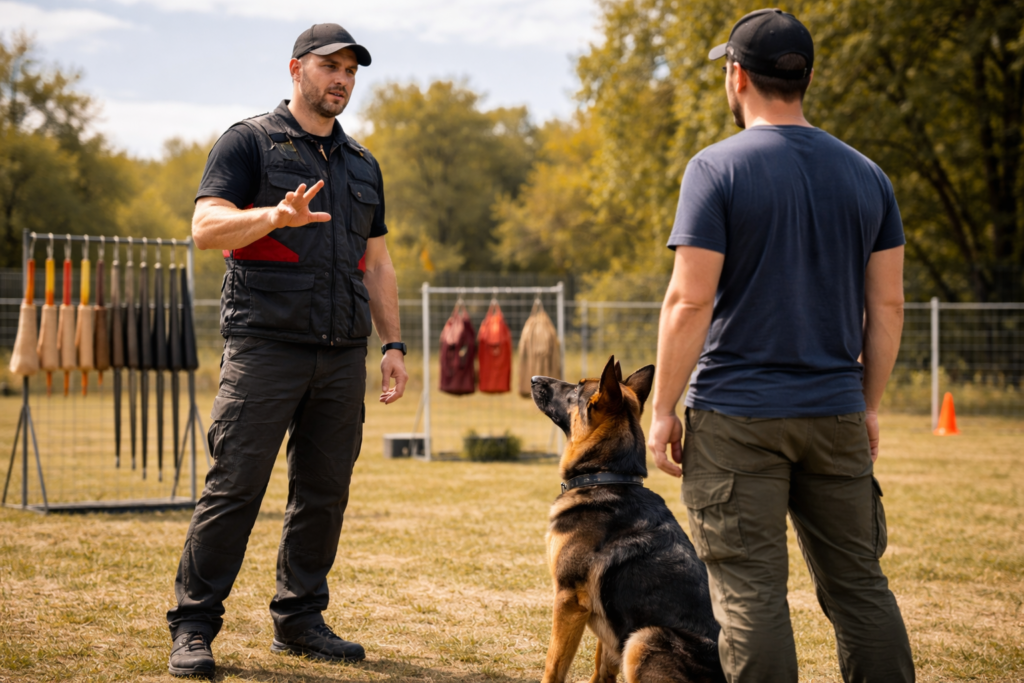
Benefits of professional training:
- Experienced decoys who know how to pressure dogs appropriately
- Access to proper equipment and training facilities
- Structured progression with clear milestones
- Ongoing support and tune-up training
- Legal protection through documented training methods
Good trainers evaluate your dog honestly before accepting them into a program. They will tell you if your dog lacks the temperament or drive for protection work.
Do-It-Yourself Risks and Limitations
Training your own protection dog without professional guidance creates serious risks. Improper methods can produce dogs who bite inappropriately, fail to release on command, or display unstable aggression.
Common DIY training mistakes:
- Starting bite work too early
- Using punishment during protection training
- Failing to build sufficient obedience first
- Encouraging aggression rather than controlled protection
- Skipping scenario training in varied environments
Liability concerns matter too. If your self-trained dog bites someone inappropriately, you face legal consequences without the documentation and expertise that professional training provides.
The money saved on training costs disappears quickly if your dog injures someone or must be rehomed due to behavioral issues.
For insights on selecting quality trainers and programs, read our article about how to find the best protection dog for your family.
Essential Skills Every Protection Dog Must Master
Protection training creates specific behaviors that define a reliable guardian. These skills separate trained protection dogs from aggressive pets who simply bite when aroused.
Controlled Aggression and the Out Command
The ability to bite on command means nothing without an equally strong out command. Your dog must release immediately when told, even under maximum drive and excitement.
Out command training progression:
- Trade releases using toys or food rewards
- Two-toy method where releasing one gets access to another
- Verbal out while decoy stops moving
- Verbal out while decoy continues pressure
- Out from full fight drive
A protection dog who won’t release on command is dangerous and uncontrollable. This single skill determines whether your dog is an asset or a liability.
Threat Assessment and Discrimination
Your dog must differentiate between normal situations and genuine threats. A visitor ringing your doorbell shouldn’t trigger protection behavior, but someone breaking a window should.
Training appropriate responses:
- Neutral behavior toward invited guests
- Alert barking at unusual activity
- Defensive positioning when handler shows concern
- Full engagement when commanded or when actual attack occurs
This skill relies heavily on proper socialization and scenario training. Your dog learns to read your body language and the situation before responding.
Handler Protection in Multiple Scenarios
Protection dogs must guard you in various situations, not just when a decoy attacks during training. Real threats happen in parking lots, during walks, or in your home.
Scenario variety matters:
- Front attacks you can see coming
- Attacks from behind or the side
- Threats to other family members
- Multiple attackers
- Attacks while you’re distracted or incapacitated
Your dog should position between you and the threat, use warning barks before engaging, and escalate only when necessary. Immediate full bites without warning create liability problems.
Timeline and Realistic Expectations
Protection dog training takes significantly longer than basic obedience. Understanding realistic timelines helps you plan and avoid rushing the process.
| Training Phase | Duration | Key Milestones | Handler Involvement |
| Foundation (Obedience & Socialization) | 6-12 months | Perfect recall, off-leash control, stable temperament in public | Daily training, consistent exposure |
| Drive Building & Bite Introduction | 3-6 months | Strong toy drive, confident bite, basic targeting | Regular play sessions, weekly decoy work |
| Protection Development | 6-12 months | Courage under pressure, controlled aggression, scenario work | Weekly training, maintaining obedience |
| Advanced Scenarios & Maintenance | Ongoing | Real-world application, multiple attackers, environmental generalization | Monthly tune-ups, ongoing practice |
Factors That Affect Training Duration
Some dogs progress faster than others based on genetics, temperament, and training consistency. A dog from working lines with excellent temperament may reach reliable protection work in 12 months.
Variables that impact timeline:
- Natural drive: High-drive dogs learn faster
- Age when starting: Younger dogs need more foundation time
- Training frequency: Daily work progresses faster than weekly sessions
- Handler experience: Skilled handlers accelerate progress
- Temperament stability: Confident dogs advance more quickly
Don’t compare your dog’s progress to others. Each dog develops at their own pace, and rushing creates problems.
Maintenance Training Requirements
Protection training isn’t a one-time process. Your dog needs ongoing practice to maintain skills and stay sharp.
Maintenance schedule:
- Weekly obedience practice in distracting environments
- Monthly scenario work with a decoy
- Quarterly evaluation by a professional trainer
- Annual certification or testing for serious protection dogs
Skills degrade without practice. A dog who hasn’t worked with a decoy in six months may not respond appropriately when faced with a real threat.
Before bringing a protection dog home, make sure your environment is ready. Our guide on how to prepare your home for a protection dog covers essential safety and setup considerations.
Common Training Mistakes to Avoid
Even experienced handlers make mistakes that interfere with protection dog development. Knowing these pitfalls helps you avoid creating problems that take months to fix.
Starting Protection Work Too Early
The biggest mistake in protection training is starting bite work before your dog has the physical and mental maturity to handle it. Dogs under 12 months lack the bone development and emotional stability needed.
Problems from early protection training:
- Soft or incomplete bites from immature jaw structure
- Fear or avoidance from overwhelming pressure
- Loss of confidence that persists into adulthood
- Inappropriate aggression from poor impulse control
Focus on foundation skills during the first year. Build drive through play, establish perfect obedience, and create extensive socialization experiences.
Inconsistent Training and Commands
Protection dogs need absolute clarity about commands and expectations. Inconsistency confuses your dog and creates unreliable responses.
Common consistency problems:
- Using different words for the same command
- Allowing behaviors sometimes but correcting them other times
- Multiple family members giving conflicting commands
- Changing training methods frequently
Establish clear rules and stick to them. Every family member must use identical commands and enforce the same boundaries.
Neglecting Socialization
Some handlers worry that socializing a protection dog will make them too friendly to guard effectively. The opposite is true. Well-socialized dogs can accurately assess threats because they understand what normal behavior looks like.
Dogs with poor socialization react to everything as a potential threat. This creates unnecessary aggression, makes public outings difficult, and reduces your dog’s quality of life.
Continue socialization throughout your dog’s life, even after protection training begins. Your dog should remain comfortable around friendly strangers while maintaining the ability to recognize and respond to genuine threats.
Your Path to a Reliable Protection Dog Starts Here
Training a protection dog demands significant time, expertise, and commitment. The process involves building foundational obedience, developing natural drives, introducing controlled bite work, and creating a dog who can assess threats accurately while remaining safe in daily life.
Most owners discover that professional training delivers better results with less risk. Experienced trainers recognize subtle temperament issues, use proven methods that avoid creating dangerous behaviors, and provide ongoing support as your dog matures.
Whether you choose professional training or work with a qualified instructor as an owner-handler team, the investment in proper education protects your family and creates a reliable guardian. Shortcuts in protection training create liabilities, not assets.
At K9 Mania Protection Dogs, we specialize in top-tier personal and family protection dogs in Long Island. Our commitment to delivering reliable, well-trained protection dogs focuses on safety, performance, and your peace of mind. We understand the unique challenges of protection dog training and provide expertly trained guardians ready to protect your family. Trust K9 Mania Protection Dogs to deliver the exceptional protection and companionship your home deserves. Visit our site to explore our custom protection dogs and find your perfect guardian today.
Explore Related Articles
Protection Dog for Elderly: The Complete Safety and Companionship Guide
Types of Protective Dogs: Complete Guide to Canine Guardians
Frequently Asked Questions
Can I train my own dog to be a protection dog?
You can train your own dog for basic protection work if you have significant dog training experience and access to qualified decoys and proper equipment. However, most owners lack the expertise to safely develop controlled aggression, recognize temperament issues, or create reliable threat assessment skills. Professional guidance is strongly recommended even for experienced handlers to avoid creating dangerous behaviors or liability issues.
How hard is it to train a dog for protection?
Protection dog training is one of the most challenging types of dog training because it requires expert timing, understanding of drive development, and the ability to build controlled aggression while maintaining perfect obedience. The process takes 12 to 24 months and demands consistent work with experienced decoys. Many dogs also lack the temperament or drive for successful protection work, regardless of training effort.
What breeds are best for protection?
German Shepherds, Belgian Malinois, Rottweilers, Doberman Pinschers, and Giant Schnauzers consistently rank as the best protection dog breeds due to their natural guarding instincts, trainability, and stable temperaments. These breeds were developed specifically for protection work and possess the drive, courage, and physical capability needed. Working lines from these breeds typically outperform show lines for serious protection applications.
How expensive is a trained protection dog?
A fully trained protection dog typically costs between $15,000 and $50,000, depending on the dog’s age, training level, and breed. Basic protection dogs start around $15,000, while elite family protection dogs with extensive scenario training and proven genetics can exceed $50,000. This investment includes years of professional training, health testing, and ongoing support from reputable trainers.
What is the #1 most protective dog?
The Belgian Malinois is widely considered the most protective dog breed due to its intense drive, fearless temperament, and exceptional trainability. These dogs are used by military and police units worldwide for protection and detection work. However, German Shepherds offer a better balance of protection ability and family suitability for most households, making them the more popular choice for personal protection.
Are female or male dogs better guard dogs?
Male dogs typically display more territorial behavior and physical presence, making them slightly better for property protection and deterrence. Female dogs often show stronger handler focus and may be more reliable for personal protection work. Both sexes can become excellent protection dogs when properly trained. The individual dog’s temperament, drive, and training matter far more than gender in determining protection capability.