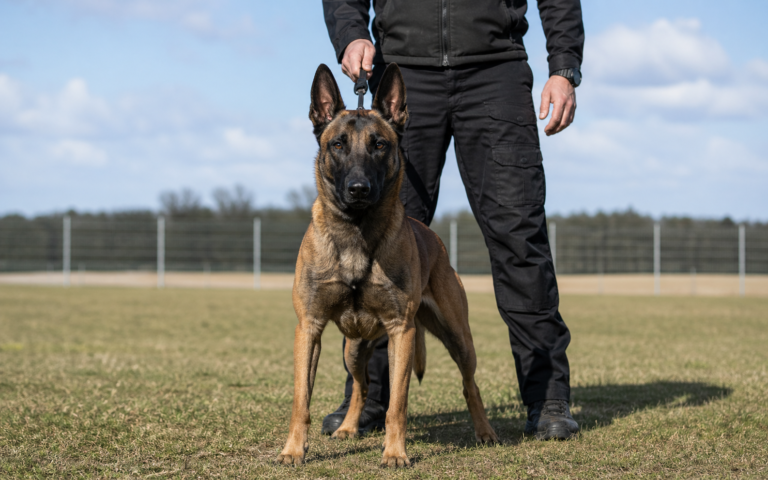
A fully trained protection dog is a five-figure purchase, and across the professional market finished adult dogs generally run from the low tens of thousands into six figures depending on training level, bloodline, and the program behind the dog. The price reflects two to three years of selection, daily training, and real-world proofing, not just the dog itself.
That range is wide enough to be confusing, and the confusion is where buyers get taken advantage of. This guide breaks down what you are actually paying for, how training level changes the figure, what ownership costs after delivery, and how to tell a fairly priced dog from an overpriced one.
Things to Know
- Protection dog pricing reflects years of training and selection, not breed or pedigree alone
- Training level is the single largest factor in what a finished dog costs
- Ongoing ownership costs are real and should be budgeted before purchase
- Unusually low prices almost always signal missing training, missing health screening, or an unstable temperament
- No two programs define their pricing tiers the same way, so compare capabilities rather than numbers
Also Read: Price only makes sense once you understand how a dog is chosen in the first place. See how the K9 Mania selection process narrows a large pool of candidates down to the small percentage suited for protection work.
What You Are Actually Paying For
The dog is the smallest part of the cost. What you are buying is the time, expertise, and washout rate behind it.
A legitimate program starts with genetics. Trainers source from proven working bloodlines, most commonly German Shepherds, Belgian Malinois, and Dutch Shepherds, then evaluate each candidate for nerve strength, confidence, and stability under pressure. Most candidates never make it. A program that keeps every dog it buys is not selecting, it is reselling.
The dogs that pass then spend eighteen months to three years in structured daily training. That covers full on and off leash obedience, environmental exposure to crowds, traffic, elevators, stairs, and unfamiliar surfaces, then controlled protection work layered on top of a stable foundation. Every hour of that is labor you are paying for.
Finally there is proofing. A dog that performs in a quiet training field is not finished. Real programs test their dogs in genuinely unpredictable environments before placing them, because the difference between a dog that works and a dog that folds only shows up under pressure.
Protection Dog Cost by Training Level
Most companies sell finished dogs in tiers. There is no industry standard for what each tier means, so the labels vary, but the capability progression is fairly consistent across the market.
| Training Level | What the Dog Does | Typical Buyer | Relative Cost |
|---|---|---|---|
| Level 1 | Full obedience, alert barking, visible deterrence, no bite work | Families wanting presence and early warning | Lowest tier |
| Level 2 | Everything in Level 1 plus controlled engagement and release on command | Higher-risk households, frequent travelers | Mid tier |
| Level 3 | Everything above plus handler-directed work, area searches, multiple-threat scenarios | Executives, public figures, business owners | Highest tier |
| Custom | Trained to a specific home, property, routine, or handler | Buyers with unusual requirements | Varies widely |
The jump between tiers is not small. Each level adds months of training and narrows the pool of dogs capable of the work, which is why the price climbs steeply rather than incrementally.
Also Read: The tier labels only tell you so much. This breakdown of protection dog commands shows what a dog at each stage should reliably do on cue.
The Factors That Move the Price
Two dogs with the same training label can be priced very differently. These are the variables that explain the gap.
Age and remaining working years. A dog finished at two years old has a longer working life ahead of it than one finished at five, and price reflects that.
Bloodline and health clearances. Documented working pedigree, hip and elbow scoring, and full veterinary screening all add cost and all protect you from an expensive problem later.
Breed and availability. German Shepherds and Belgian Malinois dominate the market. Less common working breeds can price higher purely on scarcity, not capability.
Handler suitability. A dog that any competent adult can handle is worth more to most buyers than a high-drive dog that only an experienced handler can manage safely.
Delivery and handover. Serious programs deliver the dog in person and spend days transferring control to you in your own home. That is included in the price for a reason, and its absence should worry you.
Post-delivery support. Lifetime support, refresher sessions, and access to your trainer when something changes are part of what you are buying. A dog sold with no follow-up is a cheaper product.
The Costs That Come After Purchase
The purchase price is the beginning of the budget, not the whole of it. Working dogs are large, athletic, and long-lived, and they cost more to keep than a typical family pet.
Food and routine veterinary care. Expect higher food costs than an average dog simply on size and activity level, plus standard annual care, dental work, and preventatives.
Maintenance training. Protection training decays without reinforcement. Budget for periodic refresher sessions with a professional, not just your own daily obedience work.
Equipment. Quality leads, collars, a secure crate, vehicle restraint, and a proper rest area are not optional for a dog of this size and drive.
Insurance. Some homeowners policies exclude certain breeds or add conditions for dogs trained in protection. Ask your insurer before you buy, not after.
Time. The most underestimated cost. These dogs need daily structure, consistent handling from everyone in the household, and real exercise. A dog that is left to idle will find its own job, and you will not like the one it picks.
Also Read: Ownership demands more setup than most buyers expect. Read the full guide on how to prepare your home for a protection dog before the dog arrives.
When a Low Price Should Worry You
Bargain protection dogs exist, and there is almost always a reason. The most common ones are worth knowing before you shop on price.
- The dog has obedience training and a convincing bark but no genuine protection work behind it
- Health screening was skipped, and hip, elbow, or temperament problems surface within a year
- The dog was sport trained rather than protection trained, meaning it works on equipment and not on real threats
- The seller is a broker who imported the dog and never assessed it personally
- Delivery, handover, and support are stripped out to hit a headline number
If you are still narrowing down programs, this guide on how to find the best protection dog covers what to look at before price enters the conversation.
A protection dog that cannot be controlled is not a discount. It is a liability living in your house, and correcting a badly trained working dog costs far more than buying a properly trained one.
Matching Your Budget to the Right Dog
The right question is not what is the cheapest dog available, it is what level of capability your situation actually requires. Most families overestimate the level they need and underestimate the obedience and stability they need.
| Your Situation | Level That Usually Fits | What Matters Most |
|---|---|---|
| Family home, children, average risk | Level 1 to Level 2 | Stable temperament, calm indoors, reliable recall |
| Property or estate with grounds | Level 2 | Perimeter awareness, confidence outdoors, strong off switch |
| Business, warehouse, or retail premises | Level 2 to Level 3 | Handler-directed work, neutrality around staff and customers |
| Public-facing individual or frequent traveler | Level 3 | Composure in crowds, vehicle work, discreet control |
At K9 Mania Protection Dogs, dogs are selected from the top percentage of candidates on temperament and protective instinct, then proofed in real scenarios before placement, and every placement includes free lifetime post-delivery support. The company started as a hands-on training operation rather than a resale business, which is why temperament is assessed before any protection work begins rather than assumed afterward. Current pricing and what is included is covered on the pricing and selection process page.
Making the Protection Dog Cost Decision With Confidence
Protection dog cost comes down to one honest question: how much trained capability do you actually need, and is the program in front of you genuinely delivering it? A well-priced dog from a serious program is expensive because the work behind it is expensive. A cheap dog is cheap because something was left out.
Before you commit anywhere, ask to see the dog work, ask what happens if the placement does not fit, and ask exactly what support you get after delivery. Those three answers tell you more about value than any number does.
If you are ready to talk through what level of dog your household actually needs, contact K9 Mania Protection Dogs and start with a conversation rather than a price list.
Frequently Asked Questions About Protection Dog Cost
Why are protection dogs so expensive?
Protection dogs are expensive because you are paying for years of selection and daily training, not for a dog. A program evaluates a large pool of candidates and rejects most of them, then invests eighteen months to three years training the ones that pass. Add health screening, environmental proofing, in-person delivery, handover training, and ongoing support, and the cost reflects an enormous amount of skilled labor spread across relatively few finished dogs.
Is a protection dog worth the money?
That depends entirely on what you need and whether you will actually live with the dog properly. For households facing genuine risk, a trained dog offers something no alarm system does: presence, early warning, and a controlled response without a call-out delay. For someone who wants a deterrent and nothing more, a well-bred family dog with strong obedience may be enough. The investment only pays off if you maintain the training.
How much does protection dog training cost separately?
Training-only programs price by duration and level rather than by dog, and they vary widely between trainers. The catch is that most dogs are not suitable candidates for protection work regardless of how much training you pay for. A temperament evaluation should always come first, and this guide on the importance of professional training for family protection dogs explains why.
Do protection dogs cost more to keep than regular dogs?
Yes, though the gap is smaller than most people expect. The main differences are higher food costs for a large, athletic dog, periodic maintenance training with a professional, better quality equipment, and potentially higher insurance depending on your policy. The larger cost is time, since these dogs need daily structure and consistent handling from everyone in the home.
Can I finance a protection dog?
Some programs offer payment plans or financing, and terms vary considerably between companies. It is worth asking directly rather than assuming, and worth reading what happens if the placement does not work out. Any program you are considering should be transparent about payment structure, what the price includes, and what support continues after the dog is delivered.
What should be included in the price?
At minimum: the finished dog, complete health and veterinary records, in-person delivery, and hands-on handover training in your home so you can actually handle the dog from day one. Ongoing support should also be included or clearly available. If a quote leaves out delivery and handover, the number is not comparable to one that includes them, and you should ask why.
Understanding Protection Dog Cost: Talk to the Team at K9 Mania
K9 Mania Protection Dogs is a Long Island based protection dog company placing elite personal and family protection dogs with households across the country. Every dog is hand-selected for temperament and stability, trained to blend into home life rather than dominate it, and backed by free lifetime post-delivery support. If you want a straight answer about what a dog for your situation involves, visit k9maniaprotectiondogs.com and speak with the team directly.